MAM
‘Marketers must not fall prey to the viral trap:’ KS Chakravarthy


MUMBAI: Speaking at Association for Data Driven Marketing and Advertising (DDMA) India Annual and Awards on Greatness — The New Minimum For Survival, digital marketing and social media agency Liqvd Asia CCO KS Chakravarthy (Chax) points out that accepting the changing role of advertisers and consumers is the bare minimum for the digital world that marketers are operating in today.
Going back few years, one can see how the internet has changed the way consumers behave. From viewers, they are increasingly looking for outlets to be heard. With social media, advertisers and marketers aren’t the only story tellers; consumers are also partaking in the creative process. In fact, according to Chakravarthy, marketers are no more storytellers, but responders looking out for meaningful conversation touch points in a consumer’s life.
Citing Google’s concept of micro moments, Chakravarthy highlights how technology enables one to target much sharper. “The entire journey to purchase can be broken down into moments. There is a moment to know, which is when a consumer is seeking information, and it is also the time when you can engage them in conversation and build relationship. And then there are moments to to go when the consumer is actually purchasing… these moments creates avenues for marketers to not just drive sales but to engage consumers,” says Chakravarthy.

Chakravarthy moves on to expand on the statement with numerous examples of how brands have effectively anticipated and converted consumer engagement with campaigns to brand communications, starting with the Old Spice advertisement in 2010, which the marketers responded to Twitter backlash to generate more conversation about the brand resulting increased sales. While that was accidental, American FMCG brand Honey Maid anticipated negative feedback on their campaign and incorporated that into their follow up campaign.
Apart from the new take on consumers, the key benchmarks that emerged from the session that digital marketers must take note of are reality of the second screen adoption and the vista of opportunity it poses to the marketers to capitalise upon; social influences or the viral stars of the digital world be it on YouTube, Pinterest or Vine; and the importance of collaboration or branded content, which is being tried but is still at a nascent stage in India compared to other markets.
Having said that, Chakravathy pointed out why marketers should not fall prey to the viral trap. “It’s sad that in India only 20 per cent of the digital spends goes to video content, while the number is almost 80 per cent in a market like Japan where digital marketing is much more evolved. The issues isn’t just with infrastructure and bandwidth consumption. Whenever we think of digital marketing through videos we think of viral videos. Somehow we all think that we will make a video that will go viral, which is not the case. If one were to analyse YouTube’s data, one can see that most of the videos we know as viral in India are paid for by brands. It’s not organic and hence of no use to marketers,” he said.
“Unless a video engages a consumer in something informative, and ensures meaningful consumer engagement, it will not convert to anything even close to sales for a brand,” Chakravarthy asserted.
When queried as to whether he finds digital marketers lacking confidence in the Indian market, Chakravarthy gives them the benefit of doubt and expresses his primary concerns with the medium in the current landscape. “Apart from a few B2B brands, most brands can’t to without television in India, especially FMCG brands. Moreover even with the buzz around digital marketing, clients haven’t really got what they want from digital practices in India on marketing. Once that happens, this question of confidence won’t come. The fact remains that marketers must engage brands in all touch points of their purchasing journey using digital as a tool. That’s the bare minimum,” Chakravarthy signed off.






Brands
KKR sixes to power EV charger rollout under VIDA campaign
Cricket meets clean mobility as big hits spark India’s charging growth
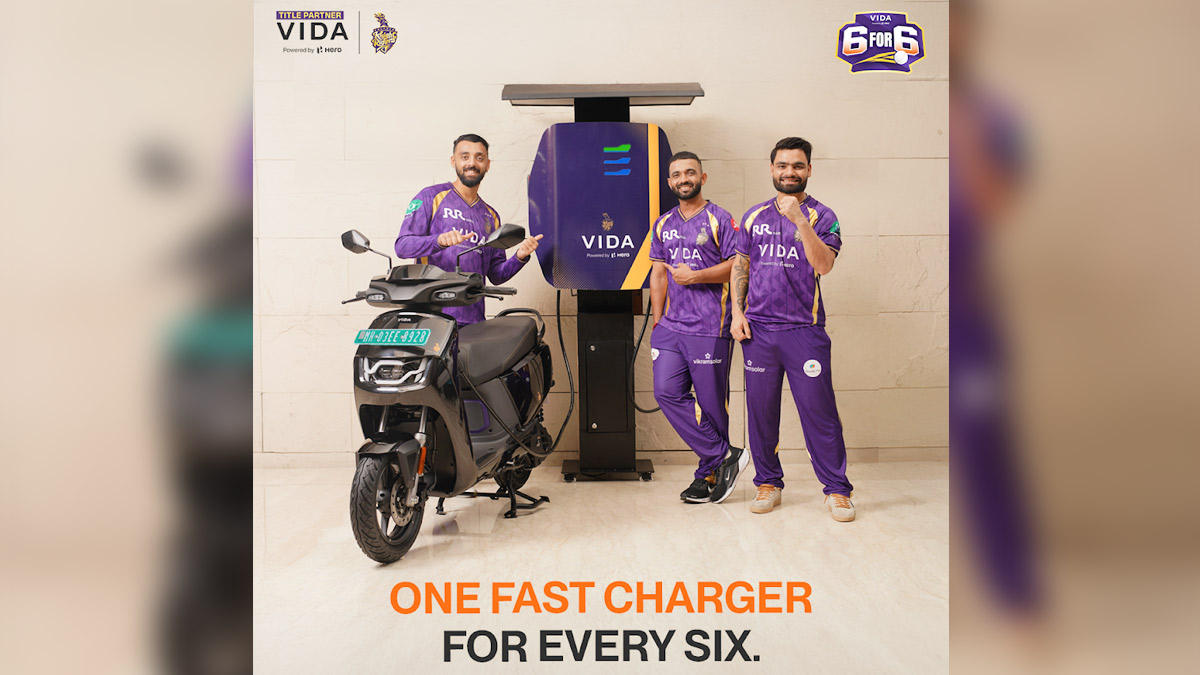
NEW DELHI: VIDA, the electric mobility arm of Hero MotoCorp, has teamed up with Kolkata Knight Riders to launch a campaign that turns cricketing flair into real-world impact.
Titled ‘6 for 6’, the initiative promises to install a 6kW fast EV charger for every six hit by KKR during the ongoing Indian Premier League season. The idea is simple but powerful, as each big hit on the field contributes directly to expanding India’s fast-charging infrastructure.
The campaign builds on VIDA’s growing network, which already spans over 5,300 fast-charging points across more than 430 cities. With EV adoption gaining pace, the brand is using cricket’s mass appeal to accelerate both awareness and infrastructure growth.
Explaining the thinking behind the move, Hero MotoCorp emerging mobility business unit chief business officer Kausalya Nandakumar said, “Cricket has an incredible ability to unite and inspire millions across the country. With the ‘6 for 6’ campaign, we are turning every big hit on the field into a step towards a cleaner and a more accessible mobility future.”
She added that VIDA’s expanding fast-charging network and removable battery technology are designed to make EV ownership more convenient and practical for everyday users.
From the franchise’s side, the campaign is also about giving on-field moments a larger purpose. Kolkata Knight Riders chief executive officer Venky Mysore said, “The ‘6 for 6’ campaign exemplifies the potential of sport as a platform for meaningful, real-world impact. By linking every six to the expansion of EV charging infrastructure, this partnership transforms fan excitement into tangible progress.”
As part of the rollout, VIDA has introduced co-branded charging stations in KKR’s signature colours, with a flagship installation unveiled alongside team players. The chargers are designed for quick top-ups, powering VIDA scooters from zero to 80 percent in about an hour, while also being positioned along key highways to support longer journeys.
The initiative also taps into VIDA’s removable battery system, which allows users to charge using standard household plug points, adding flexibility to the charging ecosystem.
By blending the thrill of cricket with the urgency of clean mobility, VIDA and KKR have found a neat way to make every six count twice, once on the scoreboard and again on India’s road to an electric future.








