Brands
Garnier goes green: Will ditch virgin plastic, lower carbon emissions

MUMBAI: The Covid2019 pandemic seems to have accelerated the agenda for a greener and cleaner Earth. Sustainable living and environment-friendly actions are top of the agenda for consumers across the globe in 2021. An international survey commissioned by global beauty brand Garnier found that 81 per cent of global consumers want to be more sustainable in 2021, and 44 per cent respondents expect brands to facilitate this, thus proving the importance of green beauty offerings.
With these findings in mind, Garnier has launched its #GreenerWithGarnier initiative which aims to stop using virgin plastic for all packaging by 2025. The company plans to use either reusable, recyclable or compostable materials in all packaging under its sustainability programme, thereby cutting down on 37,000 tonnes of plastic productions every year. Moreover, it has already reduced its CO2 emissions at its factories and manufacturing sites by 72 per cent, it said.
The cosmetic brand further aims to achieve an improved environmental profile for all its new products, transforming all its industrial sites into 100 per cent carbon neutral locations by adopting renewable energy.
Calling 2020 ‘the wakeup call to protect our planet’ Garnier global brand president Adrien Koskas pledged in a statement to lessen the company’s impact on the planet and innovate for a sustainable future. “It will take time, but Green Beauty will transform Garnier, and we hope the beauty industry as a whole," he added. Moreover, from 2022, all plant-based and renewable ingredients used by the company for its products will be sustainably sourced, it noted.
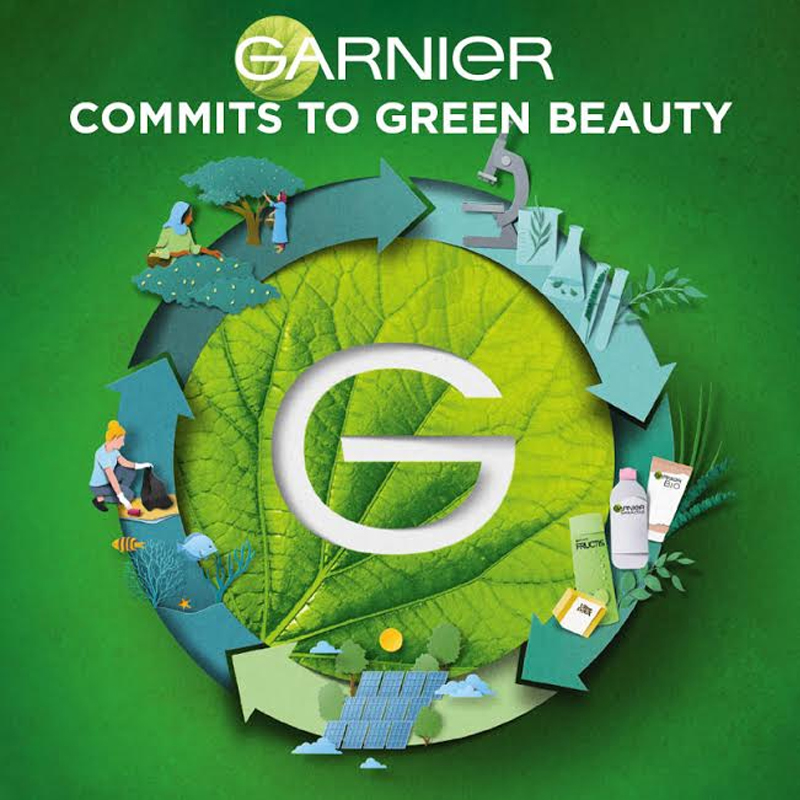
The cosmetics company hopes to usher a huge shift in the way that the beauty industry operates with the launch of the Garnier Green Beauty campaign. A complete end-to-end approach to sustainability, the campaign aims to transform every stage of Garnier’s value chain, thereby reducing its environmental impact in the following ways: greener and cleaner formulas, more recycled and recyclable packaging, more renewable energies; also more actions to fight plastic pollution, by having more empowered communities worldwide as part of its solidarity sourcing programme.
Garnier India general manager Zeenia Bastani said that under the initiative, the company is also working with its suppliers and marginalised community. It has partnered with Plastics For Change to help with the social impact of plastic pollution. "Through this association, Garnier will support the holistic development of waste picker communities in India," it said. Plastics for Change supports education for children, healthcare, nutrition, financial literacy and empowerment of girls and women. By 2025, Garnier will empower 800 communities worldwide as part of its solidarity sourcing programme, she added.
As Garnier India’s brand ambassador, Bollywood actor John Abraham also endorsed his commitment towards the cosmetic brand’s green initiatives.
“With the continuous depletion of our environmental resources over the years, we firmly believe that individual contributions leading to a larger united front will help achieve the set goals,” said Abraham. “Through the Garnier Green Beauty initiative, we are offering an opportunity to all young ambitious Indians to come forward and join us in making small changes in your life today, contributing to a sustainable tomorrow and a greener future.”
The Green Beauty initiative also presents an annual global Sustainability Progress Report, offering complete transparency on Garnier’s commitments. The report can be tracked publicly via the Garnier website and states where Garnier stands today, mapping out the process of how the brand will reach its ambitious 2025 targets.