
Digital
Galleri5 launches India’s first AI cinema OS at India AI Summit
Collective Artists Network unveils end-to-end production platform powering Mahabharat series and Hanuman teaser.

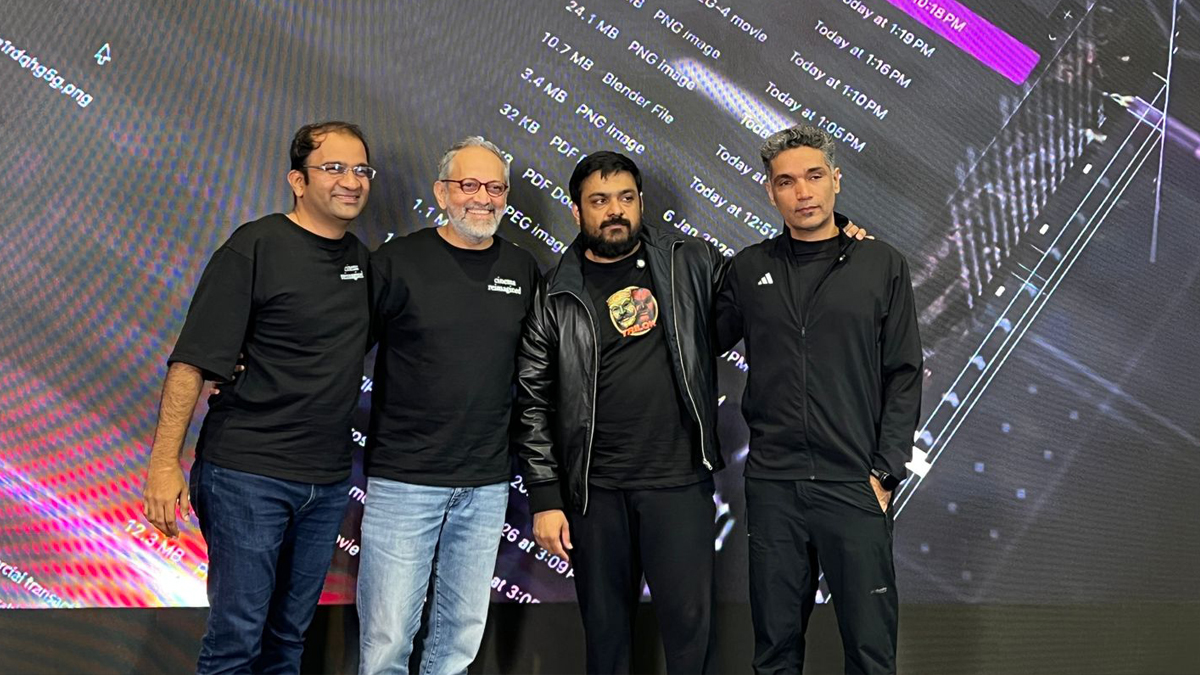
MUMBAI: India’s cinema just got an AI operating system upgrade because why settle for tools when you can have a full production command centre? Collective Artists Network and Galleri5 today unveiled Galleri5 AI Studio at the India AI Impact Summit in New Delhi, billing it as the country’s first cinema-native production technology platform. Launched on 20 February 2026, the system acts as an end-to-end orchestration layer for film and television, integrating generative AI, LoRA-driven character architecture, controlled shot pipelines, 3D/VFX tools, lip-sync, upscaling, quality control, and delivery, all tuned for theatrical and broadcast standards.
Unlike piecemeal AI tools, Galleri5 controls the entire stack from script and world-building to final master output. Filmmakers retain creative authorship, continuity, and IP security while slashing timelines from years to months.
The platform is already in live use at scale. Mahabharat: Ek Dharmayudh, an AI-powered series produced under Collective’s Historyverse banner, is airing on Star Plus and streaming on JioHotstar, ranking among the top-watched shows in its slot. Meanwhile, Chiranjeevi Hanuman – The Eternal (produced by Star Studios 18) dropped its teaser on IMAX screens, leveraging Galleri5’s infrastructure for the visuals.
Collective Artists Network founder and group CEO Vijay Subramaniam said, “For India to lead in the next era of storytelling, we have to think beyond tools and start building systems. This is about putting durable production infrastructure in place so creators can dream bigger, producers can execute faster, and our stories can travel further.”
Galleri5 partner at Collective and CEO Rahul Regulapati added, “Cinema requires precision, repeatability, and control. Off-the-shelf AI doesn’t solve that. Orchestration does. We built an operating system where technology bends to filmmaking, not the other way around.”
Under Historyverse, Collective Studios is developing a slate including Hanuman, Krishna, Shiva, and Shivaji blending advanced AI systems with traditional craft. The summit session featured directors from Hanuman, Krishna, and Shiva alongside Collective leaders, diving into real-world case studies: what delivers on screen, what glitches, and how production economics are shifting.
At a summit packed with global tech brass and policymakers, Galleri5 stakes a bold claim, cinema’s future belongs to integrated systems, not isolated gadgets and India is building one right now. Whether you’re a filmmaker eyeing faster workflows or just curious about AI remaking epics, this OS could be the script-flip the industry didn’t see coming.





