
MAM
Dentsu CEO Sano bets on AI, speed and clients to power the agency group’s reset
Takeshi Sano outlines a leaner global structure focused on speed, integration and growth


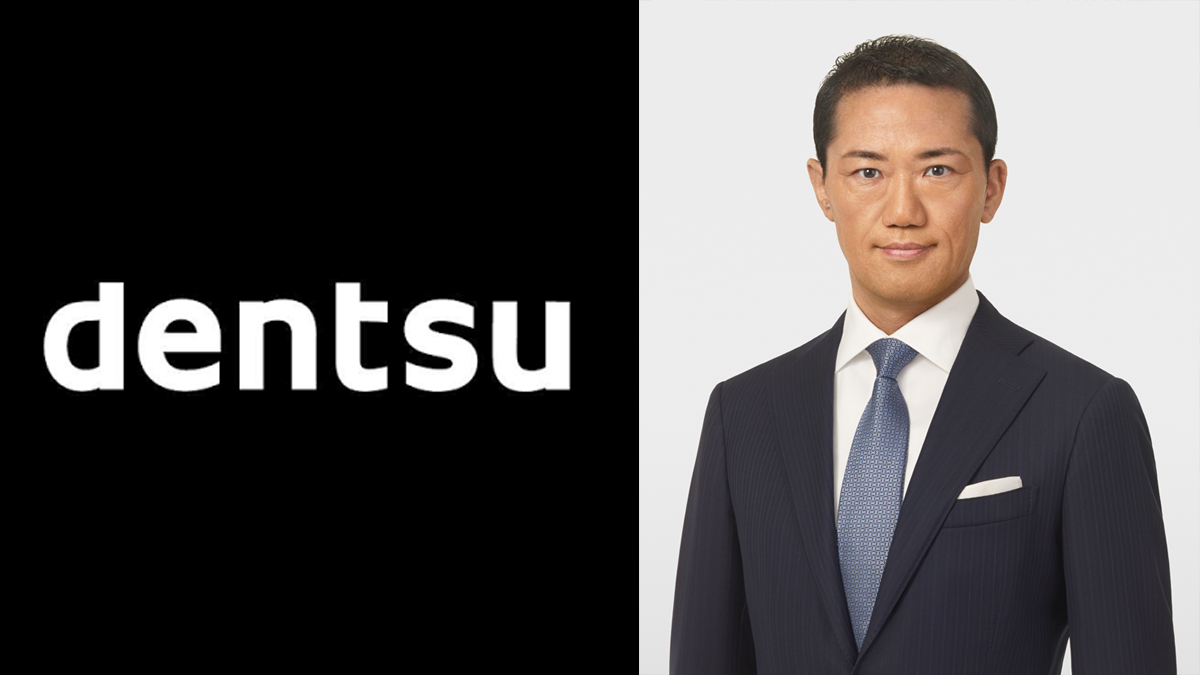
MUMBAI: Dentsu is putting execution where its mouth is. The Japanese advertising and marketing services group is making faster delivery, artificial intelligence and closer client relationships the centrepieces of its global transformation, as it looks to sharpen competitiveness and improve profitability across its international operations.
In a message accompanying the company’s first-half results, Dentsu Group president and global CEO Takeshi Sano said businesses can no longer rely on vision and ideas alone as technology, the economy and society change at an unprecedented pace. The ability to turn ideas into tangible outcomes and create measurable economic value, he said, will increasingly separate the leaders from the laggards.
Sano’s message points to a significant shift in how Dentsu wants to operate globally. Rather than treating creativity, media, data and technology as separate capabilities, the group plans to bring them together more closely to act as an integrated growth partner for clients.
A key part of the strategy is a revamped global management structure. Dentsu has reduced layers of management and placed a larger share of global leadership directly under the global CEO.
The aim is straightforward: fewer organisational hurdles and faster decision-making.
The restructuring comes as Dentsu seeks to rebuild the foundations of its overseas businesses, which Sano identified as a key management priority. The group wants to restore competitiveness and profitability in international markets while keeping its Japan business on a growth trajectory.
Sano also wants the strengths developed in Japan, including creativity, technology, insight and a deep understanding of consumers, to play a bigger role across the wider global organisation.
Artificial intelligence sits at the heart of the transformation. Dentsu plans to use AI, data and technology more extensively across its operations and client work, moving beyond experimentation towards practical business outcomes.
The broader ambition is to take greater end-to-end responsibility for clients, spanning strategy, execution and measurable impact.
That reflects a wider change in the advertising industry, where generative AI is rapidly reshaping everything from content creation and media planning to data analysis and campaign optimisation. For Dentsu, the challenge is to turn those technological capabilities into a competitive advantage rather than simply add another layer of tools to its existing business.
Under the new management structure, client-centricity is being positioned as Dentsu’s central operating principle.
Sano highlighted two priorities: agility and deeper collaboration. The first involves anticipating client needs and responding with greater speed and flexibility. The second involves bringing together the group’s different capabilities to create integrated solutions.
The idea is that integration should do more than simply combine services. By orchestrating creativity, media, data and technology, Dentsu aims to create solutions that are more valuable than what individual teams could deliver separately.
For clients, that could mean fewer hand-offs between specialist agencies and a more unified approach to solving business problems.
Sano also sees closer collaboration between Dentsu’s Japan and international operations as a source of competitive advantage.
The group plans to use the capabilities and client relationships developed in Japan to strengthen its global network, while encouraging talent to work across markets and disciplines.
The approach is intended to create greater synergy between businesses that have historically operated across different geographies and organisational structures.
Dentsu, which traces its origins to 1901, is therefore attempting to pair its long-established creative and client relationships with a more technology-driven operating model.
The transformation will ultimately be judged less by organisational charts and more by whether Dentsu can convert its AI investments, integrated capabilities and leaner structure into stronger client growth and better financial performance.
For Sano, the message is clear: in an industry being rapidly rewritten by AI and changing client expectations, having the right idea is only half the job. Making it happen, and making it count, is becoming the real competitive edge.






