Brands
Coca-Cola reshuffles Asia power centres, elevates Sanket Ray
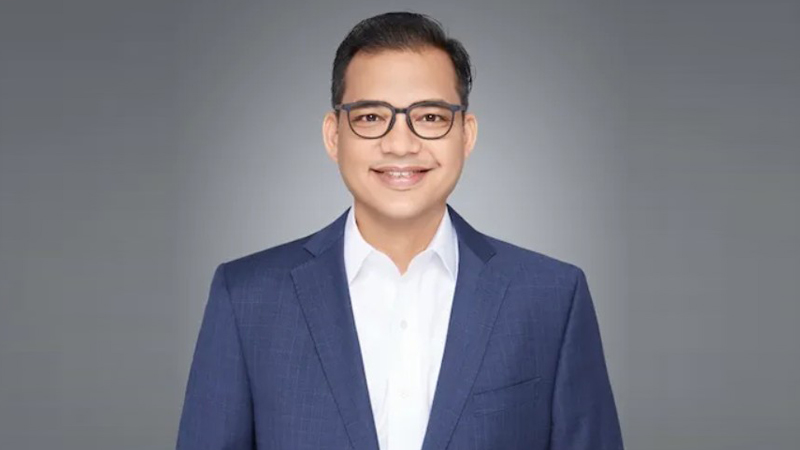
NEW DELHI: The Coca-Cola Company has handed Sanket Ray a sweeping new regional mandate, folding Asia’s biggest growth engines into his remit as the Atlanta group redraws its global power map.
From 31 March, Ray will add the title of emerging large markets lead to his current role as president, India and southwest Asia. The expanded brief gives him oversight of India and southwest Asia, greater China and Mongolia, and Japan and South Korea, placing some of the company’s most strategically critical markets under one command.
The shake-up comes as Henrique Braun prepares to take over as chief executive officer on 31 March, 2026, replacing James Quincey, who will stay on as executive chairman. Braun is currently executive vice-president and chief operating officer.
As part of the overhaul, Coca-Cola is carving the world into two new market groupings reporting directly to Braun, spanning Asia, Africa and the Middle East. One of these will be led by Ray, underlining the growing weight of India and its surrounding markets inside the company’s global portfolio.
The second grouping — covering Eurasia and the Middle East, Asean and the South Pacific, and Africa — will be run by Claudia Lorenzo, who also becomes president of the Eurasia and Middle East operating unit. Lorenzo is currently chief of staff to Quincey and a former president of the Asean and South Pacific operating unit.
“These changes are intended to help equip our organisation to handle the dynamic conditions we are seeing in markets around the world,” Braun said. “Sanket and Claudia bring deep regional experience and established leadership, which will be critical as we tap the immense growth potential across the markets they will lead.”
Coca-Cola is also creating a new chief digital officer role, bringing together digital, data and operational excellence. Sedef Salingan Sahin, now president of the Eurasia and Middle East operating unit, will step into the job and report to Braun.
Responsibility for digital strategy will move from president and chief financial officer John Murphy to Sahin, tightening the company’s grip on technology-led growth as it heads into its next phase.

Brands
Godrej clarifies ‘GI’ identifier after logo similarity debate
Says GI is not a logo, will not replace Godrej signature across products.
MUMBAI: In a branding storm where shapes did the talking, Godrej is now spelling things out. Godrej Industries Group (GIG) has issued a clarification on its newly introduced ‘GI’ identifier, addressing questions around its purpose and design following a wave of online criticism. At the centre of the debate were two concerns: whether the new mark replaces the long-standing Godrej logo, and whether its geometric design mirrors other corporate identities.
The company has drawn a clear line. The Godrej signature logo, it said, remains unchanged and continues to be the sole logo across all consumer-facing products and services. The ‘GI’ mark, by contrast, is not a logo but a corporate group identifier intended for use alongside the Godrej signature or company name, and aimed at stakeholders such as investors, media and talent rather than consumers.
The need for such a distinction stems from the 2024 restructuring of the broader Godrej Group into two separate business entities. With both continuing to operate under the same Godrej name and signature, the identifier is positioned as a way to differentiate the Godrej Industries Group at a corporate level.
The rollout, however, triggered a broader conversation on design originality. Critics pointed to similarities between the GI mark’s geometric composition and logos used by companies globally, raising questions about distinctiveness.
Responding to this, GIG said its intellectual property and legal review found that such overlaps are common in minimalist, geometry-led design systems. Basic forms such as circles and rectangles appear across dozens of brand identities worldwide, the company noted.
It added that the identifier emerged from an extensive design process and was chosen for its simplicity, allowing it to sit alongside the Godrej signature without competing visually. While acknowledging that elemental shapes may appear less distinctive in isolation, the group emphasised that the mark is part of a broader identity system that includes a custom typeface, sonic branding and other proprietary elements.
Following legal and ethical assessments, the company said it found no impediment to using the identifier, reiterating that the GI mark is a corporate tool not a consumer-facing symbol.
In short, the logo isn’t changing but the conversation around it certainly has.