Brands
Coca-Cola logs $102m India bottling gain as Q4 revenue edges up
Global revenue up 2 per cent to $11.8bn as India refranchising shapes bottling volumes

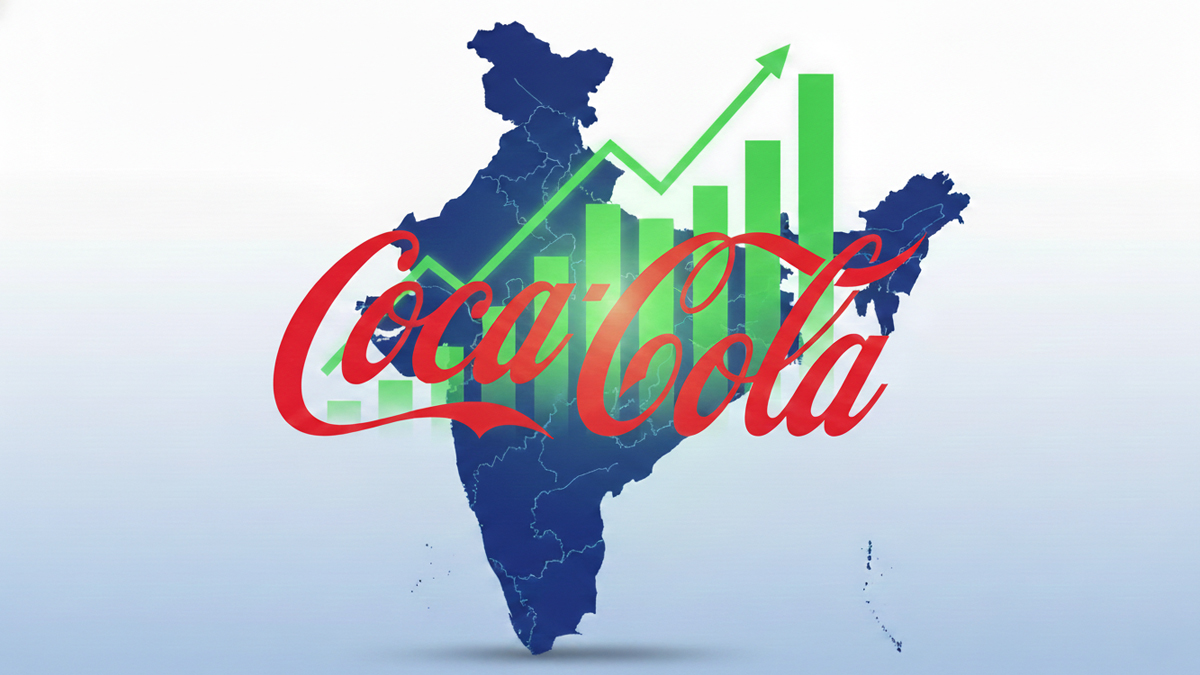
ATLANTA: If the year had a flavour, Coca-Cola’s 2025 would be classic cola with a splash of India. The beverage giant ended the year with steady global growth, a jump in profits and a tidy nine-figure gain from refranchising parts of its bottling business in the Indian market.
For the fourth quarter, Coca-Cola reported net revenues of $11.8 billion, up 2 per cent year on year, while organic revenues grew 5 per cent, powered by a 4 per cent rise in concentrate sales and a modest 1 per cent increase in price and mix.
For the full year, net revenues reached $47.9 billion, also up 2 per cent, with organic revenues climbing 5 per cent on the back of a 4 per cent improvement in price and mix and a 1 per cent increase in concentrate sales.
Profitability told a more dramatic story. Full-year operating income rose 38 per cent to $13.8 billion, while net income attributable to shareowners jumped 23 per cent to $13.1 billion. Diluted earnings per share for the year came in at $3.04, up 23 per cent.
The December quarter was more uneven. Operating income fell 32 per cent to $1.84 billion, largely due to one-off items including a $960 million non-cash impairment linked to the BODYARMOR trademark. Even so, comparable earnings per share for the quarter rose 6 per cent to $0.58.
Cash generation remained strong. The company reported $7.4 billion in operating cash flow for the year and $5.3 billion in free cash flow, or $11.4 billion excluding a one-time fairlife payment.
India adds a financial fizz
India figured not just in the growth narrative but also in the transaction line. During the year, Coca-Cola recorded a $102 million gain from the refranchising of bottling operations in certain Indian territories.
The company had already been reshaping its bottling footprint across markets, including multiple refranchising moves in India across 2024 and 2025 as part of a broader asset-light strategy.
The impact of those structural shifts showed up in the bottling investments segment, where unit case volume declined 6 per cent in the fourth quarter, largely due to a fall in India and the effect of refranchising activity.
Asia Pacific holds steady
Across the Asia Pacific region, unit case volume was flat in the quarter. Growth in water, sports drinks, coffee, tea and the core Coca-Cola trademark was offset by declines in sparkling flavours.
Operating income in the region dropped 36 per cent for the quarter, reflecting higher input costs and currency headwinds, even as the company said it gained value share in several markets during the year.
Dividend discipline and a cautious outlook
Coca-Cola continued to lean on its dependable dividend story, paying $8.8 billion in dividends during 2025 and extending its streak of annual increases to 63 years. Capital expenditure for the year stood at $2.1 billion, up 2 per cent.
For 2026, the company expects organic revenue growth of 4 to 5 per cent and comparable earnings per share growth of 7 to 8 per cent, suggesting another year of steady, if unspectacular, expansion.
For now, though, the takeaway from 2025 is simple: global growth may have been modest, but with profits up sharply and India contributing a $102 million refranchising gain, Coca-Cola’s financial year still had plenty of fizz.