MAM
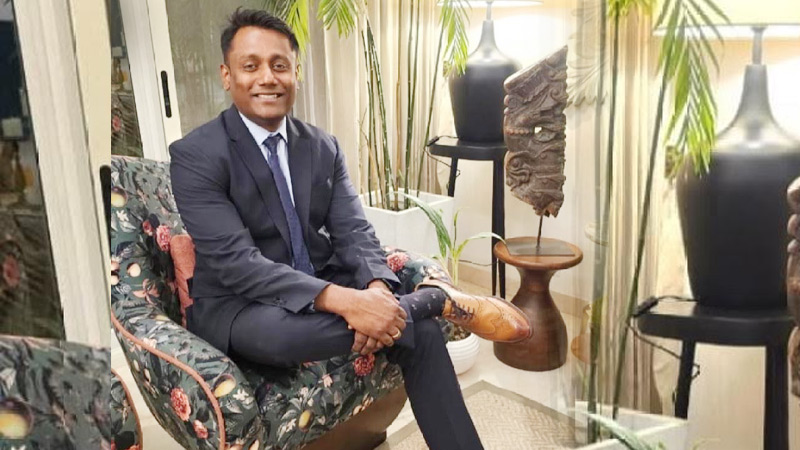
Binoy Prabhakar signs off from Hindustan Times Digital
NEW DELHI: Binoy Prabhakar has stepped down as chief content officer at Hindustan Times Digital, drawing the curtain on a nearly three-year stint leading the digital operations of the 100-year-old publisher.
In a note marking his final day on Tuesday, Prabhakar said it had been an “absolute honour” to helm the newsroom and that he was “immensely proud” of the work delivered alongside his colleagues.
Prabhakar joined Hindustan Times in April 2023, tasked with sharpening its digital strategy at a time when legacy publishers are racing to reinvent storytelling, products and revenue models for online audiences.
An entrepreneurial editor by training and temperament, Prabhakar brings over 24 years of newsroom experience across some of India’s most influential business and mainstream news brands. Before Hindustan Times, he served as editor at Moneycontrol from 2020 to 2023 and earlier led CNBCTV18.com. He also held the role of deputy executive editor for special projects at Network18.
His longest tenure was at The Economic Times, where he spent nearly 12 years in roles including senior editor and deputy editor of The Economic Times Magazine. Earlier in his career, he worked with The Indian Express, The Times of India and Hindustan Times in reporting, editing and copy desk roles.
In 2017, Prabhakar was a fellow at the Tow-Knight Center for Entrepreneurial Journalism in New York, a programme focused on building sustainable, innovation-led journalism.
Known for blending newsroom rigour with product thinking, Prabhakar has consistently championed new storytelling formats, digital-first journalism and innovative business solutions.
As Hindustan Times Digital looks to its next chapter, one of India’s most seasoned digital editors signs off, leaving behind a newsroom shaped for speed, scale and survival in a brutally competitive media economy.

AD Agencies
Omnicom Advertising Asia assembles new regional leadership team
The group is betting that a blend of creative talent, cultural intelligence and AI-driven data can help brands stay relevant in the world’s most complex marketing region.
Asia has long been the market that humbles the overconfident. Omnicom Advertising Asia is determined not to be among them.
The group announced on Monday the formation of a new regional leadership team of six senior executives, reporting to Sean Donovan, president of OA Asia. The structure is designed to help brands navigate a fragmented, fast-moving consumer landscape and build what Donovan calls “long-term cultural relevance” — the kind that survives a news cycle, a platform shift and an algorithm update.
The team
The six appointments span creativity, innovation, strategy, intelligence, business development and marketing, covering the full arc from brand idea to commercial outcome.
Peter Khoury takes on the role of chief creative officer for OA Asia, Melissa Daniels becomes chief innovation officer, and Emmanuel Sabbagh steps up as chief strategy officer. All three take on expanded regional responsibilities while retaining their leadership positions at TBWA\Singapore.
Andreas Krasser broadens his remit to chief client partner for OA Asia, continuing simultaneously as chief executive of OA Hong Kong. Ellie Brocklehurst joins as chief growth and marketing officer, drawing on her previous stint as chief marketing officer for Asia at TBWA. Rounding out the team is S. Subramanyeswar, known in the industry as Subbu, who was appointed chief knowledge officer for OA Asia alongside his role as chief strategy officer of OA India, a position that followed the close of Omnicom’s acquisition of IPG.The pitch
The team will work in close collaboration with leadership across TBWA, McCann and BBDO throughout the OA Asia network, with a brief to cut through the noise of today’s consumer landscape and deliver creative solutions that, in the group’s framing, prove short-term performance while building long-term brand health.
Underpinning the new structure is OMNI, Omnicom’s AI-driven marketing intelligence platform. The platform draws cultural intelligence from across the group’s agency brands, with the stated aim of ensuring that data is not merely accurate but grounded in context — reflecting how people actually think, feel and behave, rather than how a spreadsheet might prefer them to.
Donovan frames the proposition in straightforward terms. “Asia is one of the most complex regions for marketers, but the opportunity here is immense,” he says. “We’ve built a team that simplifies the landscape, combining top talent with an Asia-first, future-focused mindset, and unprecedented access to resources.” The model, he adds, is designed to be plug-and-play, responding to client needs in collaboration with agencies and markets across the region. “More than expertise, it’s about giving clients the perspective, ambition and access to think beyond the next campaign.”
The new structure also strengthens connections across the broader Omnicom family, including its media, production and PR operations — a post-acquisition suite of capabilities that the group is evidently keen to deploy as a single, coherent offering.
In a region where consumer attention is fractured across dozens of platforms, languages and cultures, the real test will not be the org chart. It will be whether six smart people with the right tools can actually make brands matter. Omnicom is putting its money on yes.