Digital
Bhaskar breaks the news and the numbers with 2.1 crore MAUs on poll day
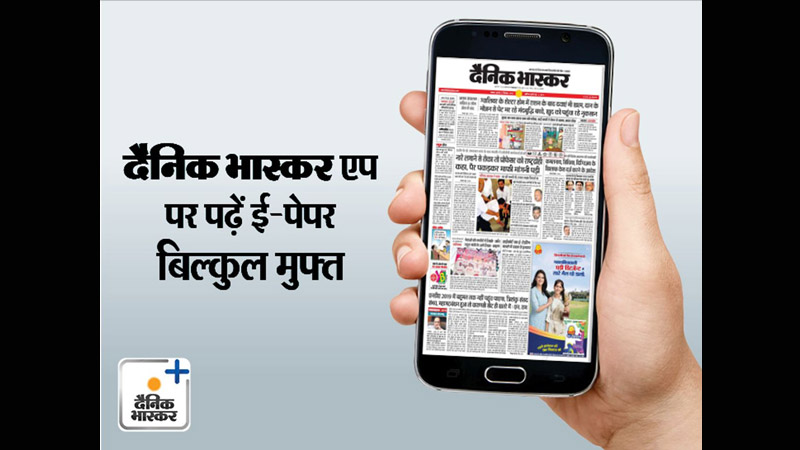
MUMBAI: When Bihar went to the ballot, India went to the Bhaskar app. Election Result Day on 14 November didn’t just reveal political winners, it also crowned a digital one, with Dainik Bhaskar registering a staggering 2.1 crore monthly active users (MAUs) nationwide and clocking an industry-leading 21 minutes of average time spent per user, the highest among all news apps in the country.
For India’s largest-circulated newspaper group and one of the biggest Hindi and Gujarati digital news platforms, the day marked a decisive win in the battleground of credibility, speed and engagement, the very pillars that shape election-day news consumption.
Driving this surge was a full suite of bespoke, high-engagement election features built specifically for the Bihar polls. The app rolled out everything from deep-dive programming on Bihar’s political history to second-by-second results updates, an AI-powered election chatbot, Bhaskar’s Reporter Poll, interactive quizzes, short reels, live video streams, a constituency-wise results map, a candidate suggestion survey and even a civic-issues portal.
The result? Not just page views, but stickiness, the kind every digital news brand chases, but few achieve at scale.
Dainik Bhaskar Newspaper Group promoter director Girish Agarwal summed up the moment with clarity, “When India and Bihar wanted credible, real-time information on elections, they turned to the Dainik Bhaskar App and they stayed with us for an average of 21 minutes. This unparalleled engagement positions Dainik Bhaskar App as the most powerful and effective platform in India at scale.”
As political tides shifted in Bihar, so did the digital scoreboard and on this front, Bhaskar didn’t just break the news. It broke the numbers too.

Digital
India leads global adoption of ChatGPT Images 2.0 in first week
From anime avatars to fantasy covers, users turn AI visuals into culture
NEW DELHI: India has emerged as the largest user base for ChatGPT Images 2.0, just a week after its launch by OpenAI, underlining the country’s growing influence on global internet trends.
While the tool was introduced as an advanced image-generation upgrade within ChatGPT, Indian users are quickly reshaping its purpose. Instead of sticking to productivity-led use cases, many are embracing it as a creative playground for self-expression, storytelling and online identity.
From anime-style portraits and cinematic headshots to tarot-inspired visuals and fictional newspaper front pages, the model is being used to create highly stylised, shareable content. Features such as accurate text rendering, multilingual prompts and the ability to generate detailed visuals with minimal input have helped drive rapid adoption.
What sets the latest model apart is its ability to “think” through prompts, generating multiple outputs and adapting to context, including real-time web inputs. But the bigger story lies in how users are engaging with it.
In India, trends are already taking shape. Popular formats include dramatic studio-style lighting edits, LinkedIn-ready headshots, manga-inspired avatars, soft pastel “spring” aesthetics, AI-led fashion moodboards, paparazzi-style visuals and fantasy newspaper covers. Users are also restoring old photographs, creating tarot-style imagery and experimenting with futuristic design concepts.
Local flavour is adding another layer. Prompts such as cinematic portrait collages and Y2K-inspired romantic edits are gaining traction, blending global aesthetics with distinctly Indian internet culture.
The surge reflects a broader shift in how AI tools are being used in the country, moving beyond utility to creativity. As younger users, creators and social media enthusiasts experiment with new visual formats, AI-generated imagery is increasingly becoming part of everyday digital expression.
If early trends hold, ChatGPT Images 2.0 may not just be a tech upgrade but a cultural moment, giving millions a new visual language to play with online.