
Sports
Kalli Purie unveils 9-point AI charter for news media at summit
India Today chief calls for fair value, transparency and reciprocity as industry leaders back framework.


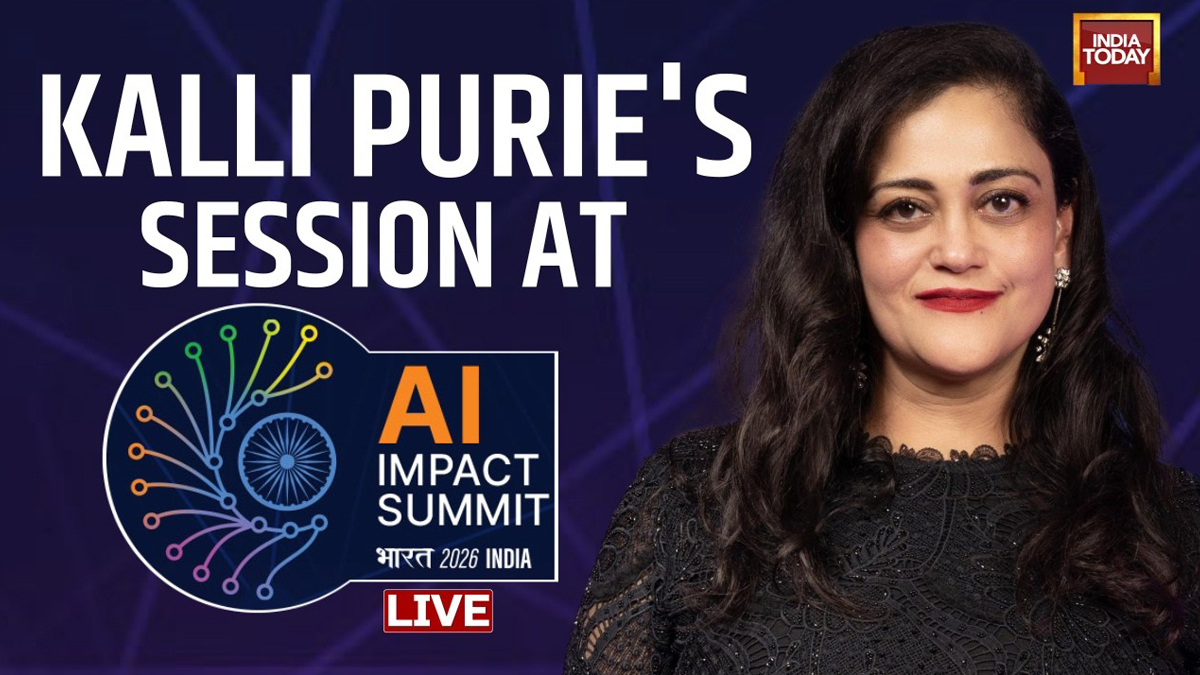
NEW DELHI: When algorithms start writing the news, who gets the byline and the bill? At the India AI Impact Summit in New Delhi on Monday, India Today Group vice-chairperson and executive editor-in-chief Kalli Purie served up a sharp reality check with a nine-point charter aimed at keeping journalism human even as artificial intelligence races ahead.
Speaking during a Digital News Publishers Association session titled “AI and Media, Opportunities, Responsible Pathways, and the Road Ahead” at Bharat Mandapam, Purie warned that without guardrails, AI could turn trusted reporting into free fuel for large language models, quietly eroding public discourse in the process.
“Fair value for journalistic content is non-negotiable. We need transparency in how AI systems digest and metabolise news,” she declared, laying out a framework that puts credible journalism back at the centre of the conversation.
Her nine-point charter calls for:
- Fair value and transparency on how news is used by AI
2. Traceability and attribution as a democratic principle
3. Recognition of journalism as a public good
4. Rewarding stories that deliver real social impact
5. Proper valuation of verified content from credible institutions
6. Severe penalties for AI hallucinations
7. Ending the reward-punishment asymmetry between legacy media and social platforms
8. Treating citizens’ attention as a rare, finite resource
9. Reciprocity from the “Magnificent Seven” tech giants, if they harvest attention and content, what are they giving back?
Purie was quick to clarify that the India Today Group isn’t anti-tech. The organisation has been using AI for over two-and-a-half years AI anchors, voice cloning, AI-driven storytelling but always with what she calls the “AI sandwich”, human intent at the start, AI as a helpful middle layer, and a human editor making the final call.
“We love technology,” she said. “But accountability for AI must have a human name attached to it. We don’t want to become one biscuit in an AI cookie-cutter world. We want to tell our stories, not AI stories.”
She also took aim at what she termed “digital imperialism”, pointing out that global platforms often treat Indian media differently from their Western counterparts. “Indian reporters go to the ground, invest resources and take risks to bring original stories. Influencers and AI summaries should not eat out on that labour for free,” she argued, pushing for paid licensing of original journalism.
The session drew heads of major Indian media houses The Hindu, Times of India, Amar Ujala, Dainik Bhaskar and the charter quickly found broad support. Panellists agreed on the need for structured talks between publishers and tech platforms, stressing reciprocity, attribution and commercial fairness. A recurring worry, if AI summaries keep siphoning traffic, how do credible newsrooms keep the lights on?
The room reached a shared conclusion, AI offers huge potential for media, but only if paired with real responsibility. As Purie put it, “If journalism is hollowed out now, the cost of decolonising later will be far higher.”
With industry leaders already pledging to shape the framework formally, Monday’s session may prove a turning point, one where news stays news, not just another data point for the machines.






