MAM
Auto industry steps on the gas to lift festive season sales

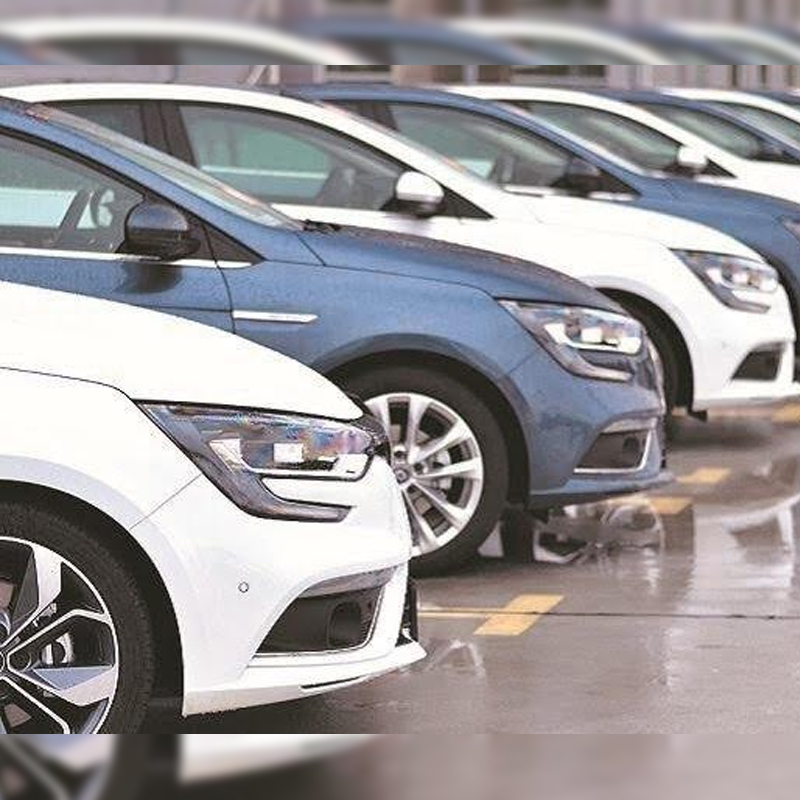
NEW DELHI: India's automobile industry has had a bumpy ride these last few years. Add a global pandemic on top of that and the sector was completely stalled. However, with the onset of the festive season, the industry finally seems to be on the road to recovery.
Factors like consumers shifting to personal mobility (due to Covid risk), new product launches, increase in bookings and enquiries have raised the pent-up demand among buyers. The month of August and September has seen an improvement in retail volumes with sales picking up marginally. The rebound in auto sales is an important barometer that economic recovery is on a progressive track. The festive period has helped boost the sentiment across demographics.
Traditionally, the industry has always been optimistic around the Diwali-Dussehra period, and this year too, car and two-wheeler makers are busy unveiling new products, giving discounts on service and older models. The recent surge in demand has led companies to focus more on their marketing strategies and get the best possible return out of it.
Maruti Suzuki India executive director, marketing and sales Shashank Srivastava held the view that car buying is a discretionary purchase and therefore is influenced hugely by sentiment. "Festival season always brings in positive sentiment and therefore sales improve during this time. We saw that positive jump during the Onam festival in Kerala. We are optimistic about the festive season sales. A caveat here is that this time there could be headwinds because of Covid2019. So, our optimism is a bit muted because of this. But our dealers are well-prepared to take care of consumer demand and have replenished their stocks which were made possible by the improved production levels in September,” he elaborated.
There’s little doubt that this year’s festive season will be crunch time for the auto industry, with customers looking to make big-ticket purchases post the lockdown, shares Vivek Srivatsa, head of marketing, passenger vehicles business unit at Tata Motors head.
“Despite the slowdown caused by the pandemic, our market share has already doubled after the first quarter of this financial year to 9.5 per cent, as compared to the number at the end of the last fiscal year. Tata Motors was the only carmaker to see a visible growth of 10 per cent in passenger vehicle sales between April and September 2020, at 69,366 units,” said Srivatsa.
Post the festive season, auto players will have to see how the demand sustains and the impact of underlying macro-economic factors. “We continue to witness a robust recovery and our supplies are being steadily ramped up to cater to the growing demand, despite industry-wide challenge in the supply chain.”
In order to capitalise on the crucial festive period sales, a Volkswagen spokesperson said the car manufacturer has rolled out 360-degree campaigns extending customised offers to customers.
“It is definitely a crucial spell for the industry and us. There has been an increase in the uptake for accessible individual mobility as consumers prioritise health, sanitization, and hygiene, steering them away from shared mobility,” the spokesperson added.
Yamaha Motors deputy general manager Vijay Kaul also explains that the auto category has seen bigger growth every in this golden quarter. “We are hopeful that retails will be better in this period, primarily because of two reasons. Natural festive demand and fear of public transport due to covid19. This is seen by the upward trends in search volume for the auto category and sales numbers compared to pre-covid.”
This year, the festive season happens to coincide with the IPL, and auto brands are keen to make the most of this golden opportunity. Since the unlock phase, they have trotted out aggressive marketing campaigns to fire up flagging consumer demand.
For example, Hyundai’s launched a ‘thank you’ campaign with the anthem Haq Hai Hamara, “to honour the spirit of mankind.” Similarly, TVS Motor roped in Amitabh Bachchan and MS Dhoni for a new corporate brand creative. Brands like Honda (cars), and Hero MotoCorp released print ads to announce offers. Recently, Volkswagen rolled out ‘Volksfest 2020’ festive promotion to introduce the red and white edition of the Polo and Vento models.
Srivatsa shared that before the pandemic the focus was equally spread across mediums. But given the current scenario, digital is leading the way as that is where most consumption of content is taking place.
This year, Tata Motors is betting big on the IPL, building its marketing strategy across TV and digital medium around the cricketing extravaganza.
“The former (TV) should help us with a wide reach amongst the audience and the latter (digital) will help us in engaging with the customers by giving them an innovative and immersive experience. We are looking at multiple engagement opportunities with the audience and players across mediums,” explained Srivatsa.
Kaul also defines that digital has taken a leap. “We are currently betting on the two strong medium TV & Digital. Within digital, we are highly skewed towards performance. That’s the need of the hour to get the call for action.”
Volkswagen echoed the sentiment, saying that digital and online media communication are definitely key in its media planning. “Traditionally, we have focussed 60 per cent of our ad spends on traditional mediums of TV, Print and OOH while 40 per cent on digital. Now, we are balancing our traditional and digital media spend equally and believe that the media spend on digital will increase in the upcoming years.”
Dentsu Impact president Amit Wadhwa also agreed that the festive season should certainly be a big step towards pushing up retail sales for the industry. “In fact, we can see it happening across both four-wheelers and two-wheelers brands. The hope is that it brings the same cheer back to some other categories too,” he said.
While on the subject, which medium are advertisers spending the most on, and is the ad revenue cycle geared up for the festive season?
Wadhwa explained that business performance is directly proportional to the ad spends/ revenue, so this certainly will reflect on that front too. “Digital has seen a significant upswing in time spent by consumers – and hence, bucks spent by advertisers, despite the high affinity for TV. What is heartening to see is the traction that even print and outdoor is getting with life getting somewhat back on track.”
In the past few months, digital buying has emerged as a new trend among auto buyers due to its bankability. For instance, Tata Motors launched an online portal called ‘Click to Drive’ to connect with all its dealerships across the country. The end-to-end digital sales platform allows the customer to make the purchase from the safety and the comfort of their homes.
However, with the gradual lifting of the lockdown, customers are once again heading back to showrooms.
The Volkswagen spokesperson shared that the brand is experiencing an increase in footfalls at its offline locations, while online platforms are also registering strong growth and demand. When shopping for a car, it’s natural for prospective buyers to visit a showroom to touch and feel a vehicle before finalizing the purchase. However, now the brand has observed a significant shift in the buying habits of consumers, as people are learning about the product online and then setting-up virtual discussions to understand the vehicle with the salesforce team.
Clearly, the auto industry is showing signs of recovery and banking on the festive season to deliver good cheer in the form of exceptional retail sales. While significant challenges lie on the road ahead, for now, the only mantra automakers need to follow is 'drive on.'