MAM
As workplaces grow more chaotic, calm becomes leadership’s quiet power

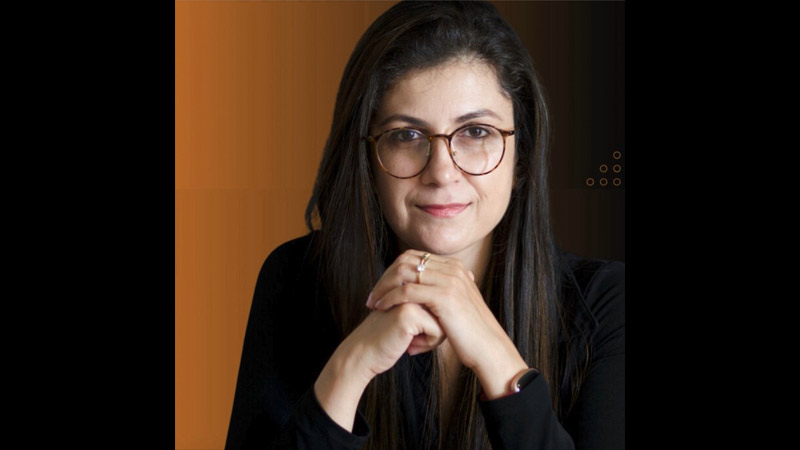
MUMBAI: In an era defined by constant pressure and perpetual urgency, a growing body of leadership thinking is challenging an old assumption, that speed equals strength. According to leadership coach and media veteran Shailja Saraswati Varghese, calm, not urgency, is fast becoming a competitive advantage.
For years, modern leadership has rewarded velocity. Rapid responses, instant decisions and an always-on posture were treated as markers of control. In boardrooms and war rooms alike, urgency passed for effectiveness.
That model, Varghese argues, is breaking down.
“When pressure becomes sustained rather than episodic, urgency starts to erode judgement,” she says. “Calm, on the other hand, preserves range, the ability to see options, patterns and consequences that disappear when adrenaline takes over.”
Varghese, who works at the intersection of inner mastery, leadership and storytelling, has spent over 25 years building large-scale content and partnership ecosystems across global media and advertising giants including Omnicom, WPP, Discovery Networks, National Geographic–FOX and Zee. Today, through her platform Unstoppable Network, she focuses on a different question altogether: what sustains leadership impact when growth, titles and visibility are no longer enough?
Her answer is deceptively simple and quietly radical.
“The calmest people in the room often understand the system best,” she observes. “Not because they’re disengaged, but because they’re regulated.”
This regulation, she stresses, is not passive composure or emotional detachment. It is an active, trained capacity that allows leaders to absorb before responding, to listen while others rush to speak, and to hold perspective when noise accelerates.
In high-pressure environments, the human nervous system defaults to threat responses: fight, flight or freeze. While these reactions may offer short-term momentum, they narrow cognitive bandwidth over time. Decision-making becomes reactive. Complexity is flattened. Nuance is lost.
“Urgency creates the illusion of movement,” Varghese says. “But under sustained stress, it often leads to poor calls made faster.”
This insight is increasingly resonating with senior leaders navigating volatile markets, organisational churn and relentless scrutiny. As global businesses grapple with geopolitical uncertainty, technological disruption and cultural change, the ability to remain steady has become a differentiator.
Leadership, in this framing, is no longer about outpacing the chaos, but about not being consumed by it.
Varghese’s work with founders and CXOs focuses on this inner capability, developing clarity under pressure and aligning decisions with values rather than impulse. An ICF-trained, PCC-level mindful self-leadership coach, she draws on long-standing practices in mindfulness and breathwork alongside narrative-led learning formats.
Her flagship podcast, Unstoppable Woman, now in its fourth season and ranked among India’s Top 100 on Spotify in its inaugural year, reflects this philosophy. The conversations move beyond visible success to explore the inner architecture of leadership, including identity, resilience, allyship and becoming.
This emphasis on inner state is rooted in Varghese’s earliest professional training as a radio drama artist with All India Radio, where voice, presence and listening were central long before digital platforms dominated communication. That foundation, she says, continues to shape how she designs leadership experiences today.
At its core, her argument reframes calm as a capability rather than a personality trait.
“Composure isn’t about being naturally unflappable,” she notes. “It’s a leadership skill that can be built, especially under pressure.”
As organisations rethink what effective leadership looks like in an age of constant acceleration, this perspective offers a counterintuitive edge. Speed still matters. But without steadiness, it becomes noise.
The real question, Varghese suggests, is not how fast leaders move when pressure rises, but what happens to their pace, judgement and presence when it does.
In today’s leadership landscape, staying calm may be the most strategic move of all.






