ITV News
How a news website stole the IPL from Sony and Google
The night a 36-year-old CEO, a fake breakdown and a decimal point rewrote Indian media history.


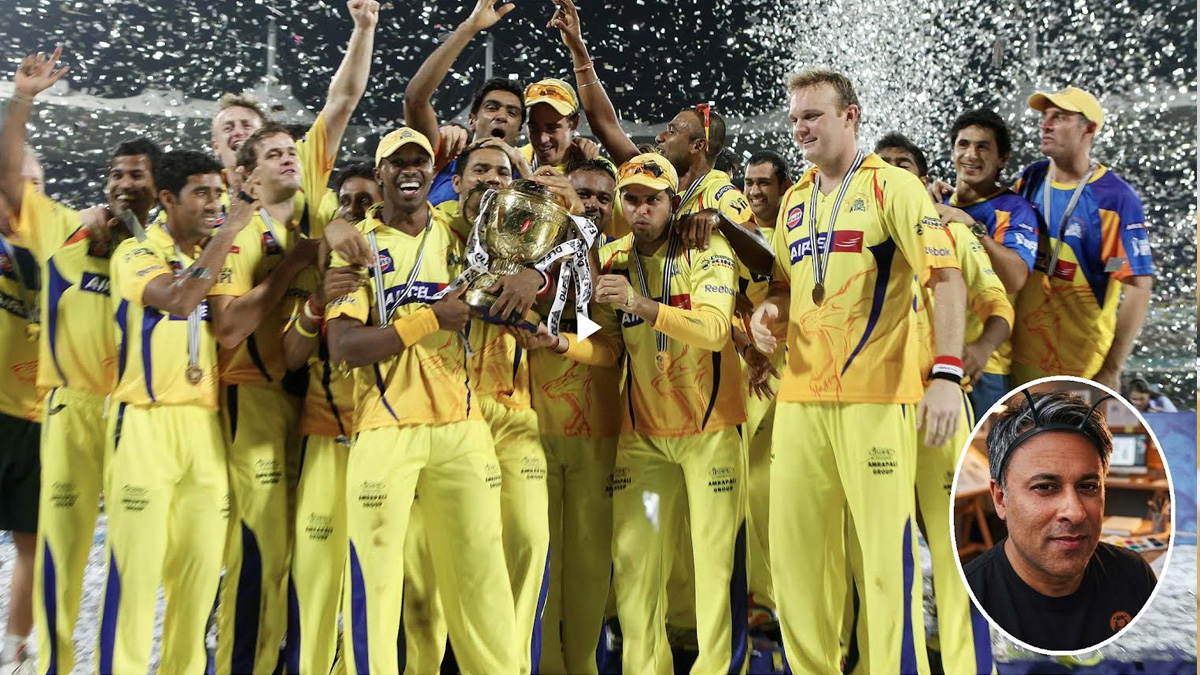
MUMBAI: In the spring of 2011, a 36-year-old chief executive with a two-year-old mandate and a team nobody had heard of walked into a Chennai hotel and walked out with the most coveted sports media rights in India. He beat Sony. He beat Google. He did it in six hours, on the back of a bluff, a rogue auto-rickshaw and a relatively small amount of Rs 6.6 crore. .
That man was Rishi Khiani, founder of venture studio Antfarm and then CEO of Times Internet. This week, he took to LinkedIn to recount in his own words exactly how it happened, with the full narrative published on the Antfarm site. The prize, he wrote, was the global digital, broadcast and radio rights to the Indian Premier League, won at Rs 261.6 crore, a sealed bid submitted with ten minutes to spare.
More than a decade on, Khiani looks back on that night in Chennai as the most instructive episode of his professional life. Not because Times Internet won. But because of how it won.
“In India, cricket is not a sport, it is a religion,” he recollects. “If you want to build an audience that comes back every day, you do not chase attention you go and stand where it already lives. In this country, attention lives at the crease.”
The rights had come loose in the chaos of the post-Lalit Modi era. The BCCI had torn up its contract with marketing agency World Sport Group. The agency dragged the board to the Supreme Court. The court cleared a re-tender only on the Friday, forty-eight hours before the auction with the season due to start April 8. Suddenly the most valuable property in Indian media was back on the table, and there was almost no runway.
Vineet Jain, who owns Times, sent Khiani to Chennai to “monitor” proceedings. Not to bid. To watch.
“He gave me half a permission,” Khiani narrates. “But he did the one thing that mattered: he gave me the room to make the call, and the understanding that I would deal with the fallout later. That is not a mandate. It is something better.”
Sony, which held the India television rights and had always coveted digital, had been in early talks with Times. The two sides were negotiating a partnership arrangement. Then, minutes before Khiani boarded for Chennai, the Sony CEO called. They were going with Google after all, he said mostly to keep Google from taking the prize alone. Nothing to worry about. They would quietly pass along their number so the two sides did not collide.
Somewhere over central India, the penny dropped. “I had just been cut out by the people I had spent weeks negotiating with,” he recalls, “and nobody back home knew yet.” Half a permission, a partner who had turned into a rival, and two hours to sit with it at 30,000 feet. By the time the wheels touched the tarmac in Chennai, Plan B was already running.
What followed was a sprint that Khiani recounts with the measured clarity of a man who has replayed every hour of it many times since.
He pulled in the people he trusted Harshavardhan from his core team, Pandurang Nayak on technology and infrastructure (today a senior leader at AWS), and Ranbir Singh, a young lawyer about to be handed the biggest night of his career. Newly arrived at Times Internet was Satyan Gajwani, who would eventually run the entire Times Group. Khiani also rang Yannick Colaco at rival broadcaster Nimbus, a partner they would need for the overseas television piece bundled into the tender. Assembling a bid of this complexity normally takes weeks. He had six hours.
“Every serious bidder was in town, which made the secrecy harder,” he recollects. “The sealed bids were due by nine the next morning.”
An action room was set up next to Khiani’s. The team broke into building the submission thousands of pages of documentation, structures, guarantees while a hard negotiation with Nimbus ran in parallel. Ranbir, the youngest in the room, spent the night drafting clauses for a global rights deal. Pandurang costed out streaming infrastructure for a tournament Times did not yet own. At 2 am, the Nimbus deal was struck. The head of the company flew in to shake hands and sign.
Sony still had to be managed. Their lawyer had been calling all night, and if they sensed a rival bid was being assembled next door, the morning would have gone very differently.
So Khiani walked into the common room where cricket’s who’s who were drinking late. And he had a breakdown on purpose.
“I let them watch me be disappointed, then disgusted, at the back-room double cross,” he says. “I acted like we were finished, like the relationship was over and there would be consequences across everything we did together.”
They laughed. Told him to go sleep it off. And as they calmed the upset young man down, they told him their number. He left, dropped the act at the door, and went straight back into execution.
The easy move would have been to take Sony and Google’s figure and pad it by ten percent. Khiani chose not to. “They had every reason to manage me,” he recounts, “and I was not going to stake the whole thing on a figure passed to a kid they were busy calming down.” So he went with the number his own math had already landed on: Rs 261.6 crore. The point six was deliberate, he did not round it, because if the other side had settled on a clean round number, that small tail would carry Times over the top.
The logic behind the figure was equally precise. Google had no real mobile ecosystem in India and had left mobile out of its valuation entirely. Times had not. “This was before 4G, the smartphone had barely arrived,” Khiani reminisces. “The explosion had not happened yet, and we were betting on the near-certainty that it was about to. Google priced the property at what it was worth to Google. We priced it at what it was worth to us and it was more.”
The contracts were printed at half past four in the morning. By 8:35 am the sealed envelopes were ready. The taxi never showed. The team crossed the road, pushed Rs 500 into the hands of an auto-rickshaw driver, and he drove like the wind. They made it to the ITC Park Sheraton with ten minutes to spare.
The bids were opened before independent observer and former Chief Justice Mukul Mudgal, with the IPL governing council watching. Sony and Google’s envelope opened first: Rs 255 crore comfortably above the number they had quietly passed to Khiani the night before.
Then Rs 261.6 crore.
“For a second the room went completely silent,” Khiani recollects. “And then my team let it out, a shout I can still hear.”
The industry reacted with barely concealed disbelief. Indiatimes was a news website. It had no business winning something this large. Vineet Jain, who had sent Khiani to Chennai to watch, woke up to a rather different morning than expected.
The win came wrapped in a lawsuit: the court ordered payment into escrow, with the BCCI permitted to draw only what the old contract would have paid until the cases were settled. Times had roughly forty days to build the streaming, monetise the inventory, and sell the overseas television and radio rights it had just acquired.
Two things saved them. Google had been so certain it would win that it had pre-sold much of the advertising the year before. That inventory did not vanish when it lost. So Khiani did the thing nobody expected: he partnered with Google to stream off YouTube’s own infrastructure, sub-licensing the live feed onto branded Indiatimes pages. For the first and only time in YouTube’s history at that point, the platform was handed to a third party to sell. All India Radio carried commentary on the audio rights. Seventy-four matches, live to most of the world.
“We turned the rival we had just beaten into our distribution,” Khiani says. “It became the biggest live streaming event the country had seen.”
When the IPL rights came back to market in 2022, the full package crossed six billion dollars. The digital rights alone fetched Rs 20,500 crore. Times Internet won the overseas packages again Middle East, North Africa and the United States. The group has since come in as co-owners of Royal Challengers Bangalore, who won the 2026 IPL title this very season. Satyan Gajwani, who had been in the war room that night in Chennai and now runs the Times Group, texted Khiani about it joking, Khiani says, that it was all his fault.
“He was not entirely wrong,” Khiani says with a laugh. “The whole journey started with one bid a little internet company had no business making because we were crazy enough to believe we could.”
Then he turns serious, the way people do when a memory still means something.
“A young team, given permission to make the call and the room to deal with the consequences, will move at a speed an incumbent cannot match. Not because they are smarter. Because they have nothing to protect and everything to prove.”
Sony and Google arrived in Chennai with chequebooks, reputations and the absolute certainty they could not lose. They thought they were managing a kid. They were not watching the war room next door.
That Rs 6.6 crore tail on a sealed bid, a small sum as compared to the overall amount and trusting his gut made all the difference. Victory comes to those who take the risk, even if they are up against giants. Rishi simply showed how it can be done.
Note- The cover Photo is courtesy the IPLT20 website and Rishi’s picture is courtesy the Antfarm website.