DTH
“We are aiming to get digital users to switch to our OTT platform”: RC Venkateish

At a time when digitization of cable television is throwing up a major challenge to direct-to-home (DTH) operators, Dish TV has reported a 55.2 per cent higher profit after at Rs 54.21 crore in the quarter ended 30 June. It is the first DTH company to report a profit after tax, also adding 390,000 subscribers, which was only slightly lower than the figure of 404,000 in the fourth quarter of 2014-15. Dish TV now has 13.3 million subscribers. The ARPU is more or less the same, but subscriber acquisition costs are running at Rs 1750 per subscriber.
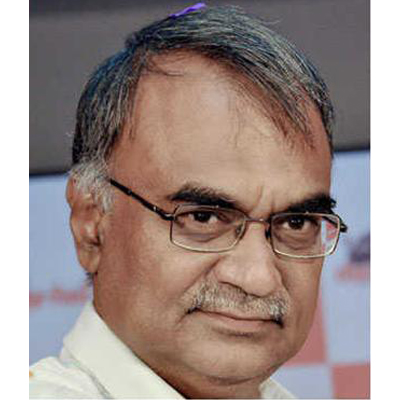
In an interview with Indiantelevision.com, Dish TV CEO RC Venkateish spoke of the work that had gone into achieving this success.
Excerpts:
To what do you attribute your success in reaching out to more subscribers and coming up with an impressive revenue figure?
I feel that the credit goes to better marketing strategies and the youth-based Zing, which has been lapped up by the people because of the local content. In fact, Zing has also succeeded because there is greater emphasis on the language of the region where it is beamed with local content and programming.
Can you throw some light on the plans to launch Zing in the Kerala market?
Zing has been present in the Bengal, Tamil Nadu, Andhra Pradesh and Maharashtra. And we are now expanding and moving to Kerala with Malayalam content.
Dish TV’s subscription figures are somewhat lower than those in the last quarter of 2014-15. Comment.
Well, the effort is to consolidate and grow. Dish expects to add 1.5 to 1.7 million subscribers this year. Do not overlook the fact that last year we had got 332,000 subscribers in the same period (first quarter of 2014-15). The gradual shift to digitization will also help, and therefore the concentration at present is on Phase III and Phase IV.
But the ARPU shows an increase of only one rupee over the previous quarter, ending up at Rs 173 a month.
The ARPU is always typically low in the first quarter but picks up later.
The Government is emphasizing on indigenous set top boxes. Are you installing local STBs for your subscribers?
Dish is currently getting these mostly from Korea though every effort is being made to get good quality indigenous STBs.
Dish TV also has a tie-up with Kolkata Knight Riders. How much of the budget goes into marketing and advertising?
The players wear Dish TV armbands, and the tie-up gives us the opportunity to have in-stadia advertising through boards etc.
I would not say budget, but around 3.5 per cent of the topline sales go into advertising and marketing. The advertising is not done merely through Zee’s own channels but also through other channels, digital platforms, hoardings, newspapers and FM channels.
Can you tell us something about your future plans?
We are working on our over-the-top (OTT) platform – DishOnline and aiming to get digital subscribers on to this platform.
There has been some tirade against local channels run by DTH operators. Comment.
We do not have a local channel. But the channel that opens as one switches on Dish is aimed only at advertising various schemes of the platform and modes of payment.