
DTH
Tata Play turns 20, Harit Nagpal pens thank-you note to families
From Tata Sky to Tata Play, the DTH pioneer completes two decades of bringing homes closer, one screen at a time


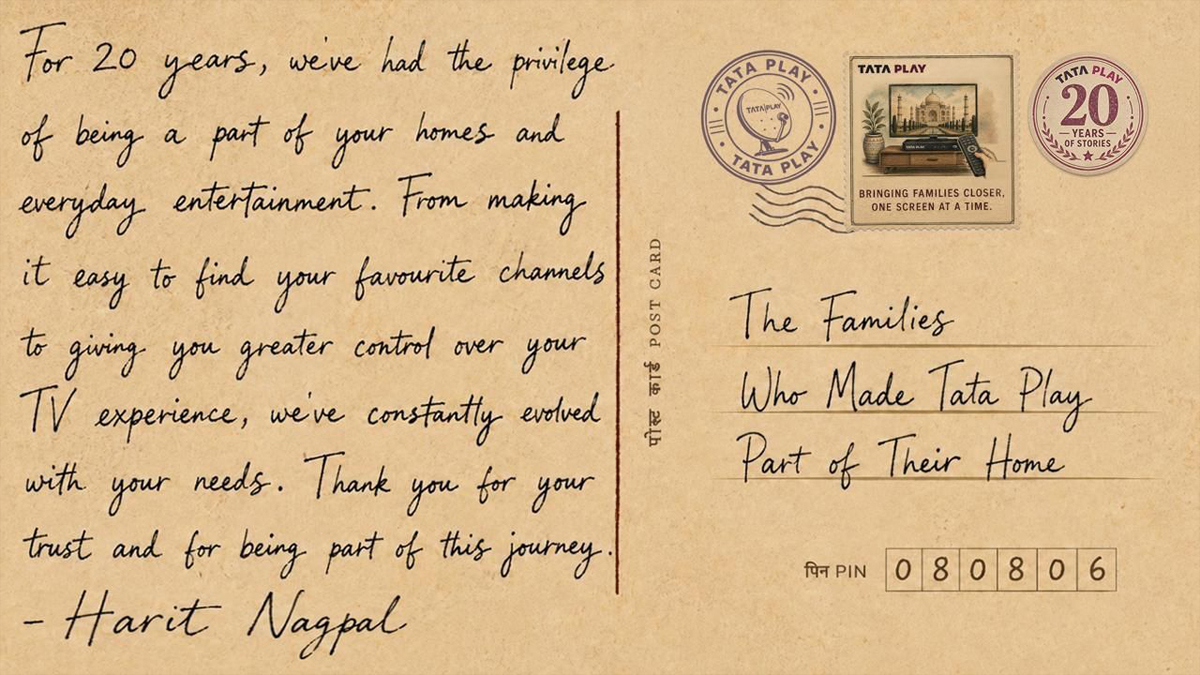
MUMBAI: Twenty years is a long innings in any business, longer still in Indian television, and Tata Play is marking the milestone with a flourish. The company, which lit up Indian living rooms as Tata Sky back on 8 August 2006, has completed two decades since its DTH operations commercially launched, and chief executive Harit Nagpal marked the occasion with a handwritten postcard thanking the families who made the platform part of their homes.
The nostalgia is well earned. Incorporated in January 2001 as a joint venture between Tata Sons and Network Digital Distribution Services, the company that popularised “Isko laga dala to life jingalala” went on to become India’s largest DTH provider. The rebrand from Tata Sky to Tata Play in January 2022, engineered with London agency venturethree, marked a deliberate pivot from a satellite broadcaster to a full-spectrum content aggregator spanning live TV, broadband and OTT, a repositioning that has aged well as viewing habits fragmented across screens.
The scale is hard to argue with. Tata Play still commands the largest slice of India’s pay-DTH market, operates across 36 transponders, the highest in the country, and beams down more than 690 channels including upward of 110 in high definition. Its Binge Combo strategy, bundling linear television with Netflix, Apple TV+, Amazon Prime Video, Disney+ Hotstar and Zee5 on a single bill, remains one of the more elegant answers to India’s crowded streaming landscape, and the Android-enabled Binge+ box lets subscribers hop between satellite and internet content without reaching for a second remote.
None of this is to say the DTH business has had it easy. India’s paid DTH universe has contracted as viewers migrate to streaming and free platforms such as DD Free Dish, and Tata Play’s own numbers reflect that structural shift, alongside Temasek’s exit from its stake and the collapse of merger talks with Bharti Airtel’s Airtel Digital TV. But 20 years of staying power, market leadership intact even as the ground shifts beneath the category, is no small feat, and nagpal’s postcard, equal parts sentiment and self-assurance, reads like a company confident it has earned the right to reflect before it reinvents again.




