iWorld
Content discovery is overwhelming nearly half of American audiences: Nielsen report

Mumbai: A nearly 20 per cent increase in unique programme titles over the past three years has almost half of the American audiences (46 per cent) feeling overwhelmed by the growing number of services and platforms that makes it more difficult to find the content they’re looking for, revealed audience measurement firm Nielsen’s inaugural ‘State of Play’ report.
According to the report, consumers now have over 817,000 unique programme titles as of February 2022 vs more than 646,000 as recently as December 2019. The increase in content also comes with an increase in consumption, as 18 per cent of Americans are now paying for four streaming services vs the seven per cent who did so in 2019.
In February of this year, content from streaming platforms accounted for just under 29 per cent of consumers’ total time with TV, ahead of broadcast programming (26.4 per cent) for the fourth straight month, according to Nielsen’s The Gauge, its monthly total TV and streaming snapshot. In total, Americans watched nearly 15 million years’ worth of streaming video content last year.

When asked about whether bundled streaming services might make it easier for consumers to find the content they are seeking, 64 per cent of respondents indicated they wish there was a bundled video streaming service that would allow them o choose as few or as many video streaming services that they wanted.
“The inaugural State of Play really underscores the fact that we’ve entered the next phase of streaming, based on the trends we have been detailing about streaming over the past few years,” said Nielsen SVP product strategy Brian Fuhrer. “We’ve moved from infancy into adolescence and all the complexities that one would expect at that point. It’s not just that streaming is increasing year over year. Now consumers want access simplified and the explosion of services has renewed discussions around bundling and aggregation. Ultimately, these challenges signal an opportunity as the industry harnesses streaming for long-term business growth.”
‘State of Play’ highlights the increasing boom of video content in both linear and streaming in recent years. Overall, Americans increased their average weekly time streaming video by 18 per cent, with a year-over-year increase from 143.2 billion streamed minutes to 169.4 billion between February 2021 and February 2022.
The report reveals two other key takeaways: streaming service consumption is expected to grow, with 93 per cent of Americans reporting they will increase their paid streaming services or make no changes to their existing plans over the next year, and over the last three years there was an 18 per cent increase in all available video content.
However, due to a nearly 20 per cent increase in unique program titles over the past three years, nearly half of audiences (46 per cent) feel overwhelmed by the growing number of services and platforms that makes it more difficult to find the content they’re looking for.
Amid the seemingly overwhelming choices provided by new streaming platforms, subscription video on demand (SVOD) now accounts for 53 per cent of minutes streamed. Of the four hours, 49 minutes per day that the average American spends watching content, 1:22 of that is through connected TV (CTV).
In addition to providing streaming consumption trends and consumer sentiment, ‘State of Play’ details how the streaming landscape has broadened beyond traditional SVOD services. Ad-supported VOD, multichannel video programming distributors (MVPDs) and virtual MVPDs (vMVPDs) have grown to account for 35 per cent. The percentage of homes with YouTube TV—the vMVPD with the highest household penetration—has grown by over 160 per cent since 2020.
The ‘State of Play’ report leverages Nielsen TV measurement and streaming data, insights from Gracenote a Nielsen company, and findings from an online custom survey of the US video streamers.






iWorld
Spotify rolls out ‘Verified by Spotify’ badge for artists
New badge and profile details aim to boost transparency in AI-driven music era.
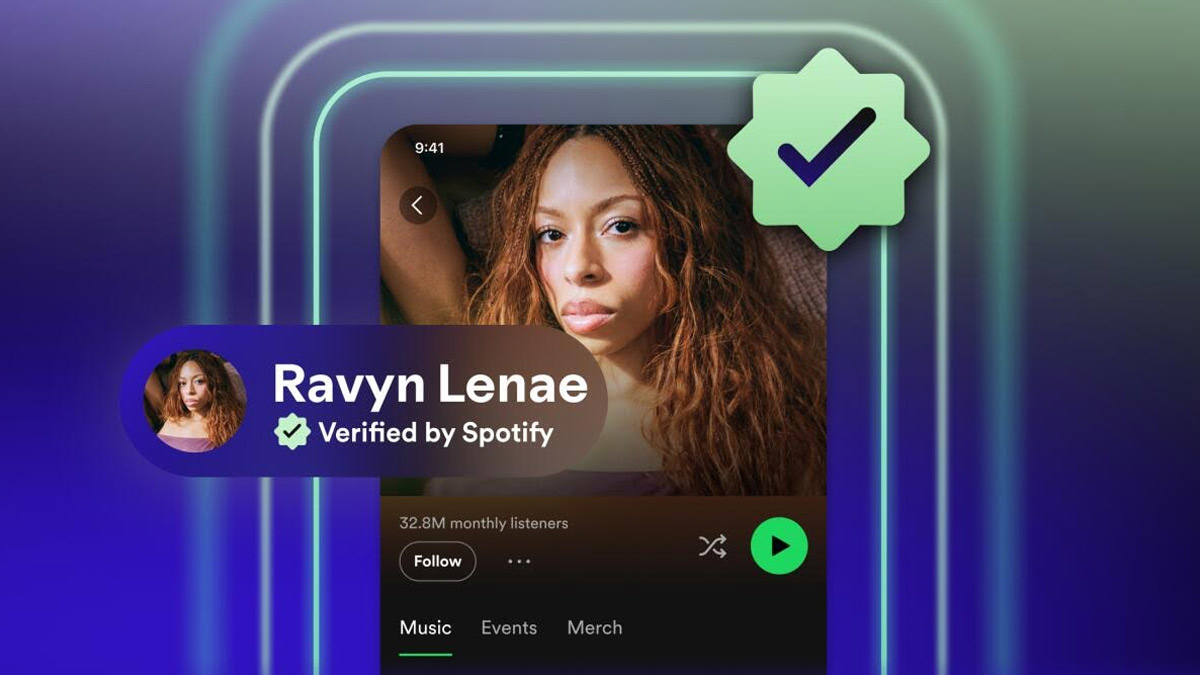
MUMBAI: In a world where even playlists can have imposters, Spotify is adding a badge of trust. The streaming platform has begun rolling out a new ‘Verified by Spotify’ badge, alongside expanded artist profile details, as it looks to bring greater clarity to listeners navigating an increasingly complex mix of human and AI-generated music. The badge, currently in beta, will appear on artist profiles that meet Spotify’s internal criteria for authenticity. These include consistent listener engagement, adherence to platform policies and signs of a real-world presence such as live performances, merchandise or active social media profiles. Notably, profiles representing primarily AI-generated artists will not be eligible for verification at launch.
Spotify says the verification process will combine automated systems with human review, prioritising artists with sustained audience interest over those driven by short-term spikes. The rollout will be gradual, with the badge appearing across profiles and search results over the coming weeks. The company noted that more than 99 per cent of artists users actively search for are already included in the initial phase.
Alongside the badge, Spotify is also introducing a new artist details section within profiles. Available even for non-verified artists, the feature will highlight career milestones, release activity and touring history, offering listeners a more comprehensive view of an artist’s journey and output.
The move builds on Spotify’s broader push towards transparency, complementing existing features such as SongDNA, expanded song credits and AI attribution tools. Together, these updates aim to give users more context about what they are listening to and who is behind it.
As generative AI continues to blur the lines between creator and creation, Spotify’s latest update signals a clear intent: in the streaming era, authenticity is becoming just as important as accessibility.