TCHxVAM2026
India’s content industry swaps channel wars for a multi-screen playbook: TCH x VAM 2026
TCH x VAM 2026 panel explored creators, microdramas and the battle for eyeballs

MUMBAI: India’s content industry is no longer just changing channels, it is changing character. At The Content Hub x VFX & More Summit 2026, the conversation around entertainment turned into a lively decoding of how creators, algorithms, reality stars and bite-sized storytelling are redrawing the rules of fame, fandom and format.
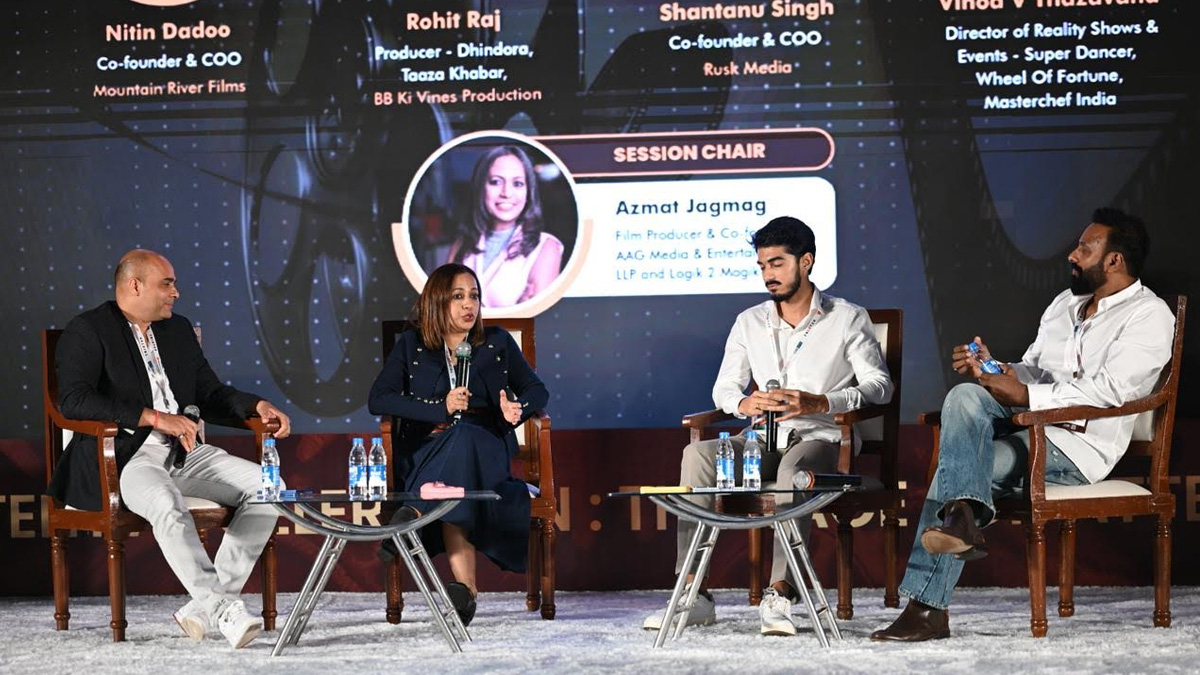
During the panel discussion “The New Content Paradigm: New Formats & Faces”, Mountain River Films co-founder & COO Nitin Dadoo, Rusk Media co-founder and COO Shantanu Singh and director of reality shows & events Vinod V Thazavana, with the session chaired by AAG Media & Entertainment LLP and Logik 2 Magik LLP film producer & co-founder Azmat Jagmag, unpacked how Indian entertainment is evolving from traditional television structures into a fragmented, fast-moving and deeply personalised digital ecosystem.
The discussion quickly moved beyond the familiar “TV versus digital” debate. Instead, the panel painted India as a multi-screen nation where audiences are not loyal to platforms as much as they are loyal to stories, personalities and emotional connections. Whether content appears on television, streaming platforms, mobile screens or social media feeds, the consensus was that viewers ultimately follow compelling narratives rather than devices.
Television, despite years of predictions about its decline, was described as far from fading away. With over 230 million television households across India, the medium still holds enormous reach, especially among middle-class and family audiences. Unlike digital platforms that demand active browsing and endless scrolling, television continues to offer a curated experience where viewers instinctively know what to watch and when to watch it.
At the same time, the panel acknowledged that digital media has dramatically altered audience behaviour, advertising flows and content discovery. The explosion of mobile screens, creator-led entertainment and algorithm-driven visibility has fragmented both attention and revenue streams. Advertising budgets that once flowed almost entirely into television are now being divided across influencers, social media platforms, streaming services and short-form content ecosystems.
Reality television emerged as one of the session’s biggest talking points. The panel reflected on how talent-based reality formats continue to thrive because they tap into aspiration, relatability and emotional storytelling. Viewers remain deeply invested in underdog journeys, small-town success stories and emotionally charged personal narratives that mirror everyday struggles and ambitions.
However, the discussion also explored how newer digital audiences are redefining aspiration itself. Earlier generations may have dreamt of becoming playback singers or television stars, but today’s younger creators increasingly want to become standalone brands, entrepreneurs and internet-native celebrities. This shift has fuelled the rise of creator-led IPs, influencer-driven entertainment and digital-first reality formats designed specifically for Gen Z audiences with global sensibilities.
The panel highlighted how platforms like YouTube helped democratise visibility by reducing the barriers to entry for independent creators. Algorithms were described as powerful equalisers, allowing smaller productions to compete with legacy entertainment brands if the content resonated strongly enough with audiences.
One of the most discussed trends during the session was the rapid rise of microdramas. These short-form, cliffhanger-heavy vertical dramas are quickly becoming a serious business model, especially among tier-two and tier-three audiences. Inspired partly by successful Chinese storytelling formats, microdramas are being engineered around quick emotional payoffs, fast pacing and constant “hook” moments designed to keep viewers engaged every few minutes.
Rather than replacing long-form storytelling altogether, the panel suggested that microdramas are influencing the grammar of mainstream entertainment itself. Even blockbuster films and premium OTT series are increasingly structured around rapid dopamine-style storytelling beats to retain restless audiences accustomed to short-form viewing habits.
Interestingly, the economics behind these formats are also shifting. Smaller budgets, faster turnaround times and measurable audience retention metrics are making microdramas attractive not only to creators but also to investors and platforms looking for scalable experimentation. Successful concepts can now be tested cheaply in short-form before being expanded into larger film or streaming franchises.
The discussion also revisited the evolving definition of stardom. While television reality shows historically produced household names with long-term recall value, digital creators are increasingly becoming formats unto themselves. Influencer personalities now shape shows around their own identities, rather than fitting into rigid pre-designed television structures.
Yet despite the rise of creator culture, the panel argued that the core emotional mechanics of entertainment remain unchanged. Audiences still gravitate towards love stories, ambition, vulnerability, triumph and human connection. What has changed is the packaging, speed and delivery mechanism.
The conversation further addressed the long-standing criticism that reality television is overly scripted. The panel pushed back against that perception by suggesting that successful reality formats are less about scripting emotions and more about creating situations where authentic reactions naturally emerge. Emotional storytelling may sometimes feel familiar or repetitive, but relatability continues to remain central to audience engagement.
By the end of the session, one thing became clear: India’s content revolution is not being driven by one format replacing another. Instead, the industry is entering an “and” era where television, streaming, creators, reality shows and microdramas are all co-existing, competing and constantly borrowing from each other.
As entertainment platforms race to hold shrinking attention spans, the future may belong not to the loudest screen, but to the storyteller who understands audiences fastest.