MAM
Surya Roshni scales cross-screen campaign with VDO.AI strategy
12M plus impressions, CTV 95.28 per cent completion, display CTR beats benchmarks

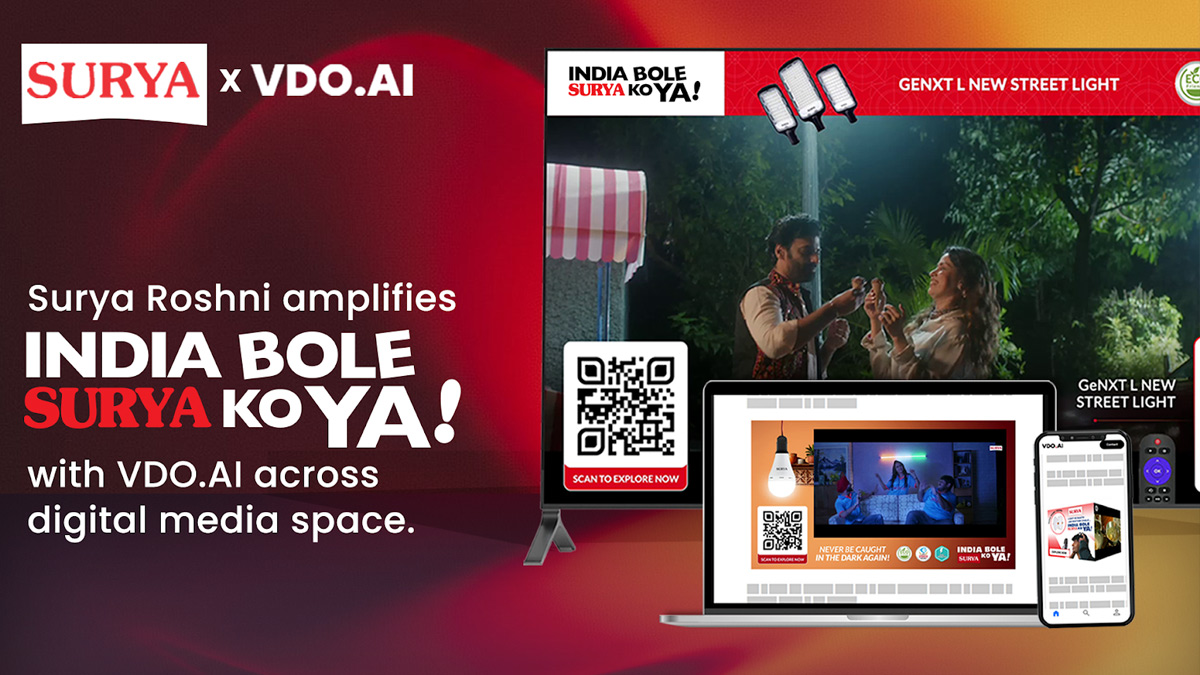
MUMBAI: When screens multiply, attention fragments but smart storytelling stitches it back together. Surya Roshni has expanded its “India Bole Surya Ko YA” campaign into a cross-screen digital play, partnering with VDO.AI to build an integrated ecosystem spanning Connected TV (CTV), online video (OLV) and display formats. The move reflects a broader shift as brands look to stay consistently visible in an increasingly on-demand, multi-device consumption landscape.
In a category where purchase cycles are infrequent, the brief went beyond visibility to continuity ensuring the brand remains relevant across touchpoints rather than appearing as a one-off interruption. VDO.AI’s solution was an omnichannel strategy designed to connect screens, formats and user journeys into a single narrative flow.
CTV formed the campaign’s anchor, using immersive formats such as animated wrappers, carousel galleries and a ‘Scan to Shop Now’ QR code to convert passive viewing into active engagement. This was extended to OLV through shoppable formats, allowing users to move seamlessly from content consumption to product exploration on personal devices. Rich media display added the final push, with formats like 3D Wobble and 3D Cube introducing motion-led interactivity to drive clicks.

The results point to strong execution. The campaign delivered over 12 million impressions, with performance metrics consistently beating industry benchmarks. CTV recorded a 95.28 per cent completion rate against an 85 per cent benchmark, while OLV achieved a 57.38 per cent completion rate and a 0.25 per cent click-through rate, both above standard levels. Rich media display posted a 0.34 per cent CTR, outperforming the 0.2 per cent benchmark.
The campaign also underscores a larger industry shift from siloed campaigns to connected systems that mirror how consumers actually move across screens. By aligning storytelling with programmatic precision and audience intelligence, the initiative moves beyond impressions to measurable engagement.
As digital ecosystems evolve, the takeaway is clear, it’s no longer about being seen once, it’s about being seen everywhere, and making each moment count.




MAM
Kerala election ads surged in 2026, with print nearly tripling and TV up 52 per cent
Political parties spent bigger and smarter this cycle, concentrating their firepower in the final weeks before polling day
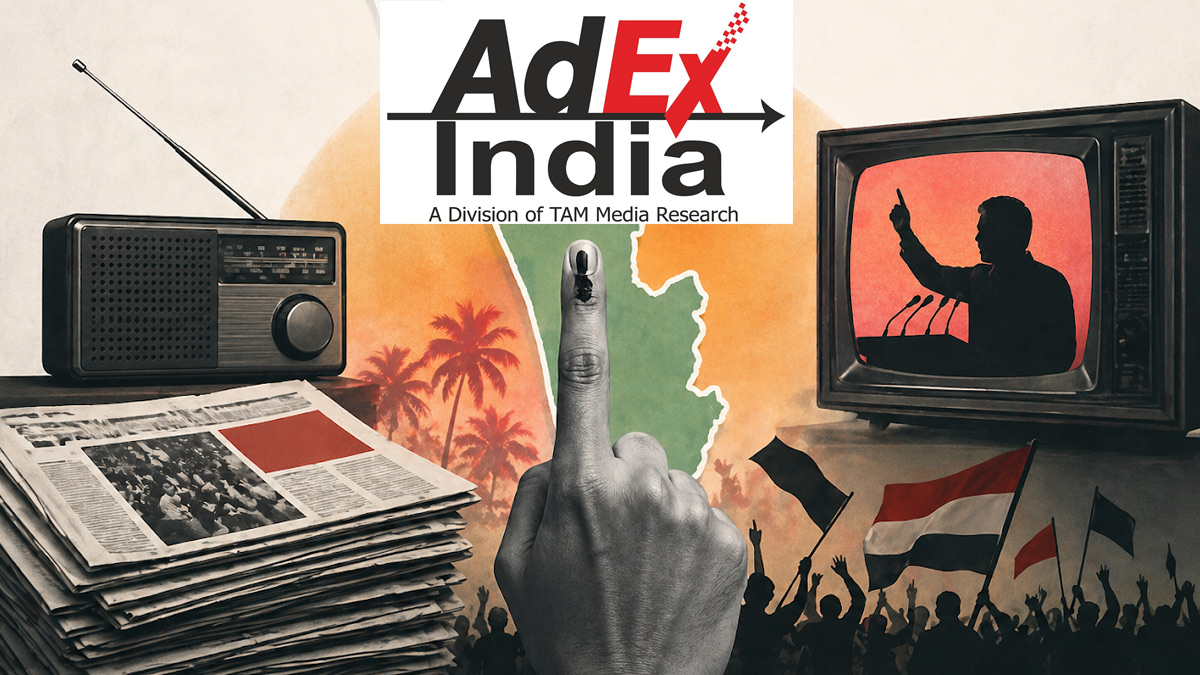
KERALA: Kerala’s politicians discovered something in 2026 that seasoned marketers have known for years: timing is everything, and when in doubt, spend more. Political advertising during the Kerala Assembly Elections 2026 surged sharply across traditional media compared to the 2021 cycle, with print and television leading the charge, according to the latest analysis by TAM AdEx.
Print was the standout performer, expanding nearly 2.7 times compared to 2021, a striking jump that underlines its continued grip on targeted political communication in a state with some of India’s highest newspaper readership. Television was not far behind, with ad insertions rising 52 per cent, reflecting the enduring appeal of mass-reach platforms for shaping voter sentiment at scale. Radio held steady, mirroring television trends and reinforcing its role as a reliable supporting medium.
The pattern of spending was as revealing as the volumes. More than 85 per cent of all political ad insertions were recorded in the weeks immediately before polling, a concentration that points to a deliberate, last-mile strategy. Ad volumes peaked during weeks four and five in both the 2021 and 2026 cycles, suggesting that parties have settled on a consistent playbook of high-frequency messaging in the home stretch.
The contrast between media types was equally instructive. Print advertising maintained a relatively even spread across the campaign period, serving as a vehicle for sustained, detailed communication. Television and radio, by contrast, displayed sharp spikes in the closing weeks, deployed as blunt instruments for high-impact bursts at the precise moment voters are making up their minds.
What the 2026 cycle signals most clearly is a shift toward more structured, data-driven media planning. The increase in overall volumes, combined with sharper peaks in campaign intensity, suggests that political advertisers are beginning to think less like propagandists and more like performance marketers, balancing broad reach with targeted engagement and watching the returns closely.
Kerala’s election advertising has, in short, grown up. The question for the next cycle is whether digital finally gate-crashes a party that print and television have so far kept firmly to themselves.