Digital
Galleri5 launches India’s first AI cinema OS at India AI Summit
Collective Artists Network unveils end-to-end production platform powering Mahabharat series and Hanuman teaser.
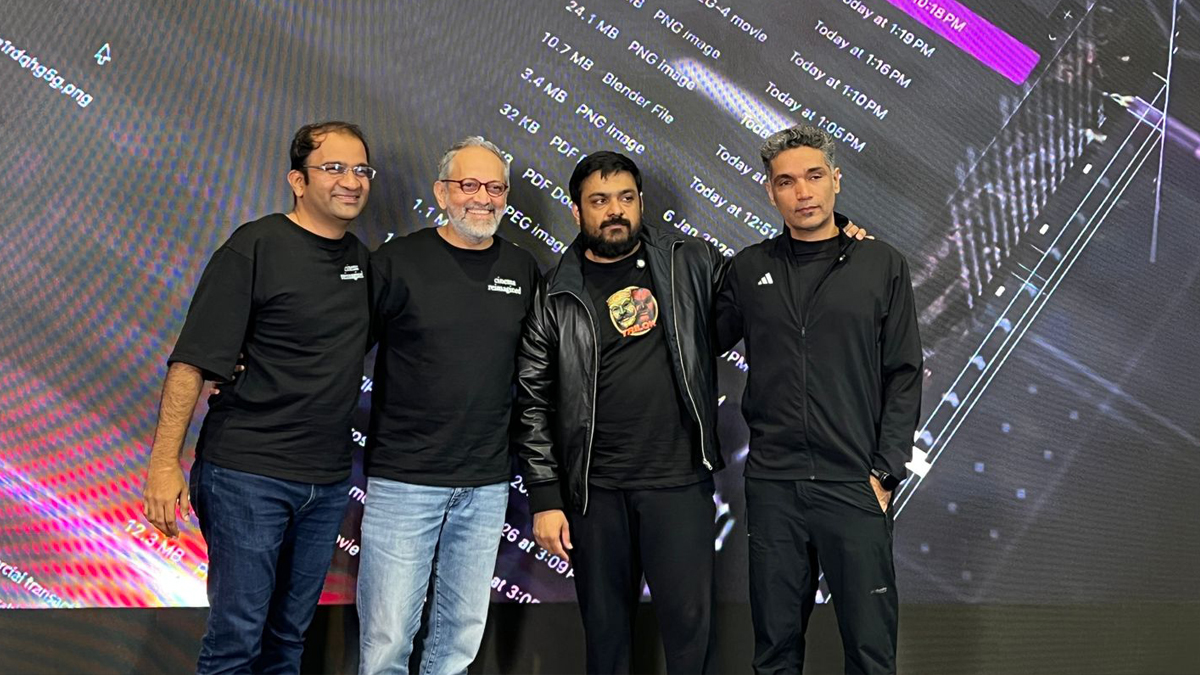
MUMBAI: India’s cinema just got an AI operating system upgrade because why settle for tools when you can have a full production command centre? Collective Artists Network and Galleri5 today unveiled Galleri5 AI Studio at the India AI Impact Summit in New Delhi, billing it as the country’s first cinema-native production technology platform. Launched on 20 February 2026, the system acts as an end-to-end orchestration layer for film and television, integrating generative AI, LoRA-driven character architecture, controlled shot pipelines, 3D/VFX tools, lip-sync, upscaling, quality control, and delivery, all tuned for theatrical and broadcast standards.
Unlike piecemeal AI tools, Galleri5 controls the entire stack from script and world-building to final master output. Filmmakers retain creative authorship, continuity, and IP security while slashing timelines from years to months.
The platform is already in live use at scale. Mahabharat: Ek Dharmayudh, an AI-powered series produced under Collective’s Historyverse banner, is airing on Star Plus and streaming on JioHotstar, ranking among the top-watched shows in its slot. Meanwhile, Chiranjeevi Hanuman – The Eternal (produced by Star Studios 18) dropped its teaser on IMAX screens, leveraging Galleri5’s infrastructure for the visuals.
Collective Artists Network founder and group CEO Vijay Subramaniam said, “For India to lead in the next era of storytelling, we have to think beyond tools and start building systems. This is about putting durable production infrastructure in place so creators can dream bigger, producers can execute faster, and our stories can travel further.”
Galleri5 partner at Collective and CEO Rahul Regulapati added, “Cinema requires precision, repeatability, and control. Off-the-shelf AI doesn’t solve that. Orchestration does. We built an operating system where technology bends to filmmaking, not the other way around.”
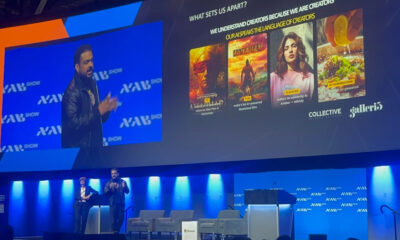
Under Historyverse, Collective Studios is developing a slate including Hanuman, Krishna, Shiva, and Shivaji blending advanced AI systems with traditional craft. The summit session featured directors from Hanuman, Krishna, and Shiva alongside Collective leaders, diving into real-world case studies: what delivers on screen, what glitches, and how production economics are shifting.
At a summit packed with global tech brass and policymakers, Galleri5 stakes a bold claim, cinema’s future belongs to integrated systems, not isolated gadgets and India is building one right now. Whether you’re a filmmaker eyeing faster workflows or just curious about AI remaking epics, this OS could be the script-flip the industry didn’t see coming.

Digital
Ethical AI must benefit society, not dominate it, says WFEB chief Sanjay Pradhan at IAA event
At Mumbai event, ethics expert urges businesses and governments to shape AI responsibly
MUMBAI: Artificial intelligence may be racing ahead at lightning speed, but its direction must still be guided by human conscience. That was the central message delivered by Sanjay Pradhan, president of the World Forum for Ethics in Business (WFEB), during the latest edition of IAA Conversations held in Mumbai.
The session was organised by the International Advertising Association (IAA) and the Artificial Intelligence Association of India (AIAI) in association with The Free Press Journal at the Free Press House on 7 March. Addressing a packed audience, Pradhan called for stronger ethical leadership to ensure AI remains a tool that benefits humanity rather than one that governs it.
“Artificial intelligence has rapidly become one of the most powerful technologies humanity has created,” Pradhan said. “It is unlocking breakthroughs in medicine, science and creativity at a pace unimaginable just a few years ago.”
But he warned that the same technology carries serious risks. AI, he noted, can amplify disinformation faster than facts can travel, compromise privacy, deepen discrimination and disrupt millions of livelihoods. Referencing concerns raised by AI pioneers such as Geoffrey Hinton, often called the godfather of AI, Pradhan stressed that the real challenge is not whether AI will shape the world, but whether humans will shape it with ethics and wisdom.
Structuring his talk around four guiding questions, why, what, how and who, Pradhan introduced the audience to WFEB’s emerging AI Ethics Partnership, a global platform aimed at advancing responsible artificial intelligence. He outlined four priority concerns that demand urgent attention: disinformation, bias and discrimination, data privacy and job security.
To make the idea of ethical AI easier to grasp, Pradhan offered a simple metaphor. Ethical AI, he said, is like a three layered cake. The outer layer represents the visible value ethical AI creates for businesses and society. The middle layer is organisational culture that moves ethics from written codes to everyday practice. The innermost layer, however, is the most crucial, the conscience of individual leaders.
Drawing from Indian philosophical thought through WFEB co-founder Ravi Shankar, Pradhan noted that while artificial intelligence can reproduce stored knowledge, true intelligence is boundless and rooted in conscience, creativity and compassion. Practices such as breathwork and meditation, he suggested, can help leaders develop the calm clarity needed for ethical decision making.
The event also featured a discussion with Maninder Adityaraj Singh, chief of staff and head of innovation at Rediffusion Brand Solutions Pvt Ltd, and Yash Johri, lawyer, Supreme Court of India.
Opening the session, IAA India chapter president Abhishek Karnani, highlighted the need for industries to understand and engage with AI responsibly.
“AI has to be befriended and understood,” added Rediffusion managing director and AIAI national convenor Sandeep Goyal. “Its ethical use will determine whether it becomes a friend or a foe.”
As AI continues to reshape industries and societies, Pradhan ended with a simple but powerful call to action. Businesses, governments and individuals must work together to ensure that the algorithms shaping the future reflect human values rather than just cold logic.