MAM
Tackling the CMO dilemma: Strategic solutions in brand marketing
Mumbai: Facing the multifaceted challenges in brand marketing is a central dilemma for today’s chief marketing officers (CMOs). As a co-founder of NeoNiche, I’ve encountered these challenges firsthand and have identified key areas where strategic focus is imperative. This blog explores solutions to common dilemmas faced by CMOs in integrating marketing efforts, measuring ROI, implementing ABM, fostering emotional connections, scaling marketing strategies, and fostering team innovation.
1. Integrating Marketing Efforts Strategically:
. Challenge: Overcoming the siloed approach of campaign-specific mindsets.
. Solution: Develop a unified marketing strategy that aligns different channels and campaigns, ensuring a cohesive brand narrative across all platforms.
2. Demonstrating ROI:
. Challenge: Effectively measuring and communicating the return on investment, particularly for long-term brand-building initiatives.
. Solution: Implement a balanced measurement framework that considers both quantitative results and qualitative impacts.
3. Account-Based Marketing (ABM) Complexity:
. Challenge: Tailoring marketing strategies to individual accounts in B2B contexts without overwhelming resources.
. Solution: Leverage customer data and predictive analytics to identify high-value accounts and personalize marketing tactics.
4. Fostering Emotional Engagement:
. Challenge: Building deep, emotional connections with audiences in a competitive market.
. Solution: Create authentic, narrative-driven marketing campaigns that resonate with customer values and experiences.
5. Scaling Marketing Efforts:
. Challenge: Expanding the reach of marketing strategies while maintaining effectiveness and brand consistency.
. Solution: Utilize scalable digital platforms and marketing automation tools, adapting strategies based on market feedback.
6. Team Alignment and Innovation:
. Challenge: Ensuring team alignment and fostering an environment of continuous innovation.
. Solution: Regular team training sessions, internal huddles, and collaborative workshops are key. These initiatives promote knowledge sharing, encourage creative thinking, and align team efforts with organizational goals.
Addressing these core challenges is crucial for CMOs striving to navigate the complex landscape of modern brand marketing. By adopting these strategic solutions, they can enhance brand engagement, drive sustainable growth, and build stronger connections with their target audience.
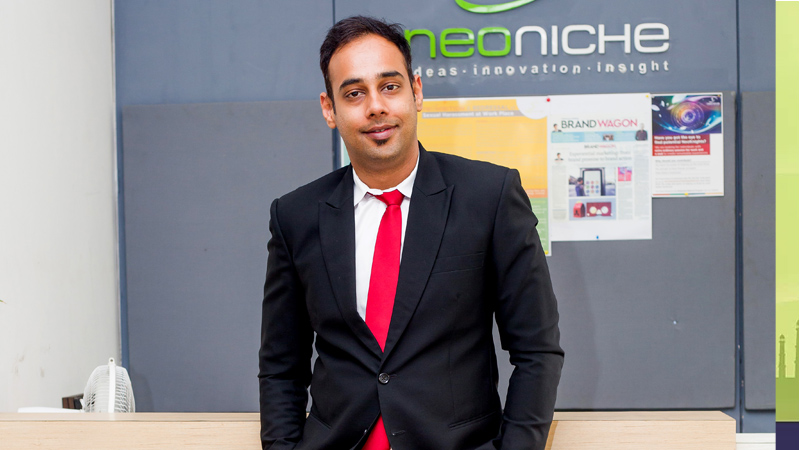
The author of this article is NeoNiche Integrated Solutions Pvt Ltd Valay Lakdawala.

Brands
KPMG names Gary Wingrove as global chairman and CEO from October
Record Gmada bids signal rising demand as Rs 1,000 crore bet reshapes Tricity skyline
MUMBAI: KPMG has chosen continuity with a forward tilt. The firm has announced that Gary Wingrove will take over as global chairman and CEO of KPMG International, beginning a four year term from 1 October 2026. Currently serving as global chief operating officer, Wingrove steps into the top role after being nominated by the global board and elected by the global council.
A KPMG veteran with over 25 years at the firm, Wingrove has been closely involved in shaping its recent trajectory. As global COO, he has helped drive the firm’s Collective Strategy, focusing on operational integration, global investments and the steady expansion of the KPMG Delivery Network. He has also been at the forefront of KPMG’s digital push, including the rollout of AI enabled solutions across its global operations.
Before his global role, Wingrove served as CEO of KPMG Australia for nearly a decade, where he led a period of strong growth, almost doubling revenue, profitability and headcount while steering a cultural reset.
He succeeds Bill Thomas, who has led KPMG since 2017 and will work alongside Wingrove over the next six months to ensure a smooth transition.
Thomas leaves behind a firm that looks markedly different from when he took charge. Under his leadership, KPMG’s global revenues have risen by 55 per cent, and its workforce has expanded to more than 276,000 people. He also unified the network of member firms under the Collective Strategy, aligning priorities and strengthening governance.
His tenure saw heavy investment in technology and partnerships, with alliances spanning Microsoft, Google Cloud, SAP, Oracle and ServiceNow. These collaborations, along with platforms like KPMG Clara, have helped the firm scale its AI-led offerings and sharpen its competitive edge.
Beyond growth, Thomas also pushed improvements in audit quality and sustainability. Initiatives such as a multiyear global sustainability strategy and the Our Impact Plan have aimed to embed long term thinking into the firm’s operations and client services.
For Wingrove, the brief is clear but evolving. He has signalled a focus on agility, deep expertise and technology driven solutions as clients navigate an increasingly complex business landscape. He also emphasised KPMG’s identity as a people first organisation, supported by technology and unified through its global network.
The timing of the leadership change comes as KPMG continues to grow, reporting a 5.1 per cent rise in global revenue in FY25, with gains across tax and legal, audit and advisory services. Growth was recorded across all regions, despite a challenging macro environment.
As Wingrove prepares to take charge, the firm appears set on a familiar path with a sharper digital edge. Same playbook, perhaps, but with a renewed focus on speed, scale and smarter solutions.