
News Broadcasting
World News Day: Why fact-based journalism still matters in the age of noise
From Gutenberg to digital feeds, the press has evolved, but its public duty remains unchanged


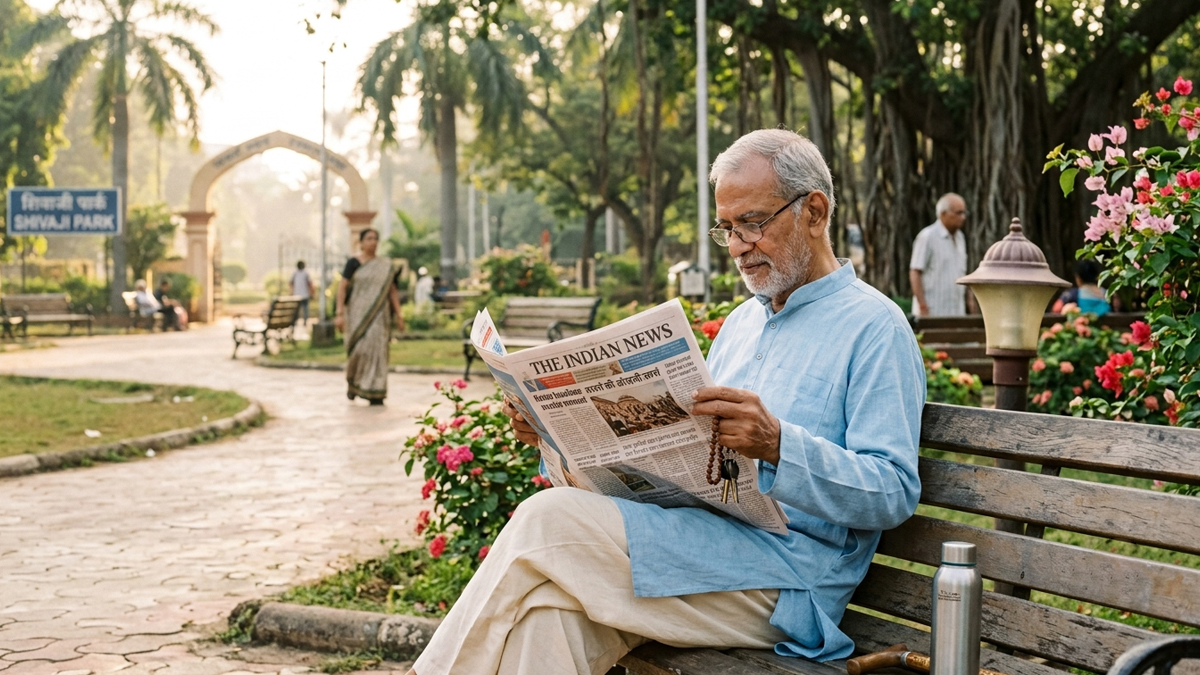
MUMBAI: Every second, millions of words compete for our attention. Breaking news alerts flash across mobile screens, viral videos race through group chats and algorithms keep serving us carefully selected fragments of reality. In this endless stream of information, one question matters more than ever: who is actually looking for the facts?
Observed every year on 28 September, World News Day offers a moment to step back from the noise and reflect on the role of journalism in society. Accurate, independent and ethical reporting does more than deliver information. It can expose wrongdoing, hold institutions accountable, give communities a voice and help citizens make informed decisions.
Journalism did not begin with television studios, smartphones or digital newsrooms. Its roots can be traced to early forms of public information, including Rome’s Acta Diurna, which carried daily notices, and China’s Dibao, circulated among government officials during the Han Dynasty.
The information revolution accelerated in the 15th century with Johannes Gutenberg’s movable-type printing press. Printing made it possible to reproduce information on a scale previously unimaginable, gradually widening access to knowledge and helping newspapers evolve into forums for political and social debate.
By the 17th and 18th centuries, newspapers had become an important part of public life, providing readers with commercial information as well as a platform for discussion and political ideas.
The technology has changed dramatically since then. The fundamental challenge has not: separating information that matters from information that merely makes noise.
India’s journalistic history is closely tied to its political and social transformation.
The country’s print journalism journey is generally traced to James Augustus Hicky’s Hicky’s Bengal Gazette, launched in 1780. Though short-lived, the publication established an early precedent for a press willing to challenge authority.
Social reformer Raja Ram Mohan Roy later used publications including Mirat-ul-Akbar to campaign for social reform, education and public debate.
During the freedom movement, journalism became an important vehicle for political mobilisation. Mahatma Gandhi edited publications including Young India, Harijan and Navajivan, while Bal Gangadhar Tilak used his Marathi newspaper Kesari to promote nationalist ideas.
For these early journalists, the newspaper was not simply a commercial product. It was a means of shaping public discourse and challenging the established order.
After 1947, India’s expanding press took on a new role as a watchdog within a democratic republic.
That role faced one of its most significant tests during the Emergency from 1975 to 1977, when press censorship was imposed. Parts of the media complied with restrictions, while others found ways to signal resistance through blank editorial spaces and alternative forms of publication.
The period remains an important reminder that press freedom is not an abstract principle. It directly affects what citizens can know, question and discuss.
The digital revolution has given journalism unprecedented reach. India now has a vast ecosystem of television channels, newspapers, regional-language publications, websites, social platforms and independent digital outlets.
But more information does not necessarily mean better information.
The modern newsroom faces a different set of pressures.
The clickbait and ratings race: Digital traffic, engagement metrics and television ratings can reward sensational headlines and polarising content. Nuanced reporting can struggle to compete with stories designed primarily to generate immediate attention.
The spread of misinformation: False claims can travel across WhatsApp groups, social media platforms and video networks at extraordinary speed. Deepfakes and manipulated content have added another layer to the verification challenge.
Economic and editorial pressures: News organisations have to balance rising costs with the need to maintain credible reporting. For independent outlets in particular, building sustainable business models while protecting editorial independence remains a continuing challenge.
The result is a paradox: people have access to more information than ever before, but determining which information deserves trust has become harder.
World News Day, an initiative supported by the Canadian Journalism Foundation and the World Association of News Publishers, is ultimately about more than celebrating journalists.
It is about recognising the public value of reliable news.
A reporter investigating corruption, documenting environmental damage, questioning an official claim or reporting from an underserved community performs a civic function. Such work helps citizens understand what is happening around them and gives institutions something they cannot easily ignore: public scrutiny.
That responsibility extends beyond newsrooms. Audiences also play a role in the information ecosystem.
Checking a source before forwarding a message, reading beyond a headline, distinguishing commentary from reporting and supporting credible journalism can all help reduce the spread of misinformation.
The press has travelled a long way from printed notices and newspapers to smartphones, livestreams and algorithm-driven feeds. Yet its central responsibility remains remarkably familiar: to find out what happened, verify it and tell people clearly.
In an age when anyone can publish and anything can go viral, the value of journalism lies not simply in producing more information but in establishing what can be trusted.
On World News Day, that may be the most important reminder of all: facts need verification, truth needs evidence and democracy needs journalism that is willing to ask difficult questions.






