Special Report
Premier League & its growing band of Indian followers

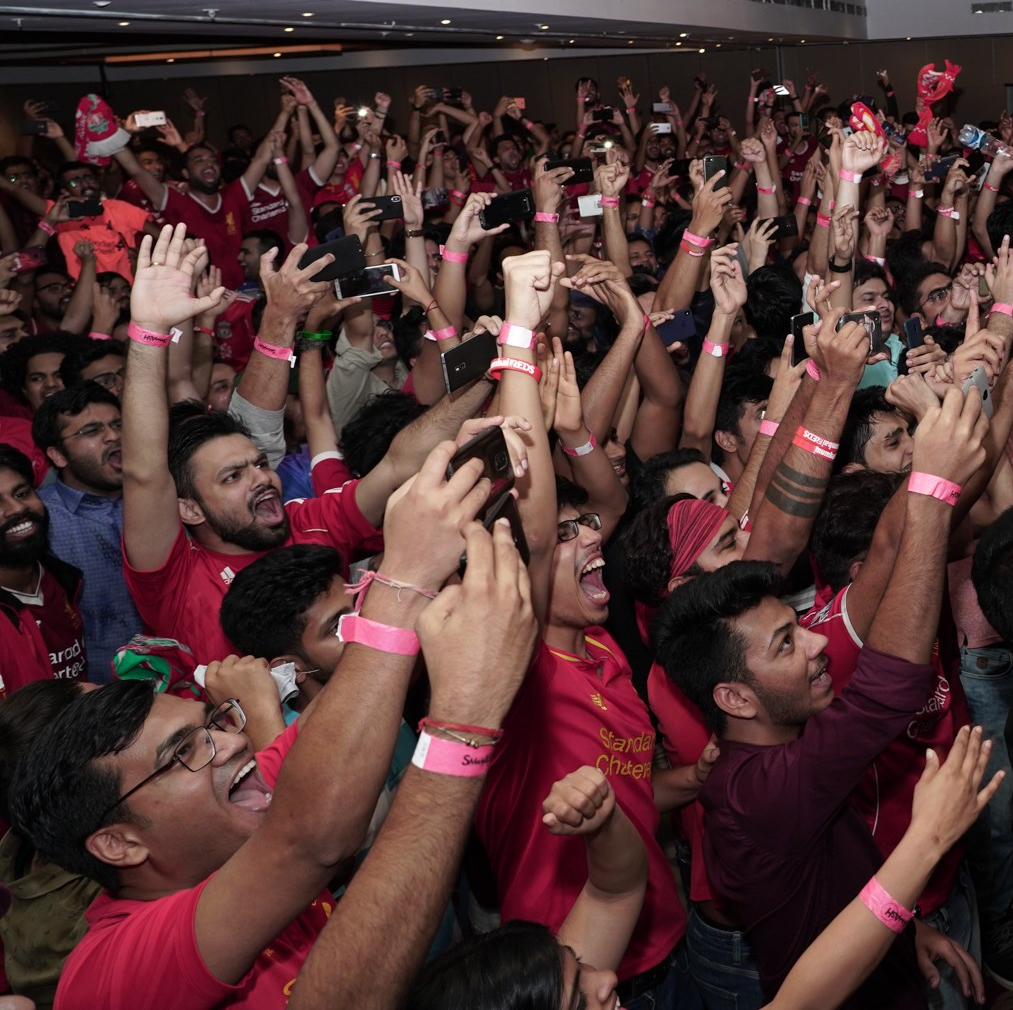
MUMBAI: If there’s one sport that unites people all over the world, it is football. Cricket maybe a religion in India, but football is life for billions of fans in every nation. When a Neymar changes teams for $260 million, as many – if not more – weep or rejoice. India too has its legions of football lovers: Estimates are that 283 million of them viewed football in 2018-19. The Premier League remains by far the most watched and supported football league with an awareness level of 79 per cent amongst soccer fans, according to a Brand Finance research report. The league itself has estimated that 155 million Indians track it, its teams and the players throughout the year, religiously. In the 2018-2019 season, 30 million actively watched the Premier League.
Run by the UK’s Football Association, the 28-year-old league is available in 643 million homes in 212 countries globally with a potential TV audience of 4.7 billion. 20 clubs each play 38 matches against each other (at home and away) on Saturdays and Sundays in the afternoon.
In 2017, the league roped in Gully Boy Ranveer Singh- who is also a keen Arsenal follower – as its official brand ambassador for India, thus broadening its appeal within the country.

The typical Premier League enthusiast is a new millennial, affluent, someone who wears either Levis or Killer jeans or a Zara T-shirt, goes on a holiday in India at least a couple of times a year, uses personal transport, orders from an e-commerce platform at least once a month, and is located in the metros and mainline cities. He meticulously follows the game scores, is tech savvy, tweets and posts about the game on social media. Women also seem to have developed a fancy for the Premier League as they comprise a sizeable 30 per cent of the fan base.
The Premier League mania is so strong that official clubs have sprouted up nationwide in almost every metro supporting the top teams: Manchester United, Liverpool, Arsenal, Chelsea, Manchester City, and Tottenham Spurs. These clubs have affiliations with the mother clubs in the UK and have a presence in almost every metro and major city in India. Memberships run into 500 plus in almost each city, making for a massive fan base.
31-year old Mayur Bhosale is a Chelsea fan and also the marketing head of the team’s official fan club in India. “For me football is my life. I am so looking forward to the next season of the Premier League. This time the gap between the previous season and this one has been short, which is good.”
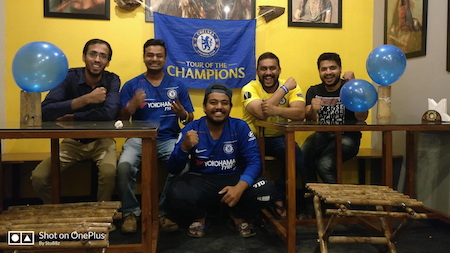
Mayur’s day job is as a chief engineer with one of Airtel’s data centres in Pune. But the nights are devoted to football. “I watch every match – even when the kick-off is late at night 12:30 and ending at 2:30 am. I will wake up the next morning and head to my meeting weary in body but fresh in spirit.”
Tony George, who works in a pharma company, is the chairman of the Arsenal India Supporters Club, Kerala chapter. “We have been following the Premier League for the past 19 years and especially Arsenal. We are expecting the team to do better this year, with new signings.”
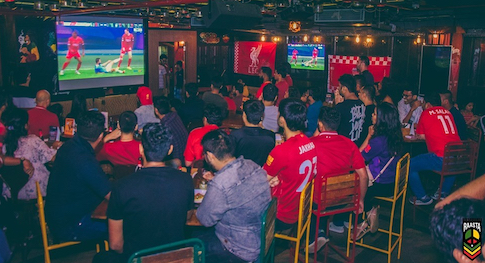
In fact, the supporters’ clubs normally have screenings when the matches are on, with 50-200 members gathering in a club, and making merry while watching the furiously-paced game on a large screen. Brands such as Budweiser, Kingfisher and Heineken have supported the get togethers in the past. Other brands which have been consistent partners – especially of the Manchester United Supporters Club – include: HCL, nutrition brands like ON and RiteBrite, Apollo Tyres and home grown beer brand White Owl.
“People come dressed in colours of their favourite team,” says Mayur. “They are tattooed and they cheer every forward’s move and defender’s success at intercepting a rival’s pass. We replicate what we believe is happening in the stadium. Budweiser is the partner for many of our initiatives and for us Budweiser is our favourite beer and is equal to the Premier League.”
According to him, most of the members of the fan clubs are either students or those who are newly into their professional careers. “70-75 per cent of them are in that age group of 23-29 years,” he reveals. “25-30 per cent are above 30 like me.”
With clubs being shut thanks to the pandemic, fans have migrated to the virtual world. Mumbai-based Chelsea fan Andre Rodrigues says meetups have happened over Zoom ever since the pandemic hit India. “The Mumbai chapter has organised some Zoom meets for quizzes and discussions over the last few months. And we will continue to do so for the coming season as well during the matches as well.”
Mayur adds that the Chelsea Fan Club has made five Zoom bridges bringing together 600-700 fans across cities, thus catching their reactions towards the action during the live matches and screenings in the past few months. ”We have done at least four or five these,” he says. “These probably are here to stay. Then we have our Whatsapp group, Instagram handles, and our Facebook pages where we constantly engage.”
Disney Star India – the broadcast partner of the Premier League in India – organises large format match screenings for various team fans across cities under the brand Select FC.
Mayur, who loves his Jawa two-wheeler, wears Woodland or Adidas shoes, when he goes to screenings, remembers his experience fondly. “It was a fantastic vibe,” he says. “They gave us a few gifts, had quizzes, free beer coupons and the fact that we were all together egging our team on was memorable. For us, Premier League fans, it rules.”
This access to young affluent and passionate fans of Premier League is wooing over marketers, media buyers and planners. The platform helps drive associative value for brands and categories which want to target this unique audience and are driving initiatives and association which help them dive right into the fan sentiment and integrate/embed themselves amidst this tribe and get the rub off and preference of this audience.
For instance, Hero Motocorp associated with the Premier League broadcast on Star Sports last year in a Twitter contest towards the fag end of the tournament. Fans were asked to send their #HeroFanMoment with the hashtag #Raiseyourgame to support their respective teams.
Net result: the contest generated 6.9 million impressions, with Star Sports reaching out to 2.59 million unique accounts. The original announcement of the contest alone generated 3.53 million impressions and 125,725 engagements, and took the initiative amongst the top 10 trends in India for an hour and a half on the short messaging engagement platform.
Then, lubricants major Gulf Oil is a votary of the Premier League, especially in the current circumstances. According to the company’s CEO & managing director Ravi Chawla, the English Premier League is one of the most awaited seasons for football enthusiasts. Amidst the gloom around Covid, these sporting events are bringing back much-needed excitement among the consumers. Although the fans may not be able to watch the action in the stadium, we feel that a combination of the digital adoption behaviour and aspiration to continue to see their favourite players on the field will keep the fans glued more than ever. Keeping with the enthusiasm, Gulf Oil released a global film #GulfGetMovingAgain with Manchester United illustrating a new world emerging post lockdown to communicate a strong message that – "The world may have changed but our dreams haven’t”. It garnered an engagement of 4.5 million plus Manchester United fans.”
“…given that EPL is an extended format, it will have relevant brand associations. Brands are evaluating all opportunities very keenly right now,” expounds Havas Media India managing director Mohit Joshi. “The football fan base has only been increasing in India over the years and that is clear from the buzz around the sport. In this Covid year, viewers have been deprived of live sports. As a result, the season will do extremely well. More than viewership, it is the social buzz that one can already feel around it.”
With that kind of positive sentiment, don’t be surprised if during this season, brands rain heavily on the Premier League, rather than just the just the normal summer showers.






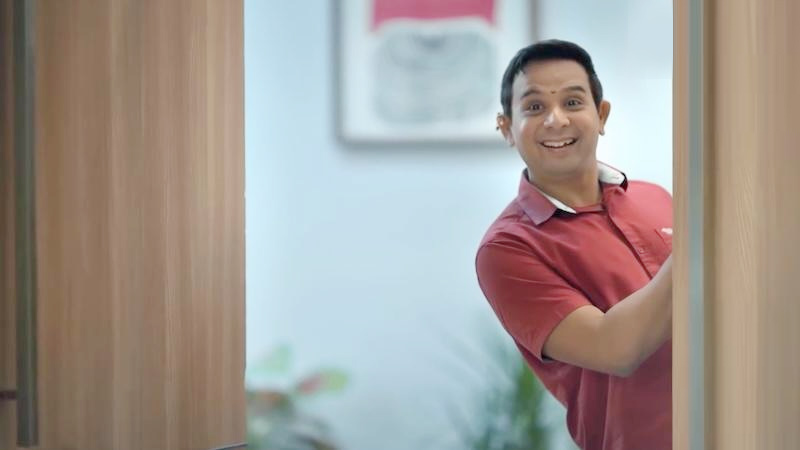
MUMBAI: Some friendships are made in heaven; others are coded in Mumbai. Hamara Vinayak, the first-ever digital original from Siddharth Kumar Tewary’s Swastik Stories, turns the divine into the delightful, serving up a story that’s equal parts start-up hustle and spiritual hustle.
Some tech start-ups chase unicorns. This one already has a god on board. Hamara Vinayak takes the leap from temple bells to notification pings and it does so with heart, humour and a healthy dose of the divine.
At its core, the show asks a simple but audacious question: what if God wasn’t up there, but right beside you, maybe even debugging your life over a cup of chai?
The show’s tagline, “God isn’t distant… He’s your closest friend” perfectly captures its quirky soul. Across its first two episodes, screened exclusively for media in Mumbai, the series proves that enlightenment can come with a good punchline.
The series follows a group of ambitious young entrepreneurs running a Mumbai-based tech start-up that lets people around the world book exclusive virtual poojas at India’s most revered shrines. But as their app grows, so do their ethical grey zones. Into this chaos walks Vinayak, played with soulful serenity and sly wit by the charming Namit Das, a young man whose calm smile hides something celestial.

He’s got the peaceful look of a saint but the wit of someone who could out-think your favourite stand-up comic. Around him spins a crew of dream-driven youngsters – Luv Vispute, Arnav Bhasin, Vaidehi Nair and Saloni Daini who run a Mumbai-based tech start-up offering devotees across the world the chance to book “exclusive” poojas at India’s most sacred shrines. It’s a business plan that blends belief and broadband – and, as the story unfolds, also tests the moral compass of its ambitious founders.
“The first time I read the script, I found the character very pretty,” Namit joked at the post-screening interaction. “It’s a beautiful thought that God isn’t distant, he’s your closest friend. And playing Vinayak, you feel that calm but also his cleverness. He’s the friend who makes you think.”
The reactions to the series ranged from smiles to sighs of wonder. Viewers were charmed by the show’s sincerity and sparkle, a quality that stems from its creator’s belief that faith can be funny without being frivolous.
Among the cast, Luv Vispute shines brightest, his comic timing adding sparkle to the show’s more reflective beats. But what keeps Hamara Vinayak engaging is the easy rhythm of its writing – one moment touching, the next teasing, always gently reminding us that spirituality doesn’t have to be solemn.
Luv spoke fondly of his long association with Swastik. “Since my first show was with Swastik, this feels like home,” he said. “Every project with them is positive, feel-good, and this one just had such a different vibe. I truly feel blessed.”
Saloni Daini, who brings infectious warmth to her role, added that she signed up the moment she heard the show was about “Bappa.”
“We shot during the Ganpati festival,” she recalled. “The energy on set was incredible festive, faithful, and full of laughter. It’s such a relatable story for our generation: chaos, friendship, love, kindness, and faith all mixed together.”

Vaidehi Nair and Arnav Bhasin complete the ensemble, each representing different shades of ambition and morality in the start-up’s journey. Their camaraderie is easy and believable, a testament to how much the cast connected off-screen as well.
This clever fusion of mythology and modernity plays to India’s two enduring loves, entertainment and faith. Mythology has long been the comfort zone of Indian storytellers, from the televised epics of the 1980s to the glossy remakes that still command prime-time TRPs. For decades, gods have been our most bankable heroes. But Hamara Vinayak tweaks the formula not by preaching, but by laughing with its characters, and sometimes, at their confusion about where divinity ends and data begins.
Creator Siddharth Kumar Tewary, long hailed as Indian television’s myth-maker for shows like Mahabharat, Radha Krishn and Porus, explained the show’s intent with characteristic clarity, “This is our first story where we are talking directly to the audience, not through a platform,” he said. “We wanted to connect young people with our culture to say that God isn’t someone you only worship; He’s your friend, walking beside you, even when you take the wrong path. The story may be simple, but the thought is big.”
That blend of philosophy and playfulness runs through the show. “We had to keep asking ourselves why we’re doing this,” Tewary added. “It’s tricky to make something positive and spiritual for the OTT audience, they’ve changed, they want nuance, not sermons. But when the purpose is clear, everything else aligns.”
For the creator of some of Indian TV’s most lavish spectacles, Hamara Vinayak marks a refreshing tonal shift. Here, Tewary trades celestial kingdoms for co-working spaces and cosmic battles for office banter. Yet his signature remains: an eye for allegory, a love for faith-infused storytelling, and an understanding that belief is most powerful when it feels personal.
Hamara Vinayak, after all, feels less like a sermon and more like a conversation over chai about what success means, what faith costs, and why even the gods might be rooting for a start-up’s Series A round.
As Namit Das reflected during the Q&A, “Life gives us many magical, divine moments we just forget to notice them. Sometimes even through a phone screen, you see something that redirects you. That’s a Vinayak moment.”
The series also mirrors a larger cultural pivot. As audiences migrate from television to OTT, myth-inspired tales are finding new form and flexibility online. The digital screen lets creators like Tewary reinvent the genre, giving ancient ideas a modern interface, without losing the emotional charge that’s made mythology India’s storytelling backbone for decades.
In a country where faith trends faster than any hashtag, Hamara Vinayak feels both familiar and refreshingly new, a comedy that’s blessed with heart, humour and just enough philosophy to keep the binge holy.
For a country where mythology remains the oldest streaming service, Tewary’s move from TV to OTT feels both natural and necessary. Indian storytellers have always turned to gods for drama, guidance and TRPs from Ramayan and Mahabharat on Doordarshan to glossy mytho-dramas on prime time. But digital platforms allow creators to remix reverence with realism, and in Hamara Vinayak, faith gets an interface upgrade.
The result is a show that feels like a warm chat with destiny, part comedy, part contemplation. And in an age of cynicism, that’s no small miracle.
As Tewary put it, smiling at his cast, “The message had to be positive. We just wanted to remind people that even in chaos, God hasn’t unfriended you.”
With 5 episodes planned, Hamara Vinayak promises to keep walking that fine line between laughter and light. It’s mythology with memes, devotion with dialogue, and a digital-age reminder that even the cloud has a silver lining or perhaps, a divine one.
If the first two episodes are any sign, the show doesn’t just bridge heaven and earth, it gives both a Wi-Fi connection.






