News Broadcasting
Obamania: The biggest blockbuster of 2015

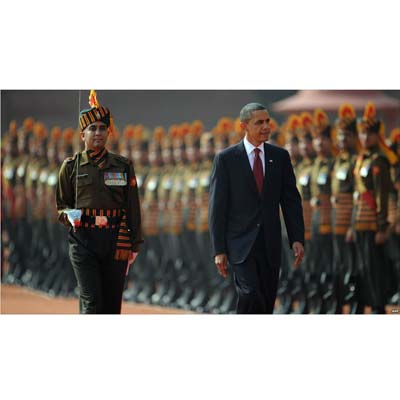
For India weekend means late mornings, set of movies in theatres and relaxation. Subsequently Indian news media shifts the focus from hard news to Bollywood gossips and cupids. ’Twas a similar weekend but in the National Capital, the excitement was almost palpable on a sodden morning of fog and rain. The Eagle had indeed landed at the Palam Airport carrying POTUS and FLOTUS!
Yes, it was the Air Force One carrying President of the United States Barack Obama and his wife and First Lady of the United States Michele Obama.
Obamania had begun!

The media spotlights were aimed on the door of that aircraft and journalists were on the edge of their seats in the studios. The moment the door opened, breaking news and flash tickers started rolling in each and every news channel. Every news channel began its claim of being distinguished and unabated. If one channel was emphasizing on economics, the other was showing exclusive footages of the hotel. Creative juices were flowing freely as far as headlines and programme names go on various news channels!

NDTV named its coverage ‘Namo’ste Obama’, with anchoring responsibility majorly rotating amongst its senior brass of journalists namely Vishnu Som, Sreenivasan Jain, Vikram Chandra and Barkha Dutt. They ensured cameras were present everywhere and whatever penetrated through the lenses was discussed in detail with a panel of experts. Shekhar Gupta and Vivek Katju were among them.
Times Now kept it simple by calling its coverage – “Obama’s India Visit.” CNN-IBN named it “Namaste Obama” and Headlines Today called it “Rolling Coverage Obama.”
Speaking to Indiantelevision.com on the entire three days’ coverage, NDTV CEO Vikram Chandra said, “We had a distinguished panel that had expertise in various fields and we were determined to have a comprehensive coverage. We were the only channel to have presence in the Taj Palace, where the CEOs met President Obama and Prime Minister Modi. We were also present in DAVOS where global economics was debated in presence of Finance Minister Arun Jaitley and economist Nouriel Roubini.”
The US President’s visit to attend the 66th Republic Day Celebration of India was indeed an event of historical importance. That aside, a lot of economic and strategic modifications were also expected from the visit. India now has a stable Government with absolute majority in the Lower House and economic growth is one of the prime need of the country at this point. The current Government has made its position clear on developing an open, business friendly market scenario. Not long back, India was one of the fragile five economies of the world and now the country aspires to be in the fantastic five.
All news channels were exclusively covering the developments in Hyderabad House where Obama met Modi for a bilateral dialogue. After hours of speculations of what was happening inside, the deadlock was broken in a joint press conference where channels got the second big breaking news, which they termed as ‘Nuke Deal.’ Soon after, all news broadcasters began discussions on the positives and negatives of the Indo – US nuclear deal. That was the major talking point of Day 1 of President Obama’s India visit.
Day 2 was India’s Republic Day. It was bitterly cold weather with overcast sky accompanied by a slight drizzle and the focal point was ‘Rajpath.’ The coverage responsibility was on India’s public broadcaster Doordarshan. A three hour long extravaganza was put forward by valiant soldiers of respective battalions. And it concluded with an Air Show by the Indian Air Force.

When queried about the entire coverage, Doordarshan India deputy director general (IR) C K Jain said, “We employed the best of infrastructure and technicians to cover the parade. There was absolutely no commercialisation and the parade was covered uninterrupted. We did not accept any commercial advertisement, we showed some government ads before and after.”
All other private channels were relaying DD’s coverage.
On a national holiday, when executives separate themselves from work and corporate meetings, 26 January would see them preparing for one of the biggest meetings of their lives. From Ratan Tata to Anil Ambani, they all queued up to meet POTUS. This was the second major talking point of Day 2 – the CEO meet. The focal point this time was ‘Taj Palace’ and the breaking news was the $4 billion investment promise made by Obama. The detailed discussion on the deal summed up Day 2 coverage of Obama’s Visit.
Speaking about the commercial impact of the coverage, Maxus South Asia MD Kartik Sharma said, “We have to wait for the ratings to see which news channel performed better. As per my opinion, the English news channels were more specific and slightly better than the Hindi ones but Hindi news channels also catered well to their viewers. In news channels there was a marginal hike in ad rate due to Obama’s visit.”
On Day 3, Obama left for Riyadh but before taking off he gave an amazing speech to the Indian media that could be discussed for days. Addressing a gathering of 2000 students, Obama started his speech by saying ‘Namaste’ and concluded it with ‘Jai Hind’. During his speech he paid gratitude to Mahatma Gandhi and Swami Vivekananda, warned India against communalism and domestic fragmentation. To add to the delight of the students and journalists present, he recited the famous dialogue from the iconic Bollywood film, which completed 1000 weeks at the box office recently – Dilwale Dulhaniya Le Jayennge (DDLJ). “Senorita, bade bade deshon mein…you know what I mean,” said Obama. Not surprisingly, soon after DDLJ started trending on social media and became an important part of the round up.
Though Obama’s visit was not a Bollywood movie, it turned out to be one of the biggest blockbuster event followed by one and all for various reasons.





News Broadcasting
CNN-News18 to host Fury in the Gulf conclave on West Asia crisis
Three-hour summit to unpack geopolitical fallout and impact on India
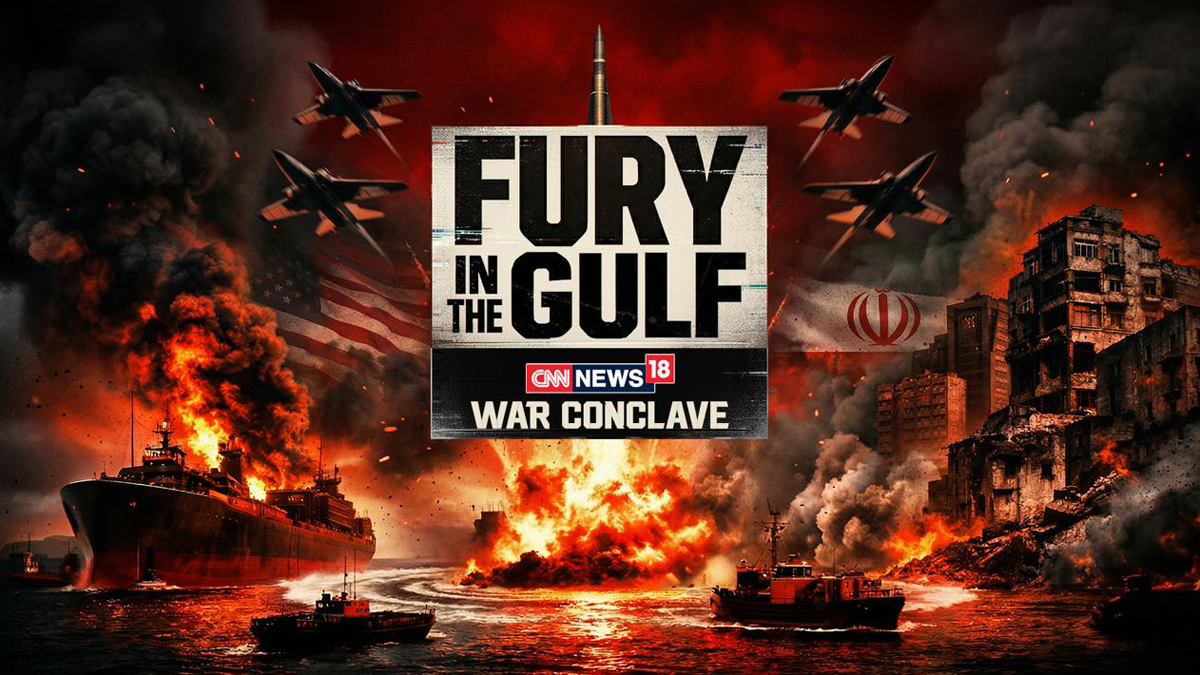
MUMBAI: CNN-News18 is set to host a special three-hour broadcast, Fury in the Gulf – War Conclave, on April 7, aiming to decode the escalating West Asia crisis and its far-reaching implications for India.
Scheduled from 4:00 PM to 7:00 PM, the conclave comes at a time when tensions between Iran and the United States are reshaping global geopolitics and triggering economic uncertainty. With India’s deep energy ties, trade links and large diaspora in the Gulf, the developments carry significant domestic relevance.
Built around the theme ‘Conflict, Consequences, and The Future,’ the programme will feature six curated sessions combining one-on-one interviews and panel discussions. The focus is to cut through the clutter and offer viewers a clearer understanding of the fast-evolving situation.
Key sessions include ‘Diplomacy in Times of War’ featuring Shashi Tharoor, and ‘World After the Iran Conflict’ with voices such as Ram Madhav, Reuven Azar, representatives from the European Union and the Iranian Deputy Envoy. Another session titled ‘Another Dunkirk?’ will bring together K. J. S. Dhillon and Jitin Prasada among others.
CNN-News18 editorial affairs director Rahul Shivshankar said, “In times of war, clarity becomes the most powerful tool. Fury in the Gulf – War Conclave brings together credible voices to address the questions and confusion that arise amid an overwhelming influx of information.”
He added that the initiative is aimed at delivering “facts, perspective, and insight” at a time when misinformation can easily cloud public understanding.
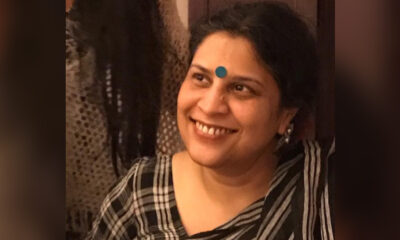
Echoing the sentiment, CNN-News18 CEO– English and business news Smriti Mehra said the conflict marks a defining global moment, with consequences that extend well beyond the region. She noted that the conclave seeks to present the crisis with “depth, nuance and responsibility” so audiences can better grasp its real-world impact.
As geopolitical tensions continue to dominate headlines, the conclave positions itself as an attempt to bring order to the noise, offering viewers a structured, insight-led look at a complex and rapidly shifting global situation.






