
Sports
JioStar to deepen investment in women’s cricket ecosystem
Ishan Chatterjee says the 446 million-strong World Cup audience is a turning point, and promises better broadcasts and more player storytelling


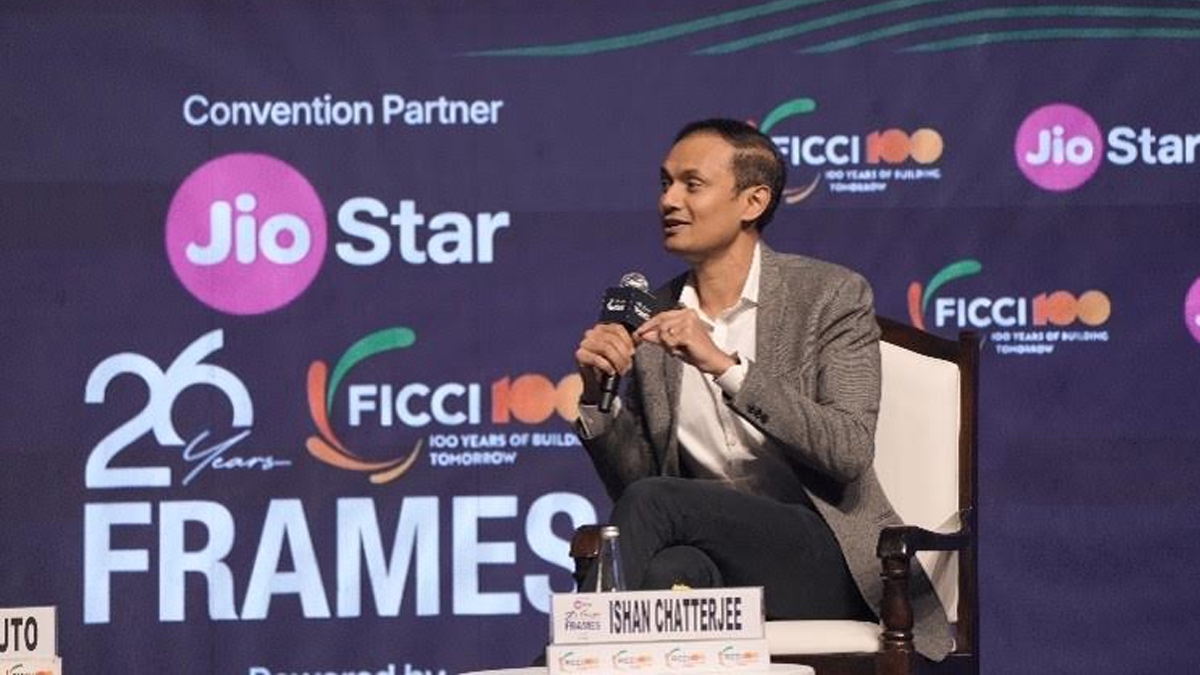
MUMBAI: Women’s cricket has stopped being a side bet, and JioStar wants everyone to know it was there first. The broadcaster will keep investing across the women’s cricket ecosystem, said Ishan Chatterjee, chief executive of JioStar sports, speaking at FICCI Frames 2026 in Mumbai. “We were believers in women’s cricket well before it became mainstream. In fact, we were the broadcast partners for the WPL when it first started,” he said.
The numbers back the swagger. The ICC Women’s World Cup 2025 reached 446 million viewers, the highest ever for women’s cricket and more than the combined reach of the previous three editions. Chatterjee called the tournament a real inflection point. “The final was as big as an IPL game. It gives you a sense of viewership, engagement and the fandom that has been built behind the women’s game, which also followed through into the 2026 WPL. We’re very excited about the upcoming WPL and the (ICC Women’s) Champions Trophy,” he said.
The Women’s Premier League (WPL) has steadily grown into a premium property, with sponsors in the 2026 edition spanning FMCG, technology, BFSI, auto, apparel and artificial intelligence (AI). That breadth matters. When a league draws money from sectors as different as soaps and software, it is no longer a charity case for advertisers. It is a line on the media plan.
Chatterjee said the spending will not stop at the cheque. “You can expect our investment to continue to increase, and not just in monetary terms. We’re going to invest in the quality of the broadcast while continuing to double down on player storytelling and building heroes because that is the core of what generates fandom,” he said.
He also spoke about how fans watch across screens. Watching on a mobile phone is a personal experience and lends itself to interactivity, he explained, while connected TV is a communal experience. “The big screen allows you to do a lot more with the features, our view is that we need to cater to both those audiences at all times,” he said.
On the wider sports calendar, Chatterjee said JioStar is keen to serve the individual fan ecosystems of multiple sports, but that does not necessarily mean stacking more events. “What that means is formats that have a differentiated viewer proposition or can create context around it will do well, and formats that are unable to do so will get challenged. Just as an example, our data tells us that multilateral cricket tournaments have higher audience engagement than some bilateral cricket,” he said. He also noted that streaming has unlocked opportunities that did not exist in the traditional broadcast world, allowing multiple sports with passionate fan bases to thrive.
What does this add up to? Three things stand out. First, the reach figure is the story. A World Cup that beats the combined audience of its three predecessors, with a final that Chatterjee likens to an IPL game, gives the women’s game the kind of evidence that sponsors and broadcasters understand. Second, the promise of better production and stronger storytelling is smart. Fandom is built on heroes, and heroes are built on stories, so investing in the craft of the broadcast is investing in the product itself. Third, the two-screen view is sensible. Phones for interactivity, big screens for shared viewing: a platform that serves both is better placed to hold a fan for the whole match. For a broadcaster that says it backed the WPL from the start, doubling down looks like a confident bet on an audience that has already shown up.






