Special Report
Even as new-look Indian fashion channels up tempo, advertisers cool


The conditional access system has certainly changed a lot of things.Even in those particular niche segments not believed to be of much consequence in the mainline advertising stakes. The fashion television genre is one such case. Till the first quarter of this calendar year, there wasn‘t much action in the genre except for the occasional protests from the “morality” brigade. Come 14 July 2003 and everything is set for revamp.
Men are from Mars and women are from Venus. It‘s great to see perfectly shaped bodies cavorting on the ramp and have a plethora of choices too. Competition, they say, induces dynamism into an otherwise static market. The entry of Zee-Turner‘s fashion channel Trendz has “shaken and stirred” Fashion TV. The minimal T against a backdrop of pink adorning the right hand corner of the television screen has really set the small screen on fire in several Indian homes.
Due to it‘s monopoly, Fashion TV had become monotonous and repetitive in the last few months. Then came Trendz! Imagine watching the svelte divas walking down steps and wading through a “liquid” ramp comprising of water. Another instance had the camera moving with the music even as the models danced and indulged in affable bonhomie. Models even indulged in “notorious” activities such as dancing around poles.

 Soon the buzzword became “movement” – innovative and creatively conceptualised backdrops. It is a treat to watch “angels and fairies” hanging from the ceiling even as the models walk the ramp below. In another case, sceptres adorned the backdrop even as the models carried some in their hands while posing for photographs. Viewers got to see fashion shows wherein the models strutted across a swimming pool located in the midst of green lawns. At the end of the show, the designer comes to the fore and jumps into the pool while taking a bow!
Trendz brought in the theatrics and the opera elements into the living rooms. The camera lingers on the models and focuses on their props and accessories. It captures their expressions as they emote.
 Trendz really seems to have set the tone with its clear-cut segmentation – programmes such as Primal Fashion, Fashion Uncensored, The Designers (Alexander McQueen), The Celebrity and Fashion Classics. The daring Bikini Open became so popular that Fashion TV is following suit and looking like a clone. Retrospectives on supermodels (Kate Moss) and the rising stars such as Esther Canadas, Giselle Bundchen and Alek Wek on Model TV would seem like a dream come true.
Feeling threatened Fashion TV started beefing up it‘s content in May. From 26 May, French channel Fashion TV became a fully free to air (FTA) feed beaming off the Asiasat 2 satellite. It has stopped its encrypted signal that till now was beaming as a “dual feed” off PAS 10.
With this move, it becomes the first private pay channel to become FTA in the lead-up to the CAS rollout deadline of 14 July for the four metros of Mumbai, Delhi, Kolkata and Chennai
 The channel was changing visibly and seemed to be chalking up brownie points. The exclusive segment on the Cannes Film Festival sponsored by luxury watch house Chopard was simply fabulous. Interviews with actresses such as Salma Hayek (for her film Frieda) grabbed attention.
According to FTV‘s new ad sales partner Worldwide Channel MD Ratnakar Kumar, a new show called Fashion in Films has been launched on Fashion TV, on the occasion of the Cannes film festival 2003, as a precursor to changing programming that will be evident on FTV.
Fashion In Films, a daily programme showing the main fashion trends as they appear in the latest movies will have clips devoted to one movie, and highlights the fashion of that movie. For example, in The Gangs of New York, Fashion TV shows all the men‘s fashion of the period. In the feature on Charlie‘s Angels, FTV shows the style of hair, the dresses, bikinis the stars are wearing. FTV edits the films into three-minute fashion clips, honouring the costume designer who was responsible for the creative look of the film.
Fashion In Films is a 15-minute daily programme, and will be broadcasted four times a day at 11:30 am, 9:30 pm, 2:30 am and 5:30 am India time.
The sessions on “hair do and make up” have also become more interesting. The background music, always a significant aspect of the package of fashion channels, improved by leaps and bounds. Fashion TV also came up with some on-screen innovations such as multiple small screens crisscrossing the length and breadth of the television set.
 The local content and sponsorships also increased on Fashion TV. The FTV Femina Girl scholarship that offered students an amount of Rs 5 million and the Kingfisher Swimwear 2003 calendar shot in Mauritius by ace photographer Atul Kasbekar were striking examples. The segments of Fashion Parties and Fashion Bar improved dramatically.
The key issue is whether FTV‘s move of turning FTA will benefit the channel in the long run. Indiantelevision.com got some reactions from media planners and buyers.
 Media consultant and ex-Carat CEO Meenakshi Madhvani says: “Having watched both channels I feel Trendz is a better offering. More “Fashion programming” and less skin! However both are very small niche channels and will attract very select/specific advertising. The pay audience for channels such as these is minuscule. If they are FTA, more networks will carry them and the chance of a casual viewer stopping at the channel increase! Hence, greater revenue possibilities! Niche channels such as these have to build their marketing efforts around the tastes of the “significant minority” that they cater to. They need for more ground visibility if they want to build audiences and revenue. Till then, insomniacs and wannabes will be the core audience for such channels!”
MediaCom‘s media group head planning Mamatha Morvankar says: “FTV is too niche a channel to be affecting media plans. Therefore, FTV‘s decision of being FTA is not really going to affect any plans immediately. We do not have any of our clients putting monies on FTV or Trendz.”
Carat Media Services‘ Gautam says: “They have pre-empted the CAS scenario and made the channel free to air. I think it is a good decision because very few people would pay to watch a channel like FTV – my feeling is that it would be the last on the priority list for any household. None of my clients ever advertised on FTV or on Trendz before. We were in the past looking at FTV to do some innovations on the channel, somehow it did not go through. FTV always had good content. Like the Mardi Gras festival.”
WPP group Maximize India MD Bashab Sarkar says: “FTV has taken the right decision to be FTA. As they do not have ratings to show, they have to depend on connectivity. If they opt for Pay then many Indian households won‘t choose them. I fear that children will be a major decision maker and keeping to our tradition, none will opt for such a channel. I haven‘t watched much of Trendz till date. But liquor advertisers have used FTV in the recent past. FTV has not done anything to really beef up its channel.”
 Optimum Media Solutions executive vice president Amit Ray says: “In Indian context FTV is truly an ADULT channel! … and like in any adult content it is probably viewed more in private than in the family environment. Going free to air seems like a decent move as when CAS comes into play it would be very difficult for an average Indian man to tell his cable operator to give him FTV especially if the wife is listening!
“About advertising it is difficult to say as I personally haven‘t seen any ads on either channel (and I do watch the channel once in a while). I really can‘t comment about the beefing up bit but there are so many unutilised opportunities in the fashion space … but for that they may need to create customised content, customised for Indian audiences,” says Ray.
MindShare MD Ashutosh Srivastava says: “As of now, none of our clients are on either channel. Being niche content channels, they will eventually have to be pay, to
survive, though in the short term going FTA may pay off for FTV.”
MindShare Delhi GM Nitin Jain says: “Fashion TV would have lost whatever little audience they had if they had stayed pay, especially in the post-CAS scenario. Thus, it is good for them to go FTA. We have no clients from MindShare, Delhi who advertise on Fashion TV or Trendz channels. If any channel is a serious player in the India context then changes in content is key to getting audiences. Sure, competition only helps these changes happen much sooner.”
MindShare‘s J Sathyan adds: “Yes, FTV‘s decision to go free to air is the right one for the next six months at least. FTV is a channel which shows repeat content worldwide and hence production costs are very low compared to any other genre – a model very similar to infotainment or cartoon channels. Such channels can afford to be free to air and in the bargain arrest any downfall on penetration due to CAS. This channel would never be asked for specifically given our Indian society but if it comes free or as package is most welcome!”
 Starcom India GM-investments (buying and new initiatives) Manish Porwal says: “Fashion TV‘s dispute with MEN and its legalities aside, it might be a good idea for the channel to go FTA, given that the CAS regime will make consumers take clear sides on which channel they want and which they don‘t. Given our social construct and taboos, most viewers who wish to watch the channel may still not be fine with accepting so, with their family, and may hesitate to directly pay for it, while making the choice.”
“We don‘t have any clients advertising on FTV as of now. Starcom has had Fiat Siena advertise on FTV some time back,” says Porwal.
“No, I am not too sure the beefing up would only be in light of the Trendz launch. They see a potential in India and therefore must have earmarked several endeavours in their calendar. One of the fairly visible ones is their capsule on Indian Fashion. It, however, would be interesting to watch the appetite grow and competition and benefit the viewer and the advertiser both,” says Porwal.
MediaWorks Advertising Krishna Suvarna says: “FTV‘s decision to go free is the right decision because after CAS people might be reluctant to watch something which is paid and being free it widens its base for more viewers to watch them. Trendz has been a catalyst for changing the look and feel of FTV.”




MUMBAI: Some friendships are made in heaven; others are coded in Mumbai. Hamara Vinayak, the first-ever digital original from Siddharth Kumar Tewary’s Swastik Stories, turns the divine into the delightful, serving up a story that’s equal parts start-up hustle and spiritual hustle.
Some tech start-ups chase unicorns. This one already has a god on board. Hamara Vinayak takes the leap from temple bells to notification pings and it does so with heart, humour and a healthy dose of the divine.
At its core, the show asks a simple but audacious question: what if God wasn’t up there, but right beside you, maybe even debugging your life over a cup of chai?
The show’s tagline, “God isn’t distant… He’s your closest friend” perfectly captures its quirky soul. Across its first two episodes, screened exclusively for media in Mumbai, the series proves that enlightenment can come with a good punchline.
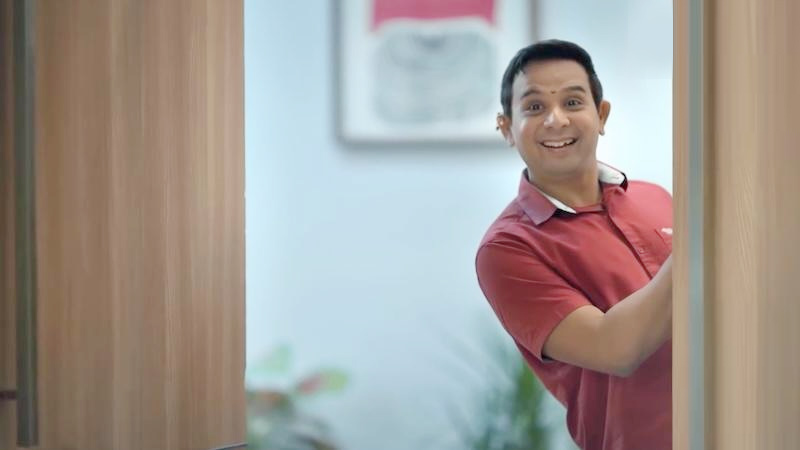
The series follows a group of ambitious young entrepreneurs running a Mumbai-based tech start-up that lets people around the world book exclusive virtual poojas at India’s most revered shrines. But as their app grows, so do their ethical grey zones. Into this chaos walks Vinayak, played with soulful serenity and sly wit by the charming Namit Das, a young man whose calm smile hides something celestial.

He’s got the peaceful look of a saint but the wit of someone who could out-think your favourite stand-up comic. Around him spins a crew of dream-driven youngsters – Luv Vispute, Arnav Bhasin, Vaidehi Nair and Saloni Daini who run a Mumbai-based tech start-up offering devotees across the world the chance to book “exclusive” poojas at India’s most sacred shrines. It’s a business plan that blends belief and broadband – and, as the story unfolds, also tests the moral compass of its ambitious founders.
“The first time I read the script, I found the character very pretty,” Namit joked at the post-screening interaction. “It’s a beautiful thought that God isn’t distant, he’s your closest friend. And playing Vinayak, you feel that calm but also his cleverness. He’s the friend who makes you think.”
The reactions to the series ranged from smiles to sighs of wonder. Viewers were charmed by the show’s sincerity and sparkle, a quality that stems from its creator’s belief that faith can be funny without being frivolous.
Among the cast, Luv Vispute shines brightest, his comic timing adding sparkle to the show’s more reflective beats. But what keeps Hamara Vinayak engaging is the easy rhythm of its writing – one moment touching, the next teasing, always gently reminding us that spirituality doesn’t have to be solemn.
Luv spoke fondly of his long association with Swastik. “Since my first show was with Swastik, this feels like home,” he said. “Every project with them is positive, feel-good, and this one just had such a different vibe. I truly feel blessed.”
Saloni Daini, who brings infectious warmth to her role, added that she signed up the moment she heard the show was about “Bappa.”
“We shot during the Ganpati festival,” she recalled. “The energy on set was incredible festive, faithful, and full of laughter. It’s such a relatable story for our generation: chaos, friendship, love, kindness, and faith all mixed together.”

Vaidehi Nair and Arnav Bhasin complete the ensemble, each representing different shades of ambition and morality in the start-up’s journey. Their camaraderie is easy and believable, a testament to how much the cast connected off-screen as well.
This clever fusion of mythology and modernity plays to India’s two enduring loves, entertainment and faith. Mythology has long been the comfort zone of Indian storytellers, from the televised epics of the 1980s to the glossy remakes that still command prime-time TRPs. For decades, gods have been our most bankable heroes. But Hamara Vinayak tweaks the formula not by preaching, but by laughing with its characters, and sometimes, at their confusion about where divinity ends and data begins.
Creator Siddharth Kumar Tewary, long hailed as Indian television’s myth-maker for shows like Mahabharat, Radha Krishn and Porus, explained the show’s intent with characteristic clarity, “This is our first story where we are talking directly to the audience, not through a platform,” he said. “We wanted to connect young people with our culture to say that God isn’t someone you only worship; He’s your friend, walking beside you, even when you take the wrong path. The story may be simple, but the thought is big.”
That blend of philosophy and playfulness runs through the show. “We had to keep asking ourselves why we’re doing this,” Tewary added. “It’s tricky to make something positive and spiritual for the OTT audience, they’ve changed, they want nuance, not sermons. But when the purpose is clear, everything else aligns.”
For the creator of some of Indian TV’s most lavish spectacles, Hamara Vinayak marks a refreshing tonal shift. Here, Tewary trades celestial kingdoms for co-working spaces and cosmic battles for office banter. Yet his signature remains: an eye for allegory, a love for faith-infused storytelling, and an understanding that belief is most powerful when it feels personal.
Hamara Vinayak, after all, feels less like a sermon and more like a conversation over chai about what success means, what faith costs, and why even the gods might be rooting for a start-up’s Series A round.
As Namit Das reflected during the Q&A, “Life gives us many magical, divine moments we just forget to notice them. Sometimes even through a phone screen, you see something that redirects you. That’s a Vinayak moment.”
The series also mirrors a larger cultural pivot. As audiences migrate from television to OTT, myth-inspired tales are finding new form and flexibility online. The digital screen lets creators like Tewary reinvent the genre, giving ancient ideas a modern interface, without losing the emotional charge that’s made mythology India’s storytelling backbone for decades.
In a country where faith trends faster than any hashtag, Hamara Vinayak feels both familiar and refreshingly new, a comedy that’s blessed with heart, humour and just enough philosophy to keep the binge holy.
For a country where mythology remains the oldest streaming service, Tewary’s move from TV to OTT feels both natural and necessary. Indian storytellers have always turned to gods for drama, guidance and TRPs from Ramayan and Mahabharat on Doordarshan to glossy mytho-dramas on prime time. But digital platforms allow creators to remix reverence with realism, and in Hamara Vinayak, faith gets an interface upgrade.
The result is a show that feels like a warm chat with destiny, part comedy, part contemplation. And in an age of cynicism, that’s no small miracle.
As Tewary put it, smiling at his cast, “The message had to be positive. We just wanted to remind people that even in chaos, God hasn’t unfriended you.”
With 5 episodes planned, Hamara Vinayak promises to keep walking that fine line between laughter and light. It’s mythology with memes, devotion with dialogue, and a digital-age reminder that even the cloud has a silver lining or perhaps, a divine one.
If the first two episodes are any sign, the show doesn’t just bridge heaven and earth, it gives both a Wi-Fi connection.




