News Broadcasting
Astill’s study of India through cricket binoculars

The book came out last month; but our review has found space on indiantelevision.com only in September. Readers, who have not yet got their hands on the book, would be wise to do so. I am a cricket fanatic and thoroughly enjoyed reading this fast paced close peek of the evolution of modern India. And would advice you to do the same if you love the game of the red cherry – or white one – if one looks at what’s in use in modern day cricket.
James Astill
James Astill, the Economist’s correspondent in India between 2007 and 2010, watched the rise of IPL. With cricket’s biggest shebang as the back ground, he has gone on to narrate a wider story of modern India. Much of this story is known. Yet while Astill relies on previously published material, what makes his book exceptional is his first-hand reporting.

The ‘tamasha’ of Astill’s title is a Hindi word meaning entertainment or show. As he tells the story, it was inevitable over time that the Indian public would forsake the extended dramas and longueurs of Test cricket for the shorter, more colourful and energetic forms of the game. This process began with India’s completely unexpected victory at the 1983 World Cup under the leadership of Kapil Dev, and has now reached its ultimate incarnation in the cat and mouse game also termed as the Twenty20 format and controversy’s favourite child the Indian Premier League.
Astill is a keen follower of the game and says “the story of Indian cricket is not only about cohesion and success, but is deeply pathetic.” He has very objectively and figuratively described the poor state of infrastructure in the country; a place where millions of children aspire to wear the Indian jersey someday. But the harsh truth is they are unlikely to even get a chance to play an organised version of the game, with a good bat and leather ball. One of the most touching stories is of the railway clerk in Rajkot who, using a concrete pitch and tattered nets, has coached several first-class cricketers, including his son – now a leading light of India’s Test team.
Politics in democratic India, Astill observes, is “feudal, corrupt and vindictive”, and the administration of cricket is no more than an aspect of politics. Money was everything in the establishment of the IPL, the cricket itself almost incidental. More than $700 million was paid for the first franchises. The Indian captain, Mahendra Singh Dhoni, is reckoned to earn $21 million a year from the game. Foreign mercenaries such as Kevin Pietersen and Shane Warne were bid for like prize bulls at a livestock market. At some matches the players’ salaries were flashed up on the scoreboard alongside their batting averages; going on to emphasis the fact that the sport has been portrayed in a completely different light.
Astill seems to have talked to everyone who is anyone involved in this deeply unattractive business – including Lalit Modi, the now-disgraced founder of the IPL, whose capacity for intrigue was exceeded only by his genius for making enemies. Almost equally disconcerting is the formidable Sharad Pawar, who combines the job of India’s agriculture minister with controlling the Indian Cricket Board and being president of the International Cricket Council.
In comparison with the corporate (read: administrators) and the Bollywood stars who keenly follow the action from the boundary’s edge, the players seem considerably more likeable. Astill tracks down the inspirational Warne, former captain of the Rajasthan Royals. Warne speaks up expressively on behalf of Twenty20, before innocently sabotaging his case by admitting that “for me it’s always about Test cricket”.
The striking thing about most of those in charge of the IPL is their lack of real passion for cricket itself. They are in it to seek exposure, to sell advertising, to exercise power. Almost none of the money filters down to fund coaching or grass-roots facilities. As for the games themselves, Astill’s judgment is that most lack tension and the real edge of competition.
Astill relentlessly highlights all this and comes to the sad conclusion that India may end up killing the great traditions of cricket. And yet Astill finds that in the streets and on patches of waste ground in the slums and villages of India, (during his stint in the Indian-subcontinent) the game is furiously alive, uniting millions in the simple desire to hurl a ball fast or spin it with conniving intent, and to hit it far. “This is where Indian cricket resides,” Astill writes eloquently, “far from the elite, the corrupt politicians and turkey-cocking film stars who have laid claim to it.” And therein lies the hope that this most beautiful of games will survive.





News Broadcasting
CNN-News18 to host Fury in the Gulf conclave on West Asia crisis
Three-hour summit to unpack geopolitical fallout and impact on India
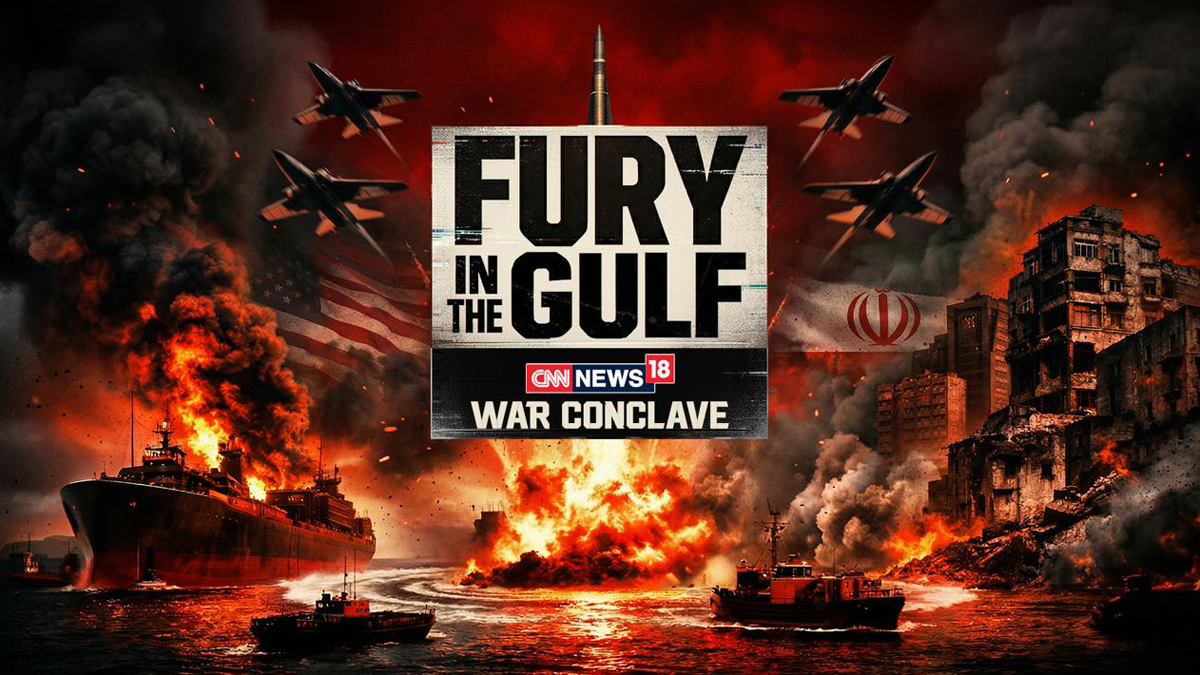
MUMBAI: CNN-News18 is set to host a special three-hour broadcast, Fury in the Gulf – War Conclave, on April 7, aiming to decode the escalating West Asia crisis and its far-reaching implications for India.
Scheduled from 4:00 PM to 7:00 PM, the conclave comes at a time when tensions between Iran and the United States are reshaping global geopolitics and triggering economic uncertainty. With India’s deep energy ties, trade links and large diaspora in the Gulf, the developments carry significant domestic relevance.
Built around the theme ‘Conflict, Consequences, and The Future,’ the programme will feature six curated sessions combining one-on-one interviews and panel discussions. The focus is to cut through the clutter and offer viewers a clearer understanding of the fast-evolving situation.
Key sessions include ‘Diplomacy in Times of War’ featuring Shashi Tharoor, and ‘World After the Iran Conflict’ with voices such as Ram Madhav, Reuven Azar, representatives from the European Union and the Iranian Deputy Envoy. Another session titled ‘Another Dunkirk?’ will bring together K. J. S. Dhillon and Jitin Prasada among others.
CNN-News18 editorial affairs director Rahul Shivshankar said, “In times of war, clarity becomes the most powerful tool. Fury in the Gulf – War Conclave brings together credible voices to address the questions and confusion that arise amid an overwhelming influx of information.”
He added that the initiative is aimed at delivering “facts, perspective, and insight” at a time when misinformation can easily cloud public understanding.
Echoing the sentiment, CNN-News18 CEO– English and business news Smriti Mehra said the conflict marks a defining global moment, with consequences that extend well beyond the region. She noted that the conclave seeks to present the crisis with “depth, nuance and responsibility” so audiences can better grasp its real-world impact.
As geopolitical tensions continue to dominate headlines, the conclave positions itself as an attempt to bring order to the noise, offering viewers a structured, insight-led look at a complex and rapidly shifting global situation.






