English Entertainment
“Any channel that we launch in the future, will be successful in year one:” MK Anand

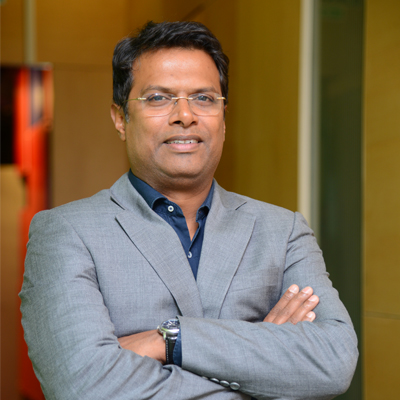
Heading the broadcasting expertise of a media conglomerate, which has been operating in India since 1838 is certainly a job of immense pressure. But there is someone who has been doing it with élan and that too at a time when every day gives birth to a new trend, every month, a new competitor enters and claims to be different. He is none other than Times Network CEO and MD MK Anand.
Not long back, acknowledging the emergence of digital and new media, Anand spearheaded a staggering move in which the Times Television Network was transformed into Times Network. Despite having an English movie channel championing the ratings week after week, he marked the launch of another channel in the same genre, with a bigger and better philosophy. Under his leadership, various channels of the network secured pole position on numerous occasions in their respective genre.

Speaking exclusively to Indiantelevision.com’s Anirban Roy Choudhury, Anand shares his vision for the media industry especially the English entertainment industry and the road map ahead for Times Network.
Excerpts:
Can you give an overview of Times Network’s news and entertainment channels and which segment is priority?
Being in niche broadcasting, I believe all sectors need attention because it’s a highly competitive industry with some strong players. So innovation needs continuous attention. Our leadership position has been good in both English movies and news space. On the other hand, Zoom needed some specific product attention in the first quarter with reference to the re-launch, marketing etc.
What next for the news sector? Property Now is launching soon and you already have Times Now and ET Now. Is there a Hindi news channel foray on the cards?
Not really. I don’t think there is sense in it right now. The portfolio that we already have needs to be adequately and correctly monetized. I think there is headroom for both in subscription as well as ad sales, which we have seen in the past six quarters or so. We have been able to continuously move the needle on that and until we exhaust that, I don’t think there is sense in stretching and going into a different language all together.
As of now, we are leaders and I feel we will be able to sustain this leadership in the top end category of the broadcast audience. There is a lot to be done there before we move into regional news etc.
The network already had a English movie channel in Movies Now, what was the reason behind launching MN+? Was it to attract advertisers?
I don’t think it is right to launch products for consumers because you have an advertising business opportunity. You launch products because you have consumer demand. So, the launch of Movies Now and now MN+ is to acknowledge the fact that with DAS Phase I and II and now as we go to Phase III and IV, the potential to launch more and more niche channels and to reach out to specific viewers is better and cheaper than it was with analog.
Niche is the way to go. Niche is to acknowledge that specific groups in a large population and vast universe have different tastes. Movies Now is more descriptive as it caters to the whole English viewership but within that there is romance, action and slow movies sector. When you acknowledge the specific niches, you can come up with products like MN+. These channels come up because of niche recognition not because of advertising opportunities.
What has been advertisers’ reaction so far to MN+?
We are delighted with advertisers’ reaction. It is one of the channels, which has almost reached a maturity level in the shortest period of time.
Speaking of the English entertainment genre as a whole, a few international channels have found it difficult to find a foothold in India. On the other hand, we have Colors Infinity and MN+ launching in the wake of the HD boom. What do you think is the need of the hour when it comes to English entertainment in India?
The HD market is definitely growing. It is the natural progression of television viewing just like black and white went to colour, terrestrial went to cable and satellite. Similarly, HD technology is getting diffused and being adopted.
The top of the pyramid is obviously the best place for advertisers to be, whether it is in print or television and therefore the returns on HD from an advertiser’s point of view will be much more than the other areas. HD is the future of all broadcasting. In fact, soon there’ll be someone launching a 4K channel and then 4K will be the future. So technological advancement per se will be the future of all broadcasting.
English entertainment was mainly targeted at the metros at one point of time. Do you see the target group growing now given the fact that we are seeing growth everywhere?
All this is happening because of digitisation. More channels per cable allows for better penetration. Secondly, in the past when TAM in its panel change introduced LC1, there was a rush to reach those markets.
I think advertising optimized distribution and the way niche channels or networks distributed in the past is now gradually changing. One of the reasons why the base is expanding is because of digitization and the possibility that subscription revenues will eventually start flowing from consumers to cable operators in a more transparent manner and through MSOs and DTH operators to broadcasters.
Broadcasters know that in the next two to five years, subscription revenue will be a lot more transparent. From that point of view, it is a bet that we take and go to those markets.
OTT player HOOQ armed with English entertainment content has entered the Indian market. With Netflix speculated to launch in India next year, do you think OTT services are a threat to traditional television model in a country like India?
There will always be a huge base of Indian consumers who will be consuming English news, English entertainment, English GEC content. It could be through Netflix or it could be through Movies Now or MN+. The fact of the matter is that consumption is not going to go down.
So if you’re asking me whether broadcasters should now stop investing in content because Netflix is coming in; I don’t think so.
Just because a YouTube exists, does it mean that other apps are not going to survive or will get lost? These are all businesses, which have been built over the last ten years. You never know what’s going to happen in the next ten years. A Netflix equivalent or a bigger player may be coming out of India in the next ten years. However, that will happen only when Indian entrepreneurs – whether it is broadcasters or otherwise – play in that market with their own hands. So we won’t fade away because some competitor is coming into play.
Do you think the time is right for India to create original English entertainment content? What is the scope for such content?
That has already started with the infotainment segment whether it is travel or lifestyle type of content. There is a lot of stuff, which is made for India and can also travel across. However, creating entertainment content for Indian production companies will take some time and even if it happens, those will have wings to fly only when they are produced for the global market and not for the Indian market alone. The Indian market is not big enough for that as of now.
Do you foresee digital overtaking television when it comes to news consumption? Or do they complement each other? Arnab Goswami recently said that by 2020, digital will probably overtake television. What is your viewpoint?
In some sectors like news, yes, digital is likely to overtake television, but certainly not in all sectors. News will be travelling across multiple platforms.
Brands like ZoOm and Times Now, which started on the broadcast medium, can now co-exist on the mobile platform with the emergence of the digital medium. I am not very sure if that will be the case with other genres. Maybe in the next elections, we will have a lot more apps giving competition to the broadcast platform. At the same time, television channels will also have a lot more viewership on apps. In the foreseeable future, both the platforms will complement each other and happily co-exist.
What kind of push and emphasis is the network giving to the digital medium?
We are ready to go full-fledge in terms of the launch of Times Now app. Video-on-demand (VOD) totally depends on Intellectual Property (IP) and we have some very strong IP in terms of Times Now’s News Hour and Frankly Speaking. However, to venture into VOD, we will need more IP.
Arnab is someone who every CEO would love to have in his team but do you sometimes feel that he is becoming bigger than the brand?
(Laughs) That is like asking a production company if they were happy to have Johnny Depp or Salman Khan in their team. What I would say is that we are happiest to have him inside rather than outside.
Times Network recently promoted Arnab as the editor in chief of ET Now. What is the road ahead for ET Now and what role will Arnab play?
ET Now has completed six years. The channel, in its first three and half years of existence, was able to challenge CNBC and become number one. The fact that we have been able to challenge CNBC is a big achievement.
Getting numbers, viewership or reach is not what we want out of this market. ET Now’s challenge is something larger, which is to be appealing to a broader base than just the so-called ‘stock market players’ or ‘business viewers.’ And that is exactly where Arnab would be useful.
Can you throw some light on ZoOm’s positioning and the way forward?
When we had launched ZoOm, music formed 80 per cent of the programming mix, whereas now that number has come down to 60 per cent. So 40 per cent of the channel’s programming is now content. Ideally, as we go forward, I see almost 65 per cent of the channel’s content comprising Bollywood trends, lifestyle and trivia. And viewers will be able to consume this content on the broadcast platform, as well as on platforms like digital and social media.
Is the Indian media and entertainment industry moving towards more subscription and less ad revenue model? What is the scenario at Times Network?
In the industry, we are already subscription positive. When it comes to Times Network, we are yet to shake off the burden of carriage fees and hence, we are still advertising led. Moreover, that is also because we don’t have a large channel, which at times is a handicap when it comes to distribution.
But yes, over the last two years, significant headway has been made. DTH operators and MSOs have started acknowledging the fact that we are a useful bunch to increase ARPUs. When it comes to the high-end consumers, you cannot have a distribution and subscription pack without including the Times Group channels. We have subsequently been able to use that to our advantage to improve our carriage versus subscription position. Our net income has improved. We are sure that it will continue to improve and we will get to a positive situation in a year or so and that’s big.
Going forward what is the road map ahead for Times Network? Will there be any new launches?
We would like to launch at least one or two channels every year complementing our catalogue. Property Now is a complement to ET Now, whereas MN+ complements Movies Now. So we will launch a new channel wherever we feel a need gap, which can be profitably filled.
One thing I am sure of – both the channels that we have launched or any channel that we launch in the future, will be successful in year one.
For the next couple of years, what we need to articulate is the fact that the sum is a lot more than individual parts. What I mean by this is, when you look at the holistic picture, we are talking to top two per cent of Indians. India’s population is 134 crore and India’s monthly English viewership is 2.6 crore, which is exactly two per cent of country’s population.
On a regular basis, we are talking to 1.3 crore people, which means that we reach out to one per cent of India every day. However, when you look at that one per cent, it’s not just any one per cent. We are serving India’s most influential broadcast audience, and that is very important because that’s not just any audience. We are reaching to the decision makers. Last year, we managed to secure 30 per cent growth. My primary target is to secure 30 per cent CAGR for the next two years as that will take us to a very strong position as a network.
What is your take on the digitisation progress so far?
Given the size of the market, its ability to pay for boxes and the current state with reference to the mostly unorganized sector, DAS Phase I and II have really happened at commendable speed. Now we need to wait and watch the progress that takes place in the Phase III and IV. However, I am not very satisfied with the way Phase III has progressed.
Has the new government addressed key issues bothering the media and entertainment industry?
I don’t think we are in a situation where things can be changed overnight. What we all are now looking at is Phase III and IV of digitization. The most important contribution I expect from the new government is to pace up the economy. If the pace is good, media will be good. Businesses like ours are very heavily advertising led and advertising follows the economy. As of right now, if we have done so well last year as well as this year until now, it’s because of the new government.
What’s your take on BARC?
I am very happy with BARC fundamentally because we have been able to hold on to our leadership. Moreover in the case of ET Now and Movies Now, our ratings have improved.
Overall, the transition was smooth. And even though there have been some teething issues, I think things will get sorted in time. The management team and the technology are able and good.




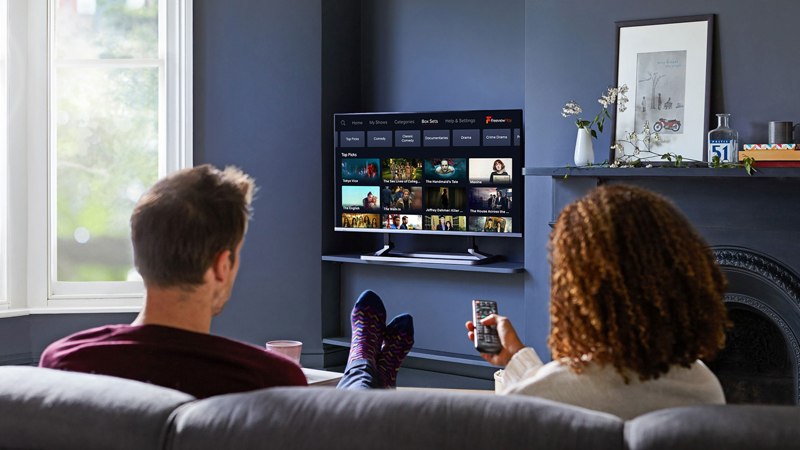
UK: The aerial is losing its grip. As broadband becomes the default way Britons watch television, the UK is edging towards a decisive, and divisive, question: should Freeview be switched off by 2034? The issue, highlighted in reporting by The Guardian, has exposed deep fault lines over access, affordability and the future of public service broadcasting.
For nearly 25 years, Freeview has delivered free-to-air television from the BBC, ITV, Channel 4 and Channel 5 to almost every corner of the country. Even now, it remains the UK’s largest TV platform, used in more than 16m homes and on around 10m main household sets. Yet the same broadcasters that built it are now pressing for its closure within eight years.
Their case rests on a structural shift in viewing. Smart TVs, superfast broadband and the Netflix-led streaming boom have pulled audiences online. Advertising economics have followed. By 2034, the number of homes using Freeview as their main TV set is forecast to fall from a peak of almost 12m in 2012 to fewer than 2m, making digital terrestrial television, or DTT, increasingly costly to sustain.
But critics say the rush to switch off risks abandoning those least able, or least willing, to move online.
“I don’t want to be choosing apps and making new accounts,” says Lynette, 80, from Kent. “It is time-consuming and irritating trying to work out where I want to be, to remember the sequence of clicks, with hieroglyphics instead of words. If I make a mistake I have to start again.”
Lynette is among nearly 100,000 people who have signed a “save Freeview” petition launched by campaign group Silver Voices. She fears the government is about to “take [Freeview] away from me and others who either don’t like, can’t afford, or can’t use online versions”.
Official figures underline the fault lines. A report commissioned by the Department for Culture, Media and Sport estimates that by 2035, 1.8m homes will still depend on Freeview. Ofcom’s analysis shows those households are more likely to be disabled, older, living alone, female, and based in the north of England, Wales, Scotland and Northern Ireland.
Freeview is owned by the public service broadcasters through Everyone TV, which also operates Freesat and the newer streaming platform Freely. After two years of review, DCMS is expected to set out its position soon, drawing on three options proposed by Ofcom: a costly upgrade of Freeview’s ageing technology; maintaining a bare-bones service with only core PSB channels; or a full switch-off during the 2030s.
The broadcasters have rallied behind the third option. They argue that 2034 is the logical cut-off, when transmission contracts with network operator Arqiva expire. By then, they say, the cost of broadcasting to a dwindling audience will far outweigh the returns from TV advertising.
Ofcom agrees a crunch point is approaching. In July, the regulator warned of a “tipping point” within the next few years, after which it will no longer be commercially viable for broadcasters to carry the costs of DTT.
Others see risks beyond economics. Questions remain over whether internet TV can reliably deliver emergency broadcasts, such as the daily Covid updates, in the way that universally available DTT can. The UK radio industry has also warned that an internet-only future for TV could push up distribution costs and force some radio stations off air if PSBs no longer share Arqiva’s mast network.
“It is a political hot potato,” says Dennis Reed, founder of Silver Voices, who says he has “dissociated” his organisation from the government’s stakeholder forum, which he believes is “heavily biased” towards streaming.
The Future TV Taskforce, representing the PSBs, counters that moving online could “close the digital divide once and for all”. “We want to be able to plan to ensure that no one is left behind,” a spokesperson says, adding that rising DTT costs could otherwise mean cuts to programme budgets.
The numbers show the scale of the challenge. Of the 1.8m Freeview-dependent homes projected for 2035, around 1.1m are expected to have broadband but not use it for TV. The remaining 700,000 are forecast to lack a broadband connection altogether.
Veterans of the analogue switch-off, completed in 2012 after 76 years, recall similar fears of “TV blackout chaos”. Around 6 per cent of households were labelled “digital refuseniks”, yet a targeted help scheme and a national campaign, fronted by a robot called Digit Al voiced by Matt Lucas, delivered a largely smooth transition.
This time, the BBC is less keen to foot the bill. Tim Davie, the outgoing director general, has said the corporation should not fund a comparable support programme for a Freeview switch-off.
Research for Sky by Oliver & Ohlbaum suggests that with early awareness campaigns and digital inclusion measures, only about 330,000 households would ultimately need hands-on help ahead of a 2034 shutdown.
Meanwhile, viewing habits continue to fragment. Audience body Barb says 7 per cent of UK households no longer own a TV set, choosing to watch on other devices. In December, YouTube overtook the BBC’s combined channels in total UK viewing across TVs, smartphones and tablets, albeit measured at a minimum of three minutes.
That shift may accelerate. YouTube has recently blocked Barb and its partner Kantar from accessing viewing session data, limiting transparency just as online platforms consolidate power.
“When the government chose British Satellite Broadcasting as the ‘winner’ in satellite TV it was Rupert Murdoch’s Sky instead that came out on top,” says a senior TV executive quoted by The Guardian. “There already is such an outsider ready to be the winner in the transition to internet TV; it is YouTube.”
Freeview’s future now hangs on a familiar British dilemma: modernise fast and risk exclusion, or protect universality and pay the price. Either way, the aerial’s days as king of the living room look numbered.







