Special Report
2015: The year of nip & tuck for Hindi GECs

MUMBAI: Ratings, ratings from the BARC, who’s the leader of them all?
‘Twas the question on many a lips as the new Indian television ratings body – Broadcast Audience Research Council India launched earlier this year and within just a few months of operations created waves in the industry by throwing up All India data comprising urban and rural numbers. The dynamics of the Indian television market changed and old programming and marketing strategies were scrapped for newer ones. Many a channel executives went back to the drawing board to figure out what India wanted to watch on television.
The year 2015 was also when Hindi general entertainment channels (GECs) slugged it out to attain the top slot by moving away from the typical saas-bahu sagas and explored other genres from horror to mythology to reality in order to provide viewers with wholesome entertainment. The fight had never been tougher for as the year drew to a close, it was nip and tuck as to which channel would lead the ratings race week on week. The undisputed leader of the genre – Star Plus could no longer be complacent as Zee Entertainment Enterprises Ltd’s (Zeel) underdog Zee Anmol gave the market leader a run for its money.

Moreover, channels no longer have the luxury to run non-delivering shows. If a show isn’t working, it’s pulled off air. It’s as simple as that. Gone are the days when a show would endlessly run for years and years. Now, the fight is no longer limited to the top three – Star Plus, Colors and Zee TV. In light of the rural ratings data, free to air (FTA) channels like Zee Anmol, Star Utsav and Rishtey have managed to find their place under the sun and emerge in the list of the Top 10 Hindi GECs. Since week 41, FTA channels started dominating the Top 10 channels’ list. In just eight weeks’ time, Zee Anmol climbed up to the number one spot from the third position, pushing erstwhile market leader Star Plus to the third spot.
On the programming front, if there was a genre apart from drama and reality shows that ruled the airwaves this year on Hindi GECs, it was mythology and historical shows. While some shows proved to be game changers for the channels, some failed to garner ratings.
The year also witnessed some successful partnerships reunite. Star Plus and Amitabh Bachchan came together once again after a span of 15 years for Aaj Ki Raat Hai Zindagi. However, the hype that was created for the show subsided as quickly as the show’s content failed to impress the audience. On the other hand, actor Iqbal Khan, who started his television career with Ekta Kapoor’s show Kaisa Yeh Pyaar Hai on Sony Entertainment Television, made a comeback after 10 years with Pyar Ko Ho Jaane Do.
Even as Priyanka Chopra rocked the international television circuit with her fiction debut in ABC’s high-octane drama series Quantico, closer home there was no dearth of star power on the small screen this year as movie stars from Bachchan, Shah Rukh Khan, Salman Khan, Shahid Kapoor, Hrithik Roshan, Sonakshi Sinha, Farhan Akhtar, Bipasha Basu, Arbaaz Khan to Malaika Arora Khan descended on television with a single minded vision to entertain the audience.
Additionally, adaptations of international format shows, which have become an important part of Hindi GECs, also saw an increase this year. While adaptations of reality and non-fiction shows have been seen on Indian television for some years now, what was special this year was that for the first time, an international fiction format was adapted. India got its very own Everybody Loves Raymond in the form of Sumit Sambhal Lega. Other non-fiction adaptations that made their presence felt this year were India Poochega – Sabse Shaana Kaun?, Bigg Boss Season 9, I Can Do That, Aaj Ki Raat Hai Zindagi and Power Couple to name a few.
The year 2015 also saw Zeel launching a new Hindi GEC under the ‘&’ brand name. Ten months into launch, &TV is striving to carve a niche for itself in the already busy GEC space.
Let’s now take a look at some of the key happenings across the genre in 2015:
Star Plus

The beginning of 2015 was good for Star Plus as it performed well in terms of ratings according to TAM Media Research data. The happy saga continued for a few weeks even after the introduction of BARC data. However, from week 34 onwards, Star Plus witnessed many ups and downs and was in close competition with Colors. Come week 41, which was when BARC released its rural data, the channel faced double trouble with introduction of FTA channels in the tally. As per the latest week data, Star Plus stood in the third spot with Zee Anmol in the top slot followed by Colors.
That said, 2015 will remain memorable for Star Plus as it roped in Bachchan as the host of Aaj Ki Raat Hai Zindagi.
The channel’s long running show including Saath Nibhaana Saathiya, Yeh Hai Mohabbatein, Diya Aur Baati and Yeh Rishta Kya Kehlta hai are among the top five programmes of Hindi GECs.
After the successful execution of Mahabharat, Star Plus launched another mythological show Siya Ke Ram on 16 November, which is produced by Triangle Film Company. A reality show called Dance Plus also made its presence felt on the small screen.
The year gone by also saw a number of shows launching and going off air in a period of three – six months. Shows like Manmarziyan, Gulmohar Grand, Badtameez Dil, Kuch Toh Hai Tere Mere Darmiyaan and Tere Mere Shehar Mein were pulled off because of poor ratings.
Colors

2015 has been a good year for Colors even as the tug of war with Star Plus to claim the leadership position kept both players on their toes. Many a times Colors successfully grabbed the lead position inching ahead of the market leader. So, what worked for the channel in 2015?
Every year Salman Khan says he won’t host the next season of Bigg Boss and every year the channel manages to lure him back on the small screen’s biggest reality show. Colors launched the ninth season Bigg Boss Double Trouble with Khan. However, not wanting to disturb the timings of its prime time fiction shows, which was raking in the ratings, Bigg Boss 9 was placed in the late prime time slot of 10.30 pm on weekdays and 9 pm on weekends.
Colors also experimented with its weekend time slot and launched the supernatural fiction show Naagin, which proved to be a game changer for the channel and was perched on the top rung of the ladder in week 50.
Some of the other notable shows, which have been performing well for the channel are the historical Chakarvartin Ashoka Samrat produced by Contiloe Entertainment as well as two fiction shows produced by Rashmi Sharma Telefilms namely Sasural Simar Ka and Swaragini.
On the non-fiction front, apart from Bigg Boss 9 Colors also launched the second season of its chat show The Anupam Kher Show: Kucch Bhi Ho Sakta Hai and the eighth season of Jhalak Dikhlaa Jaa Reloaded. Experimenting with a celebrity cooking show, Colors roped in Farah Khan and launched Farah Ki Dawat.
While the year saw Colors acquiring some flagship properties like the IIFA Awards and the Box Cricket League, the earlier editions of which were aired on different broadcasters, the channel also launched its first live event property called Suro Ke Rang Colors Ke Sang to celebrate the world of Indian music industry.
Zee TV

The year saw Zee TV struggling to hold on to its position in the third and fourth slots. Even as the channel saw some instability on the ratings chart, the year was sprinkled with a few new launches. The channel, known for its original content formats like Dance India Dance, Sa Re Ga Ma and India’s Best Dramebaaz, experimented this time round with an international format called I Can Do That.
In the fiction genre, the year saw launches like Kaala Teeka, Ek Tha Raja Ek Thi Raani, Sarojini, Laajwanti and Yeh Vaada Raha. On the other hand, the channel’s fiction show Kumkum Bhagya managed to garner high ratings and was amongst the top 5 shows across Hindi GECs.
On the non-fiction front, Zee TV launched the second season of India’s Best Dramebaaz as well as the fifth season of Dance India Dance.
Further strengthening its weekend, the year saw the channel experimenting with the slot with the launch of Neeli Chatri Waale produced by Ashwini Dhir at 8 pm on Saturdays and Sundays. Apart from this, the channel also took its Sunday programming a notch higher with the new adventurous show Janbaaz Sinbad in the 7 pm time slot.
Zee TV also extended its weekday primetime shows to six days a week from Monday to Saturday. From 28 November onwards, the shows on the channel’s 7 – 9 pm time slot were also telecast on Saturdays.
Sony Entertainment Television

In the year 2015, Sony completed two decades of its broadcast operations in India. The year was marked by a new team, new shows and even a new name… 2015 can well be called as the year of everything new for Sony Entertainment Television.
The channel’s mother company Multi Screen Media India was rechristened as Sony Pictures Networks India.
That said, even though the channel launched many new shows in the year in a bid to strengthen its programming, unfortunately not one managed to create the much required magic for the channel. The channel has a long way to go if it wants to make its presence felt in the Top 5 Hindi GECs. As of week 50, Sony stood at number seven in the pecking order according to BARC data.
On the programming front, the channel launched a couple of fiction shows like Parrvarish season 2 and Pyaar Ko Ho Jane Do. On the other hand, hopping on to the mythology bandwagon, Sony too launched two shows in the genre namely Suryaputra Karn and Sankat Mochan Mahabali Hanuman. Going by the popularity of the genre on Indian television, Sony might as well latch on these two shows and offer content that the Indian viewer is readily lapping up.
On the non-fiction front, the channel launched the second season of Junior Indian Idol, which also saw the television debut of actress Sonakshi Sinha as judge along with Vishal Dadlani and Salim Merchant.
Even though the current fare on the channel may not be whetting viewers’ appetite, Sony has been known as a pioneer in bringing cutting edge programming to Indian television screens. After introducing shows like Indian Idol, Jhalak Dikhlaa Jaa and Khatron Ke Khiladi, the channel brought another international format -Power Couple to India. Produced by Colosceum Entertainment the show was adaptation of Israeli format launched on 12 December.
Another major highlight for the channel has been its longest running show CID, which entered in its 19th year in 2015 as well as the hugely successful Crime Patrol,which is all set to follow suit.
Sab TV

Sony Entertainment Television’s sister channel Sab TV is one of India’s most loved comedy channel. Though many shows this year failed to garner sustainable ratings, the channel did not hold back when it came to experimenting with content.
Sab’s comedy show Peterson Hill produced by Garima Productions, was pulled off air due to low ratings despite having a cast like Rohit Roy, Sucheta Khanna and Ashwin Mushran. What’s more, as a part of its programming strategy, the channel also pulled down four of its shows on 19 July this year. The first one to bite the dust was the weekend show Hansi Hi Hansi Mil Toh Lein, which was launched on 29 March. The second show titled Rumm Pumm Po hit screens on 6 June and was wrapped up within 43 days. The game show titled Sab Ka Sapna Money Money, which started from 26 April went off-air in four months too. Rukawat Ke Liye Khed Hai, which launched on 26 April, was the fourth show that ended on the same date.
However, Sab TV also tried some new formats to keep the spirit alive. Taking the route of advertiser funded programming (AFP), the channel launched Chalti Ka Naam Gadi, which was produced by Deepti Bhatnagar production and funded by Maruti Suzuki.
The channel’s longest running show Tarak Mehta Ka Oolta Chashma continued to impress the audience with its comic trails. Additionally, in the last year, Sab TV also made its maiden foray into a big ticket reality show called Comedy Superstar with celebrity judges.
In terms of new offerings, Sab presented Yum Hai Hum, Sahib Biwi Aur Boss and Police Factory to the audience in 2015.
Life OK

2015 saw multiple new show launches across channels and not to be left behind, Star India’s Hindi GEC Life OK too contributed its share to the ecosystem by brining in new shows, which worked slowly but steadily for the channel.
Dream Girl, Zindagi Baki Hai Mere Ghost, Roshini, Ek Tha Chandar were among the few shows that were launched this year.
&TV

Zeel’s new Hindi GEC &TV began beaming from 2 March, 2015. Coming into an already cluttered space with established players in place, the newest baby in the Hindi GEC made its presence felt from the word go!
It’s been only ten months since launch but &TV has already managed to carve a niche for itself. From the big bang launch of the Shah Rukh Khan hosted show India Poochega: Sabse Shaana Kaun? as its flagship property to its popular fiction drama Begusarai, the sailing has so far been smooth for the channel. In a span of ten months, &TV launched as many as 17 shows across genres.
In the non-fiction category, the channel brought Deal or No Deal back on Indian television with Ronit Roy as host as well as launched the singing reality show The Voice India.
This year, the popular television awards show – the 14th Indian Telly Awards 2015, which is hosted by Indiantelevision.com hopped on board &TV.
In the fiction space, the year saw some fabulous shows like Ganga, Begusarai, Bhabhi Ji Ghar Par Hai, Yeh Kahan Agaye Hum, which managed to create the required magic for the channel.
&TV also launched its first socio-mytho show Santoshi Maa produced by Rashmi Sharma Telefilms.
What’s more, Bollywood diva Bipasha Basu also made her television debut this year on &TV’s horror show Darr Sabko Lagta Hai.
As the industry readies to usher in 2016 as well as the completion of the third phase of Indian cable television digitisation, the mass entertainer Hindi GECs are well poised to go on a growth trajectory. Moreover, as the months go by, the All India ratings data by BARC India will also steadily provide a clearer picture of trends and analysis of what a diverse country like India is actually watching thus making it easier for the channels to put in place bespoke programming strategies.






MUMBAI: Some friendships are made in heaven; others are coded in Mumbai. Hamara Vinayak, the first-ever digital original from Siddharth Kumar Tewary’s Swastik Stories, turns the divine into the delightful, serving up a story that’s equal parts start-up hustle and spiritual hustle.
Some tech start-ups chase unicorns. This one already has a god on board. Hamara Vinayak takes the leap from temple bells to notification pings and it does so with heart, humour and a healthy dose of the divine.
At its core, the show asks a simple but audacious question: what if God wasn’t up there, but right beside you, maybe even debugging your life over a cup of chai?
The show’s tagline, “God isn’t distant… He’s your closest friend” perfectly captures its quirky soul. Across its first two episodes, screened exclusively for media in Mumbai, the series proves that enlightenment can come with a good punchline.
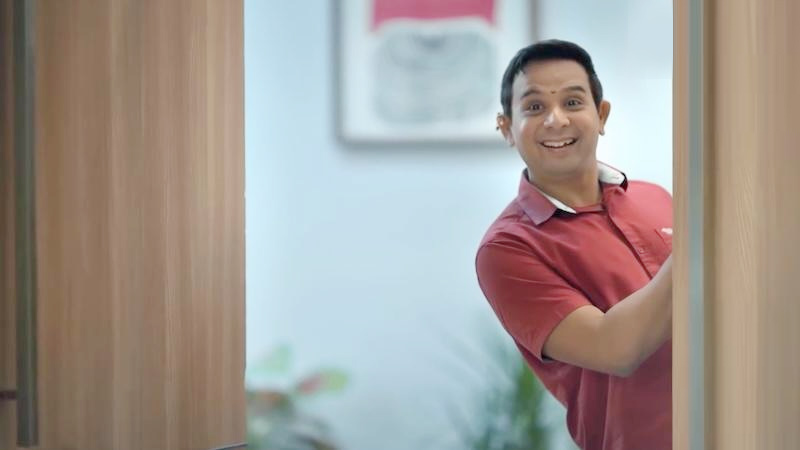
The series follows a group of ambitious young entrepreneurs running a Mumbai-based tech start-up that lets people around the world book exclusive virtual poojas at India’s most revered shrines. But as their app grows, so do their ethical grey zones. Into this chaos walks Vinayak, played with soulful serenity and sly wit by the charming Namit Das, a young man whose calm smile hides something celestial.

He’s got the peaceful look of a saint but the wit of someone who could out-think your favourite stand-up comic. Around him spins a crew of dream-driven youngsters – Luv Vispute, Arnav Bhasin, Vaidehi Nair and Saloni Daini who run a Mumbai-based tech start-up offering devotees across the world the chance to book “exclusive” poojas at India’s most sacred shrines. It’s a business plan that blends belief and broadband – and, as the story unfolds, also tests the moral compass of its ambitious founders.
“The first time I read the script, I found the character very pretty,” Namit joked at the post-screening interaction. “It’s a beautiful thought that God isn’t distant, he’s your closest friend. And playing Vinayak, you feel that calm but also his cleverness. He’s the friend who makes you think.”
The reactions to the series ranged from smiles to sighs of wonder. Viewers were charmed by the show’s sincerity and sparkle, a quality that stems from its creator’s belief that faith can be funny without being frivolous.
Among the cast, Luv Vispute shines brightest, his comic timing adding sparkle to the show’s more reflective beats. But what keeps Hamara Vinayak engaging is the easy rhythm of its writing – one moment touching, the next teasing, always gently reminding us that spirituality doesn’t have to be solemn.
Luv spoke fondly of his long association with Swastik. “Since my first show was with Swastik, this feels like home,” he said. “Every project with them is positive, feel-good, and this one just had such a different vibe. I truly feel blessed.”
Saloni Daini, who brings infectious warmth to her role, added that she signed up the moment she heard the show was about “Bappa.”
“We shot during the Ganpati festival,” she recalled. “The energy on set was incredible festive, faithful, and full of laughter. It’s such a relatable story for our generation: chaos, friendship, love, kindness, and faith all mixed together.”

Vaidehi Nair and Arnav Bhasin complete the ensemble, each representing different shades of ambition and morality in the start-up’s journey. Their camaraderie is easy and believable, a testament to how much the cast connected off-screen as well.
This clever fusion of mythology and modernity plays to India’s two enduring loves, entertainment and faith. Mythology has long been the comfort zone of Indian storytellers, from the televised epics of the 1980s to the glossy remakes that still command prime-time TRPs. For decades, gods have been our most bankable heroes. But Hamara Vinayak tweaks the formula not by preaching, but by laughing with its characters, and sometimes, at their confusion about where divinity ends and data begins.
Creator Siddharth Kumar Tewary, long hailed as Indian television’s myth-maker for shows like Mahabharat, Radha Krishn and Porus, explained the show’s intent with characteristic clarity, “This is our first story where we are talking directly to the audience, not through a platform,” he said. “We wanted to connect young people with our culture to say that God isn’t someone you only worship; He’s your friend, walking beside you, even when you take the wrong path. The story may be simple, but the thought is big.”
That blend of philosophy and playfulness runs through the show. “We had to keep asking ourselves why we’re doing this,” Tewary added. “It’s tricky to make something positive and spiritual for the OTT audience, they’ve changed, they want nuance, not sermons. But when the purpose is clear, everything else aligns.”
For the creator of some of Indian TV’s most lavish spectacles, Hamara Vinayak marks a refreshing tonal shift. Here, Tewary trades celestial kingdoms for co-working spaces and cosmic battles for office banter. Yet his signature remains: an eye for allegory, a love for faith-infused storytelling, and an understanding that belief is most powerful when it feels personal.
Hamara Vinayak, after all, feels less like a sermon and more like a conversation over chai about what success means, what faith costs, and why even the gods might be rooting for a start-up’s Series A round.
As Namit Das reflected during the Q&A, “Life gives us many magical, divine moments we just forget to notice them. Sometimes even through a phone screen, you see something that redirects you. That’s a Vinayak moment.”
The series also mirrors a larger cultural pivot. As audiences migrate from television to OTT, myth-inspired tales are finding new form and flexibility online. The digital screen lets creators like Tewary reinvent the genre, giving ancient ideas a modern interface, without losing the emotional charge that’s made mythology India’s storytelling backbone for decades.
In a country where faith trends faster than any hashtag, Hamara Vinayak feels both familiar and refreshingly new, a comedy that’s blessed with heart, humour and just enough philosophy to keep the binge holy.
For a country where mythology remains the oldest streaming service, Tewary’s move from TV to OTT feels both natural and necessary. Indian storytellers have always turned to gods for drama, guidance and TRPs from Ramayan and Mahabharat on Doordarshan to glossy mytho-dramas on prime time. But digital platforms allow creators to remix reverence with realism, and in Hamara Vinayak, faith gets an interface upgrade.
The result is a show that feels like a warm chat with destiny, part comedy, part contemplation. And in an age of cynicism, that’s no small miracle.
As Tewary put it, smiling at his cast, “The message had to be positive. We just wanted to remind people that even in chaos, God hasn’t unfriended you.”
With 5 episodes planned, Hamara Vinayak promises to keep walking that fine line between laughter and light. It’s mythology with memes, devotion with dialogue, and a digital-age reminder that even the cloud has a silver lining or perhaps, a divine one.
If the first two episodes are any sign, the show doesn’t just bridge heaven and earth, it gives both a Wi-Fi connection.







