Education
John Oliver talks about India and Modi on Last Week Tonight

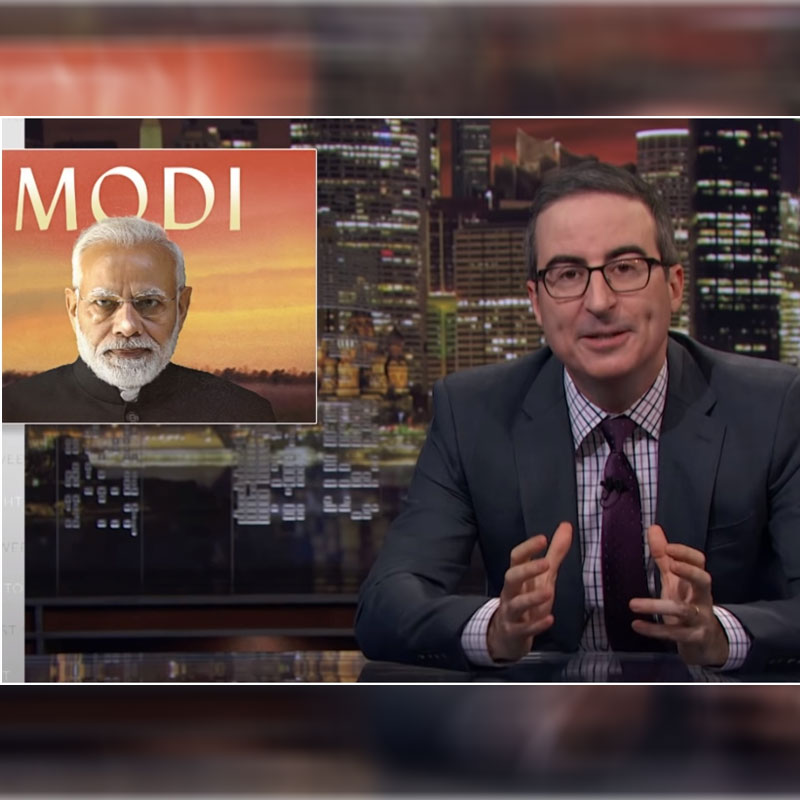
As you may know by now, Prime Minister Narendra Modi is meeting with US President, Donald Trump, in Trump’s first official visit to India. Modi’s last meeting with POTUS was back in September 2019 during the UN General Assembly. Trump called him “The Father of India”, as they praised each other. However, is that how America and the rest of the world see India?
John Oliver, British comedian and actor, and the host of popular show “Last Week Tonight” on HBO, covered part of how the Modi’s Nationalist Platform and government have taken social conflict to the next level. The winner of 8 Emmy Awards did not hesitate on critiquing Trump’s decision of referring to the current PM as “Father Of India”, a non-official title belonging to Mahatma Gandhi for his influence on the modern concept of the country.
But previous to that encounter Modi had taken many steps to get where he is right now, as this CNN´s Edition fact collection notes. On the date 5 of august 2019, Modi announced the revoking of constitutional provisions that allowed the regions of Kashmir and Jammu to make their own laws. These are Muslim-Majority regions.
John Oliver’s segment also reminds us multiple times that Modi is a Hindu Nationalist, which he calls “provocative”, arguing that “Nehru and Gandhi, explicitly disavowed that…” Quoting: “The State should be undoubtedly secular” (Gandhi, 16 August 1947).
Then we are reminded that the PM’s Party, BJP is closely related to the RSS, a Right-Wing paramilitary volunteer organization founded in 1925. This organization had links according to International Business times, and were avid followers of Adolf Hitler and Benito Mussolini, admiring the idea of a pure super race. Sharing the vision of building a powerful nation under the banner of nationalism.
Let’s not forget that Modi was the Chief Minister of his birth state Gujarat during the early ’00s, where the majority of the population is Muslim. In 2002 a fire killed 58 people in a train that carried Hindu pilgrims, and it was established that the fire was intentional, causing riots that ended up killing a thousand people, most of them Muslims.
Modi was criticized and accused of condoning the deadly riots. This did not go good for him as he was not granted a diplomatic visa by the United States for the suspicions of his role during the riots.
In fact, although his popularity rates have been astronomical as president, his encounters with the press on one-to-one interviews are far from a rhetoric example of how to be a public person, National Herald India has a compilation of them.
The actions taken by the BJP to consolidate their ideas has been little less than debatable, as they tried to get Nehru erased from many important bits of History Classes in the country according to this Hindustantimes report. Substituting Nehru’s ideas with the thoughts of “Indian supremacy”, one of the books makes different racist remarks even using the N-Word, according to AlJazeera.
Which brings us to Modi’s last step so far, last December, parliament passed an incredibly controversial bill, known as the CAB, or Citizen Amendment Bill said Bill looks to give Indian Citizenship to immigrants of three neighboring countries as long as they are not Muslims, according to this note from CNN.
The bill allows the government to fast-track those of religious minorities. The Bill has the NRC or National Registration of Citizens as a companion to reach the government’s goals.
The NRC requires people to deliver papers and registration to the state officers, something that in the poorest areas will be incredibly difficult, not to mention it could harm those who are illiterates.
The bills have provoked outrage in many cities in India, and had the country in suspense, Trump's comments about Mod and what could happen the next couple of days could have important consequences on the ideas of the Indian population and government.
The odds of John Oliver’s comments making an impact on this side of the globe are as low as of a debutant horse to win the Kentucky Derby. However, the people have power and Indians have spoken on how they want their country united as they headed to the streets to protest a couple of times. Will there be any changes in power?






