Hollywood
HBO to hold Indian premiere of ‘Terminator Genisys’ on 12 June
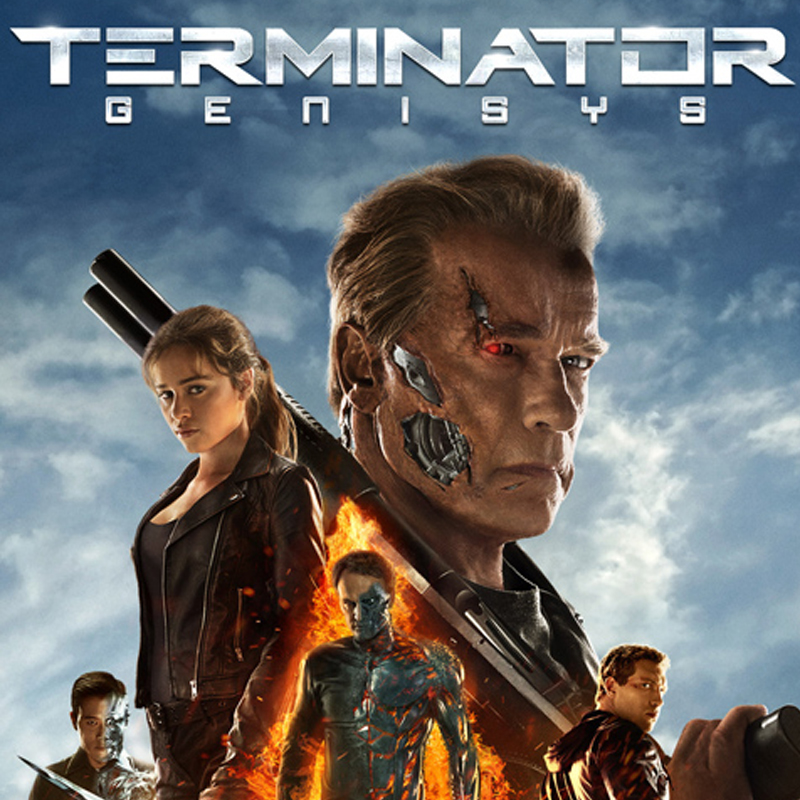
MUMBAI: Indian fans of the fiction action film Terminator Genisys have a reason to rejoice. The much awaited movie is premiering for the very first time on Indian television on 12 June 2016 at 1 pm exclusively on HBO.
Directed by Alan Taylor and written by Laeta Kalogridis and Patrick, the fifth instalmentof the franchise, stars Arnold Schwarzenegger reprising his role as the eponymous, along with Jason Clarke, Emilia Clarke and Jai Courtney. The film’s plot follows soldier Kyle Reese in the war against Skynet, who is sent from the year 2029 to 1984 by John Connor, leader of the Human Resistance, to protect Connor’s mother Sarah Connor. However, once Reese goes back in time, he discovers Sarah has been raised by a reprogrammed Terminator.
The movie’s marketing campaign across social media pages of HBO is set to ignite the imagination of moviegoers across India. HBO will give a chance to movie enthusiasts to participate in the terminator era by creating their own customised gif & also stand a chance to win exclusive Terminator merchandise. Other exciting contests include uploading a photo of a daily object as a possible weapon on the Instagram page with the hashtag #TerminatorOnHBO.and a twitter battle for the movie buffs. The tweet battle will run a poll for the fans to choose where their loyalty lies- with the power of machine or emotions of a human by commenting with the hashtag #ManVsMachine.
Directed by Alan Taylor, Terminator Genisys stars; Arnold Schwarzenegger, Jason Clarke, Emilia Clarke, Jai Courtney, J. K. Simmons, Dayo Okeniy, iMatt, Smith, Courtney B. Vance, Lee Byung-hun.

Hollywood
Utopai Studios partners Huace to deploy PAI for long form content
Deal includes revenue sharing as Huace adopts AI engine across global ops
MUMBAI: Lights, camera… algorithm, the script just got a silicon co-writer. In a move that signals how storytelling itself is being re-engineered, U.S.-based Utopai Studios has partnered China’s Huace Film & TV Co. Ltd. to bring artificial general intelligence into the heart of long-form content creation.
At the centre of the deal is PAI, Utopai’s cinematic storytelling system, which Huace will deploy as a core engine across its production pipeline from development and creative iteration to global localisation. The partnership includes a large-scale annual usage commitment from Huace, alongside a usage-based revenue-sharing model, underscoring both ambition and commercial confidence on both sides.
For Huace, one of China’s largest film and television companies, the bet is not on automation alone but on scale with control. With distribution spanning over 200 countries and a presence across more than 20 international platforms, including Netflix and YouTube, the company brings a vast content ecosystem where even marginal efficiency gains can translate into significant output shifts. Its extensive TV IP library further positions it as fertile ground for AI-assisted storytelling workflows.
The choice of PAI follows what Huace described as a rigorous evaluation of existing AI tools, many of which remain limited to fragmented use cases such as video generation or editing. What tipped the scales, according to the company, was PAI’s ability to handle long-form narrative complexity maintaining continuity, structure, and creative coherence across entire story arcs rather than isolated clips.
Utopai, for its part, is using the partnership to anchor its international expansion strategy, pitching PAI as an enterprise-ready system built for customisation, privacy, and regulatory adaptability across markets. That positioning becomes particularly relevant as global media companies increasingly scrutinise how AI integrates into proprietary workflows.
The timing is notable. Earlier this month, Utopai upgraded PAI to support three-minute 4K video generation and advanced multi-shot sequencing features designed to tackle one of AI storytelling’s biggest hurdles: consistency across scenes.
What emerges is not just another tech collaboration, but a glimpse into how the grammar of filmmaking could evolve. Because if stories were once crafted frame by frame, the next chapter might just be coded scene by scene.