News Broadcasting
Blackberry Q5 partners with UN India Centre and DDB MudraMax to celebrate International Day of Youth

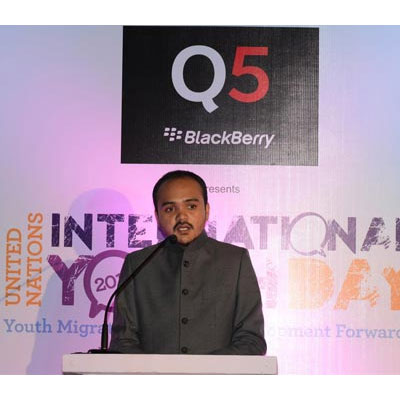
Mumbai, 12 August, 2013: Blackberry Q5 partnered with the United Nations India Centre and DDB MudraMax, in Mumbai, to host a celebration to commemorate the “International Day of Youth” on 12th August 2013. With over 150 students from across the city’s colleges, young entrepreneurs, diplomats, changemakers and representatives from the media industry, the event included motivational talks by Dr Rajan Welukar (Vice Chancellor, Mumbai University), Dr Satyapal Singh (Commissioner of Police, Mumbai), Mr Mathew Spacie (Founder, Magic Bus), Mr Shailendra Singh (Jt M.D, Percept India) and Ms Shaili Chopra (Business Editor, Tehelka Maganize), film maker Madhur Bhandkar, Devita Saraf CEO VU Technologies amongst others.
On 17 December 1999, in its resolution 54/120, the United Nations General Assembly endorsed the recommendation made by the World Conference of Ministers Responsible for Youth (Lisbon, 8-12 August 1998) that 12 August be declared International Youth Day.
The theme of International Youth Day 2013 is “Youth Migration: Moving Development Forward”.
Mr. Rajiv Chandran, National Information Office, United Nations India Centre also presented a special message by UN Secretary General
Mr. Ban Ki-Moon.


“The power of youth is hard to ignore for any country now. At BlackBerry we believe that young people are often the vanguard of technological and social changes that are brought in the world. Technology and Youth is a combination which would be driving the era we belong to. New high-tech gears are growing and essentially changing the means youngsters can interact and communicate. Not surprisingly they are using the most technologically innovative mediums to express themselves, be it to their friends, family or society at large. Keeping this in mind, to address this segment we came up with a youth-targeted BlackBerry Q5. With the revolutionary BlackBerry Q5, running on the BlackBerry 10 platform, our aim to empower the youth further and enable them to express themselves in the most progressive way possible,” said Ashish Gupta, Director, Marketing, Blackberry India.
“This day signifies the role of youth in transforming dialogue to action. The under 35s today enjoy great power to influence our society and it is critical that we create platforms for them to engage with leaders by whom they can be motivated and inspired. At DDB Mudra Max, we are proud to have collaborated with Blackberry and the United Nations to celebrate India’s continuously growing and extremely diverse youth segment”. Mandeep Malhotra, President, DDB MudraMax – OOH, Retail & Experiential.
“Young people make up a significant share of the global number of international migrants. In 2010, there were an estimated 27 million international young migrants. While migration can often offer valuable opportunities and contribute to the development of communities and society at large, it can also pose risks and lead to unacceptable situations, including discrimination and exploitation. The 2013 observance of International Youth Day will raise awareness of the opportunities and risks associated with youth migration, share knowledge and information stemming from recent research and analysis on this topic, and engage young people in discussions on their migration experiences” explains Samyak Chakrabarty, Chief Youth Marketer, DDB Mudra Group.






News Broadcasting
BBC to cut up to 2,000 jobs in biggest overhaul in 15 years
Cost pressures and leadership change drive major workforce reduction plan
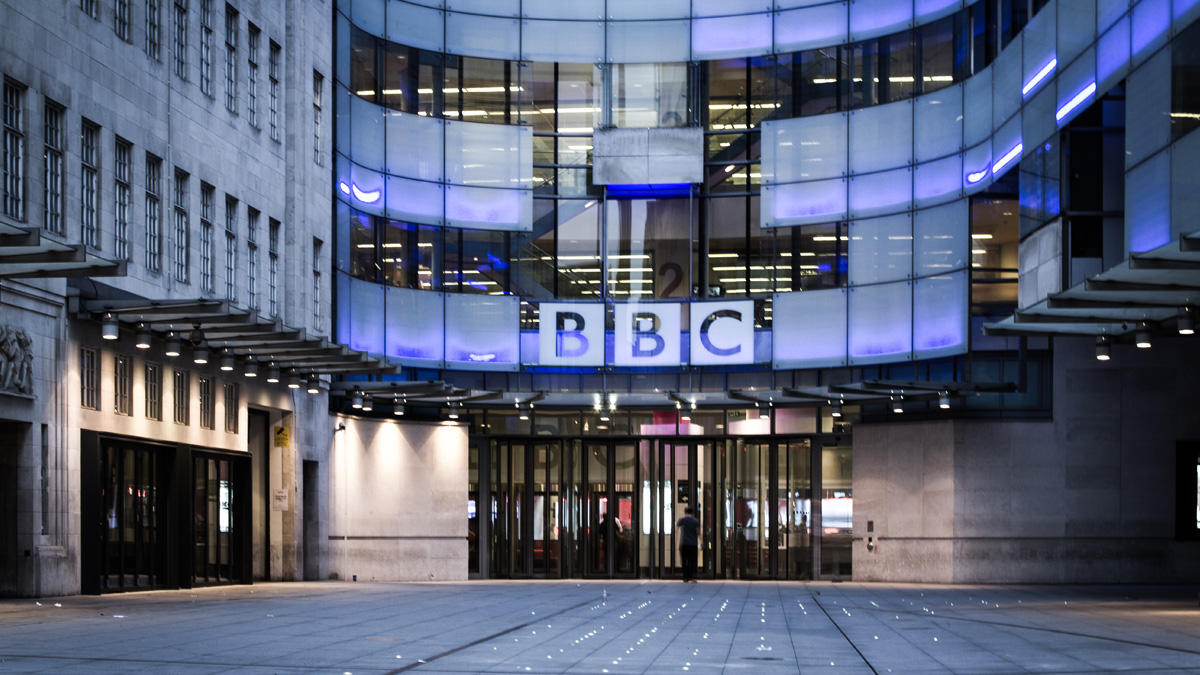
LONDON: BBC has unveiled plans to cut up to 2,000 jobs, roughly 10 per cent of its global workforce, in what marks its biggest downsizing in 15 years.
The announcement was made during an all-staff meeting led by interim director-general Rhodri Talfan Davies, as the broadcaster moves to tackle mounting financial pressures and reshape its operations.
Between 1,800 and 2,000 roles are expected to be eliminated from a workforce of around 21,500. The cuts form part of a broader plan to save £500 million over the next two years, aimed at offsetting rising costs, stagnating licence fee income and weaker commercial revenues.
In a communication to staff, BBC interim director-general Rhodri Talfan Davies said, “I know this creates real uncertainty, but we wanted to be open about the challenge,” acknowledging the impact the move would have across the organisation.
The restructuring comes at a time of leadership transition. Former director-general Tim Davie stepped down earlier this month, with Matt Brittin, a former Google executive, set to take over the role on May 18, 2026.
While some cost-cutting measures are being implemented immediately, the majority of the structural changes are expected to roll out over the next few years, with full savings targeted by the 2027–2028 financial year.
The broadcaster had earlier signalled its intent to reduce its cost base by around 10 per cent over a three-year period, warning of “difficult choices” as it adapts to shifting economic realities and audience expectations.
With operating costs hovering around £6 billion annually, the BBC’s latest move underscores the scale of the financial challenge it faces, as it balances public service commitments with the need for long-term sustainability in an increasingly competitive media landscape.