News Broadcasting
Aircel and NDTV launch the ‘Save Our Tigers’ Signature Drive 2014


MUMBAI: Carrying forward the mission to ‘Save Our Tigers’ – the largest and the most comprehensive media campaign on tiger conservation till date, NDTV and Aircel today announced a Signature Drive 2014 on World Environment Day asking for public support for the Tiger Agenda. This agenda, encapsulating immediate action points for the government, was drafted in consultation with wildlife experts.
Launched in April 2014, the 3rd season of Aircel-NDTV ‘Save Our Tigers’ successfully set this year’s tiger agenda during a panel discussion hosted by Vikram Chandra, Group CEO, NDTV Group. The Signature Drive 2014 aims to gather 1 million signatures for the Tiger Agenda 2014 which makes 6 key demands – 1) Involve Local Communities in Conservation; 2) Strengthen and modernize the forest department to step up protection; 3) Improve Man-Animal Conflict Mitigation Measures; 4) Increase protection of buffer zones and corridors; 5) Zero tolerance approach to poaching and 6) to make political parties accountable for loss of bio-diversity. The signatures collected will then be taken to Chief Ministers of key tiger states.
The signature drive also has the support of Sanctuary Asia and Wildlife Conservation Trust as knowledge partners for the campaign. The drive will culminate on The Word Tiger Day, July 29, 2014 across New Delhi, Mumbai, Kolkata and Chennai.
With the launch of the signature drive, Vikram Chandra, Group CEO, NDTV Group said, “The tiger has always been close to NDTV’s heart, it is a key part of our eco-system and if we fail to save the tiger, we risk losing everything else. NDTV and Aircel have now come together for the 3rd season to create awareness and spread the message of conservation. This year we hope lots of school children, youth and concerned citizens will come together to pledge their support to our national animal by signing our tiger agenda.”
On the launch of the signature drive, Anupam Vasudev, Chief Marketing Officer, Aircel said, “Aircel started the ‘Save Our Tigers’ initiative in 2008 to create awareness about the plight of our national animal. It was extremely heart wrenching to see how the tiger had come so close to extinction and we had come to face the unfortunate prospect that our future generations will only be able to see tigers in photographs. As we were faced with the blatant reality, Aircel started work on the ‘Save Our Tigers’ campaign with noted conservationists and experts across various on-ground projects with an aim to ensure healthy and sustainable ecological balance in the country. To take this initiative to the next level, Aircel and NDTV have come together for the third time to gain public support towards six immediate action points of Tiger Agenda 2014. We are hoping that this time as well, the people of India will come forward and pledge their support to saving the tigers in huge numbers and do their bit to keep the tiger roaring.”

About Aircel’s‘Save Our Tigers’ initiative:
The Tiger is our national animal and one that has been a part of our folklore and history for millennia. Yet this magnificent animal is on the brink of extinction. The Tiger can easily be called as the metaphor for nature, as it is a top predator and its existence ensures a healthy and a sustainable ecological balance. The year 2008 revealed the shocking number that there were just ‘1411’ tigers left in India. ‘Save Our Tigers’ is a cause related campaign started by Aircel during the latter part of 2008 with an aim to create mass awareness on the plight of this magnificent beast and rally efforts to save it.
The tag line, ‘Just 1411 left, Save Our Tigers’, struck a chord in the hearts and minds of millions of Indians.People began to rally for the cause and began to lend their voices towards the cause.
Our seriousness towards doing our bit to Save Our Tigers has led us to partner with several well-known organizations like World Wildlife Fund-India, Wildlife Conservation Trust, Wildlife Trust of India, Sanctuary Asia and NDTV as well as several noted conservationists to create an impact on ground where it really matters. We work on several projects that encompass capacity building, conflict mitigation and awareness creation. This helps us address issues in 360 degrees and reach out to create maximum impact.
To sign and support the Aircel-NDTV Tiger Agenda log on to NDTV.COM/TIGER and www.saveourtigers.com






News Broadcasting
CNN-News18 to host Fury in the Gulf conclave on West Asia crisis
Three-hour summit to unpack geopolitical fallout and impact on India
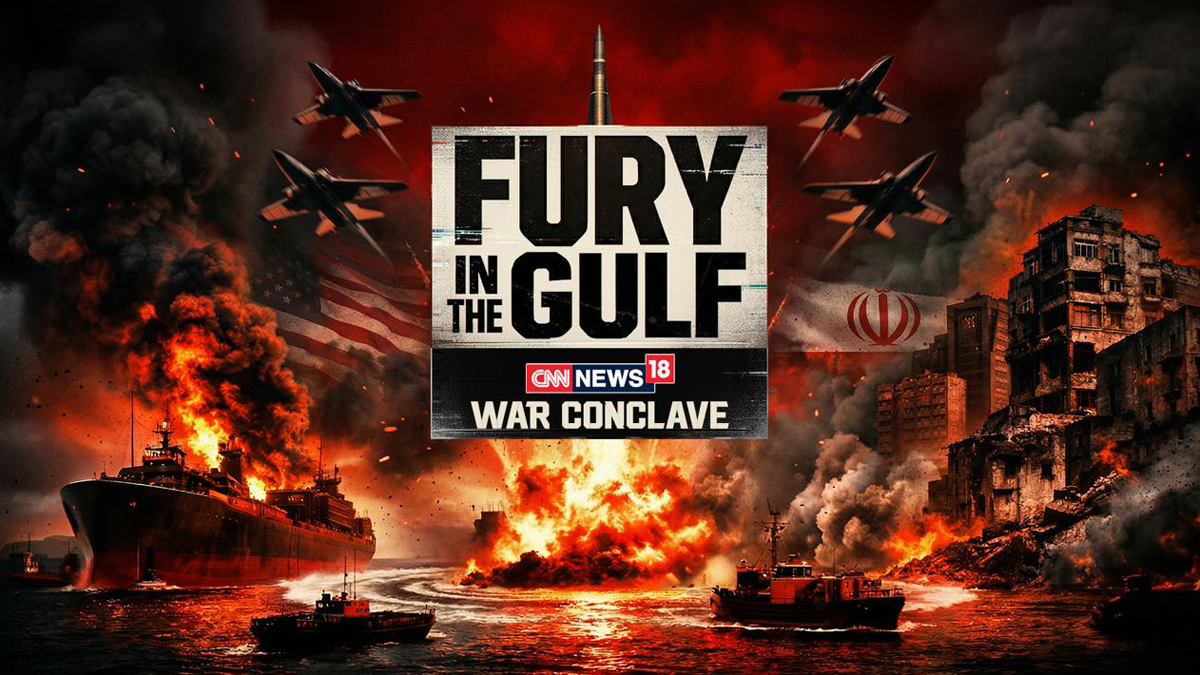
MUMBAI: CNN-News18 is set to host a special three-hour broadcast, Fury in the Gulf – War Conclave, on April 7, aiming to decode the escalating West Asia crisis and its far-reaching implications for India.
Scheduled from 4:00 PM to 7:00 PM, the conclave comes at a time when tensions between Iran and the United States are reshaping global geopolitics and triggering economic uncertainty. With India’s deep energy ties, trade links and large diaspora in the Gulf, the developments carry significant domestic relevance.
Built around the theme ‘Conflict, Consequences, and The Future,’ the programme will feature six curated sessions combining one-on-one interviews and panel discussions. The focus is to cut through the clutter and offer viewers a clearer understanding of the fast-evolving situation.
Key sessions include ‘Diplomacy in Times of War’ featuring Shashi Tharoor, and ‘World After the Iran Conflict’ with voices such as Ram Madhav, Reuven Azar, representatives from the European Union and the Iranian Deputy Envoy. Another session titled ‘Another Dunkirk?’ will bring together K. J. S. Dhillon and Jitin Prasada among others.
CNN-News18 editorial affairs director Rahul Shivshankar said, “In times of war, clarity becomes the most powerful tool. Fury in the Gulf – War Conclave brings together credible voices to address the questions and confusion that arise amid an overwhelming influx of information.”
He added that the initiative is aimed at delivering “facts, perspective, and insight” at a time when misinformation can easily cloud public understanding.
Echoing the sentiment, CNN-News18 CEO– English and business news Smriti Mehra said the conflict marks a defining global moment, with consequences that extend well beyond the region. She noted that the conclave seeks to present the crisis with “depth, nuance and responsibility” so audiences can better grasp its real-world impact.
As geopolitical tensions continue to dominate headlines, the conclave positions itself as an attempt to bring order to the noise, offering viewers a structured, insight-led look at a complex and rapidly shifting global situation.






