iWorld
ZEE5’s HiPi gears up for India’s 1 billion video consumers

KOLKATA: Evolution is the key to sustain in a transforming ecosystem; India’s leading entertainment network Zee Entertainment Enterprises Ltd (Zeel) is following that route. While it has been charting its growth in the online ecosystem with over-the-top platform ZEE5, the latter is now venturing into short-format video too. It’s not a mere expansion but the ambition is to be able to create a sustainable business over a period of time which essentially addresses a billion users in India, as ZEE5 India expansion projects business head and product head Rajneel Kumar says.
“Very soon we will have a billion Indians who will be consuming videos on a monthly basis. That time could be one, two or three years from now. That’s the overall market size we are gunning for. We have a very long-term strategy around short-form content where we will see new users who will start consuming this content. Of course, we would like million and millions to come on the platform but our main ambition is to be able to create a sustainable business over a period of time which essentially addresses a billion users in India,” Kumar said in an interaction with Indiantelevision.com.
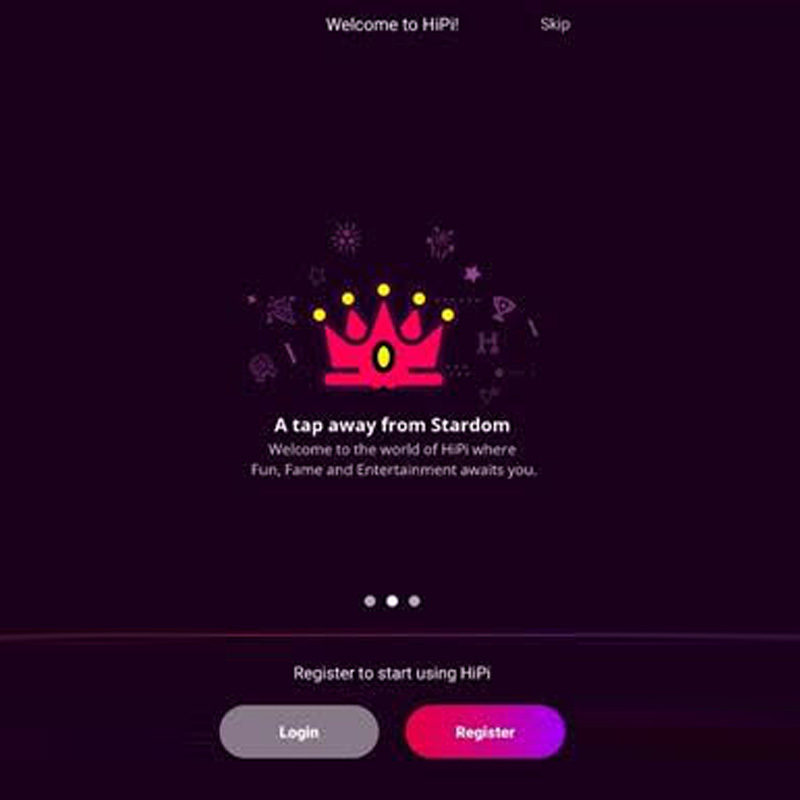
Nearly two weeks ago, ZEE5 revealed the name of its short-form content platform, HiPi. The announcement came right after the Indian government imposed a ban on 59 Chinese apps including TikTok, the giant in the short-video segment. As opposed to launching as a separate app, HiPi will be a part of ZEE5.
“We have been working on it for over a year with consumer research, content research, product research as well as trying to understand what features consumers like. The timing was honestly coincidental; it was something we already planned in this quarter. However, once the news came out we did expedite certain priorities to be able to get this out as early as we can while not compromising quality or experience,” he added.
ZEE5 is not waiting for consumers or influencers discover the platform once it launches the new segment. Rather, it is actively getting a lot of influencers who are on other platforms and onboarding them to ZEE5. With these influencers, their followers will be also able to find their content on the new platform. Initially, HiPi is launching with 300 influencers while it also has a list of other 200 influencers that will come on the platform very soon.
Moreover, it has opened the platform for new influencers as it is launching ‘Creators Dashboard' in the next couple of months. Through this, influencers can upload profiles for the kind of content they have created and references of other platforms where they exist. If they become verified, they would enter into a revenue-sharing model with ZEE5. There will be remuneration and compensation for all content they create. Currently, they can reach out to ZEE5 through the latter’s social handles.
In the past, we have seen user-generated content platforms getting dragged into controversies for sensitive content. While the company is in the final stages of testing, it is highly focusing on user experience and brand safety. Kumar assured that both human and AI intervention will be there to filter content. “Unlike other platforms, no content which is uploaded goes straight and people can see it. Every content which is uploaded goes through a layer of both AI and human moderation,” he added.
ZEE5 has several content pieces ranging from catch-up content to premium originals, news and sports. “Each one of them has individual experiences built up to see which is best for the users. When a user comes on the platform, he or she is able to see all the content which is available. Only when they start to consume a particular piece of content, whether it is a movie or a short-form content, the appropriate interface for the user comes up. The short-form content area will be a vertical scrolling video which is full-screen,” he added.
Now a bunch of short-format video sharing apps are mushrooming as OTTs did two-three years ago; even Instagram launched Reel a few days back. Hence, despite the giant being gone, it is not easy to attract consumers.
“We have put together a very strong content team which will curate the kind of content to make it different and interesting for users. We will be launching different kinds of AR filters which will enable users to create interesting content. We are focused on a road map of engagement which is beyond just consuming content; so how can the user interact with other people, how can the user play games? We are working on those kinds of areas which will be part of our roadmap and essentially our distinguishing features,” Kumar sounded confident.