News Broadcasting
Zee Media announces pulling out 14 new channels from Barc ratings


Mumbai: On Saturday, the company announced its bold and definite decision to stop participating in the Broadcast Audience Research Council (Barc) ratings.
In a statement, Zee Media noted, “This decision is a milestone for the whole news media industry. There are more than 5-8 million people associated with the news and broadcasting industry at large who get adversely impacted if incorrect reporting is published by the rating agencies, and it has been observed in the last few months that the news genre is being shown shrunk by the Barc (rating agency) to extend the benefit to GEC and other genres at large.”
The company had raised its concerns multiple times to Barc and had questioned the whole structure and their operation transparency towards the news industry, which represents the media and is usually termed as the fourth pillar of democracy.

“It is pertinent to point out that the rating agency has failed to rectify the news industry’s and Zee Media’s concerns. Barc has not given any white paper on the TRP scam until now and it’s a matter of great concern that who all was involved in this malpractice and if they are still part of the system (people/channels), what action has been taken against them?”, the company questioned.
The statement went on to say that the biggest concern and challenge is that Barc has not provided or accepted any solution because they are still reporting for landing and barker pages, which benefits those who use them at the expense of those who do not subscribe to these unethical practices.
Zee blamed that the news genre has been continuously shown to be shrinking since Barc data was restarted, while on the contrary, when the data was stopped, the genre was at its peak.
“In spite of multiple meetings and conversations with Barc, the agency not only failed but has not been able to explain such a steep fall. Drastic change in viewership is hurting the news genre’s revenue/perception in the advertising fraternity,” noted the statement.
The company also claimed that this was the biggest fall in the last 25–30 years of the industry, which is unprecedented and far from reality. Zee informed that they have repeatedly pointed out that a far larger sample (of metres) is needed if Barc is serious about ensuring a measurement process that cannot be rigged or manipulated, which they also failed to address until now.
As per the statement, the company claimed that Zee News, digitally, is number 1 in ComScore as well as on YouTube, which is real data and cannot be manipulated. However, Barc ratings show the completely opposite and different picture. While the same content is placed on both platforms, it again points out the inconsistencies of reporting methodology.
Barc’s new process of data reporting (four-week rolling average vis.a.vis earlier daily/weekly) is also a big concern for Zee Media. Due to this, the company believes the research has no meaning or outcome for the content producers and they cannot plan or validate content performance.
“Barc is unable to answer or address any of our queries/questions/suggestions. As an industry body, we believe that due to the monopoly of rating agencies, the industry is suffering at large. Hence, Zee Media decided to move from the rating agency and we have asked them to stop reporting Zee Media’s all 14 channels with immediate effect,” concluded the statement.




News Broadcasting
CNN-News18 to host Fury in the Gulf conclave on West Asia crisis
Three-hour summit to unpack geopolitical fallout and impact on India
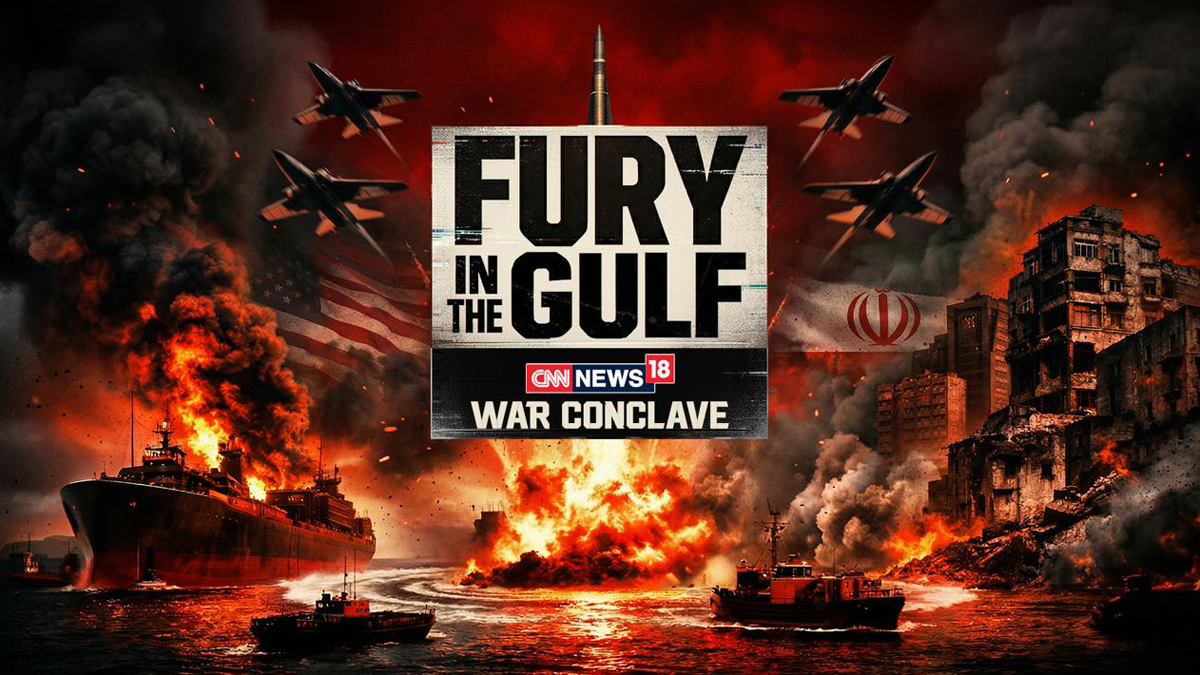
MUMBAI: CNN-News18 is set to host a special three-hour broadcast, Fury in the Gulf – War Conclave, on April 7, aiming to decode the escalating West Asia crisis and its far-reaching implications for India.
Scheduled from 4:00 PM to 7:00 PM, the conclave comes at a time when tensions between Iran and the United States are reshaping global geopolitics and triggering economic uncertainty. With India’s deep energy ties, trade links and large diaspora in the Gulf, the developments carry significant domestic relevance.
Built around the theme ‘Conflict, Consequences, and The Future,’ the programme will feature six curated sessions combining one-on-one interviews and panel discussions. The focus is to cut through the clutter and offer viewers a clearer understanding of the fast-evolving situation.
Key sessions include ‘Diplomacy in Times of War’ featuring Shashi Tharoor, and ‘World After the Iran Conflict’ with voices such as Ram Madhav, Reuven Azar, representatives from the European Union and the Iranian Deputy Envoy. Another session titled ‘Another Dunkirk?’ will bring together K. J. S. Dhillon and Jitin Prasada among others.
CNN-News18 editorial affairs director Rahul Shivshankar said, “In times of war, clarity becomes the most powerful tool. Fury in the Gulf – War Conclave brings together credible voices to address the questions and confusion that arise amid an overwhelming influx of information.”
He added that the initiative is aimed at delivering “facts, perspective, and insight” at a time when misinformation can easily cloud public understanding.
Echoing the sentiment, CNN-News18 CEO– English and business news Smriti Mehra said the conflict marks a defining global moment, with consequences that extend well beyond the region. She noted that the conclave seeks to present the crisis with “depth, nuance and responsibility” so audiences can better grasp its real-world impact.
As geopolitical tensions continue to dominate headlines, the conclave positions itself as an attempt to bring order to the noise, offering viewers a structured, insight-led look at a complex and rapidly shifting global situation.






