News Headline
West Bengal consumers look for relatable and aspirational content: Zeel’s Samrat Ghosh


New Delhi: After a successful national run, Zee Entertainment Enterprises (Zeel) forayed into the West Bengal market in the year 1999, and Zee Bangla became the first Bengali TV channel to be launched in the country. Over two decades later, the channel continues to enjoy a strong presence in the regional market with several successful shows that connected with the local masses. It further bolstered its regional genre with the launch of the sister channel, Zee Bangla Cinema in 2012.
As part of the inaugural edition of the Tele-wise Bangla summit, Indiantelevision.com, CEO and editor-in-chief Anil Wanwari got in a fireside chat with Zee Entertainment Enterprises Ltd (Zeel), cluster head, Samrat Ghosh who spearheaded the network’s journey to the east.
Ghosh has been a member of Zeel for over two decades. He took over Zeel’s Bangla business in 2014 and has been responsible for overseeing a bouquet of channels which includes Zee Bangla, Zee Bangla Cinema, Zee Sarthak, Big Ganga, and Zee Biskope. The conversation delved upon the various facets of the network’s growth in the Bangla market, the psyche of local consumers, channel’s content offering, and the brand’s philosophy.

Edited excerpts:
On Zee Bangla’s journey so far and the challenges along the way
Zee Bangla had already established a strong brand identity when I took over the channel’s business in 2014. It was perceived to be a pioneer in the non-fiction space and had some advantages over several established brands. In the fiction space, we had some flashes of brilliance here and there. My main objective at that time was to further strengthen this brand identity, create brand equity and transform the brand into ‘a brand of love and relevance’. Adopting a consumer-centric approach is the key to success. So, we reached out to consumers and gained loads of consumer insights, and started designing our products accordingly which was all-inclusive. This inclusiveness helped us to get a wide spectrum of audiences and top the viewership charts. We brought lots of cultural relevance in fiction and non-fiction shows to build more engagement among viewers and remained invested in content.
On selecting stories in the culturally rich east market
Bengal consumers are very different from other regional markets. They are bilingual, well-read, and well-informed. The state literacy level is also high at 77 per cent and they are culturally very sensitive. They also look forward to something new all the time, which also makes them extremely loyal to the brand. If the brand talks in their language and understands their needs, then they remain faithful to the brand. They look forward to a unique blend of content offering, where their values are also embedded. Such content resonates well with Bengal consumers. We have also done biopics, including the one on Netaji Subhash Chandra Bose which was well-accepted by the audiences. Bengal consumers lap up content if it is relevant to them and appeals to their aspirations.
On the choice between chasing ratings and a good story
Rating is a by-product of the content that you create. We have always embraced a consumer-centric approach. We take consumer insights to make the content more relatable and aspirational for our viewers. If we can create content like that with relevant storytelling, then the rating is bound to follow. We reach out to consumers before the launch of the product and after launch too. They are quite excited to dissect the product and tell about likes and dislikes, so content correction also happens along the way.
On reaching out to non-Bengali consumers nationally
In the non-fiction space, we have had some reality shows which developed into cult brands in the market. We had a quiz show, called Dadagiri with Sourav Ganguly and Dance Bangla Dance, and the vernacular season of Sa Re Ga Ma Pa. Many non-Bengali consumers also watch some of our shows and find them relevant. Many shows have travelled to other parts of the country within the Zeel network. So, we have catered to a wide spectrum of audiences.
On whether Bengali consumer is programme-loyal or channel-loyal
Both exist in the Bangla market. First and foremost, the Brand inertia and affinity in a typical Bengali consumer is very high. So, if you win their heart once, they will remain loyal to you for a very long time. There is a high brand loyalty among the Bengali audiences. If the content is relatable and it appeals to their aspirations, then there is always an appetite for consumption. They will wait a year after year if they develop an affinity for a show. Some shows have been running on the channel for years. But most importantly, the content has to be relatable to them.
On genres that Bengali viewer binges on
Any kind of content that has high cultural relevance will always resonate with the consumer. When he sees that the brand understands their needs, they develop an affinity for it. Localised content drives engagement and regional channels always have a higher ability to connect with consumers. The show Didi no 1 is a game show for women and it appeals to their aspirations. At the core, the brand has to be consumer-centric.
On the challenges in finding talent in writing and acting, and unique solutions adopted
Bengali TV industry has seen an upsurge in content production in the last decade and ramping up of content production hours. So, the growing demand has led to a short supply of talent for acting, writing, etc. So, we have embraced multiple ways to overcome this challenge. First, we have widened our production eco-system and we are now collaborating not only with established production houses, but the emerging ones too. Secondly, we are producing in-house shows to nurture new talent. Thirdly, we have launched a talent nurturing platform, YesBangla.com for searching for new and nurturing talent. The response has been great for acting, but for screenwriting, it is limited so far.
On the OTT boom and impact on TV
Both complement each other. TV works in the family space, while OTT is in personal space. Both platforms cater to a different set of audiences and both will co-exist. If you see, 95 per cent of video consumption is in vernacular, so OTT will grow. But, in West Bengal, for instance, there is 60 per cent penetration of TV. So, there is a lot of headroom for growth there too.
On some successful partnerships with brands and advertisers
We have had a couple of examples in the recent past. We believe in providing a value proposition to our advertising clients. We collaborated with Senco Gold and Diamonds, a jewellery brand for a show based on a jewellers’ family. So, while the brand utilized the platform and used it to launch new product ranges, it also lent huge insights for us, especially while taking our main protagonist for workshops. So, we keep doing a lot of integrations, Dadagiri was another such TV show. We have witnessed continuous support from our advertisers who see immense value in the collaboration. At Zeel, we provide a holistic proposition to advertisers, creating a win-win for the channel and the advertisers.
(The virtual summit – Zee Bangla was organised by Indiantelevision.com in partnership with Zee Bangla on 29 June and witnessed insightful sessions with representatives from television, advertising, and media.)






NEW DELHI: Hamdard Laboratories gathered a cross-section of India’s achievers in New Delhi on Friday, handing out the Hakeem Abdul Hameed Excellence Awards to figures who have left their mark across healthcare, education, sport, public service and the arts.
The ceremony, attended by minister of state for defence Sanjay Seth and senior officials from the ministry of Ayush, celebrated individuals whose work blends professional success with a sense of public purpose. It was as much a roll call of achievement as it was a reminder that influence is not measured only in profits or podiums, but in people reached and lives improved.
Among the headline awardees was Alakh Pandey, founder and chief executive of PhysicsWallah, recognised for turning affordable digital learning into a mass movement. On the sporting front, Arjuna Awardee and kabaddi player Sakshi Puniya was honoured for her contribution to the game and for pushing women’s participation onto bigger stages.
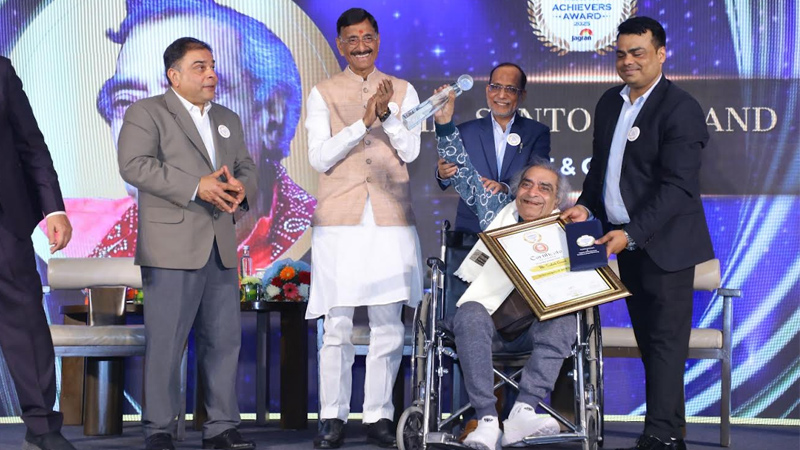
The cultural spotlight fell on veteran lyricist and poet Santosh Anand, whose songs have echoed across generations of Hindi cinema. At 97, Anand accepted the honour with characteristic humility, reflecting on a life shaped by perseverance and hope.
Healthcare honours spanned both modern and traditional systems. Manoj N. Nesari was recognised for strengthening Ayurveda’s place in national and global health frameworks. Padma shri Mohammed Abdul Waheed was honoured for his research-backed work in Unani medicine, while padma shri Mohsin Wali received recognition for his long-standing contribution to patient-centred care.
Education and social development also featured prominently. Padma shri Zahir Ishaq Kazi was honoured for decades of work in education, while former Meghalaya superintendent of Police T. C. Chacko was recognised for public service. Goonj founder Anshu Gupta received an award for his dignity-centred rural development initiatives, and the Hunar Shakti Foundation was honoured for empowering women and young girls through skill development.
The Lifetime Achievement Award went to former IAS officer Shailaja Chandra for her long career in public healthcare and governance, particularly in the traditional systems under Ayush.
Speaking at the event, Hamdard chairman Abdul Majeed said the awards were a tribute to those who combine excellence with empathy. “These awardees reflect Hakeem Sahib’s belief that healthcare, education and public service must ultimately serve humanity,” he said.
Minister Seth struck a forward-looking note, saying India’s young population gives the country a unique opportunity to become a global destination for learning, health and wellness by 2047.
The ceremony also featured the trailer launch of Unani Ki Kahaani, an upcoming documentary starring actor Jim Sarbh, set to premiere on Discovery on 11 February.
Instituted in memory of Unani scholar and educationist Hakeem Abdul Hameed, the awards have grown into a national platform that celebrates those building a more inclusive and resilient India. For one evening at least, the spotlight was not just on success, but on service with substance.






