Connect with us

GECs

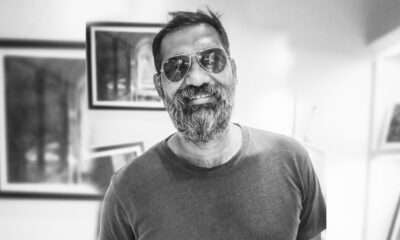
‘We want to be strategically well entrenched in the Bollywood market’ : Siddharth Roy – UTV Motion Pictures CEO

Published

on


UTV Motion Pictures Plc (UMP Plc) has emerged as one of the top film production companies, challenging established players in scale and box office hits across different genres and budgets. The roster includes Jodhaa Akbar, Race, Fashion and Mumbai Meri Jaan.

Listed in Alternative Investment Market (AIM) of the London Stock Exchange, UMP has set its eyes on good scripts, filmmakers, and talent while scaling up. Taking a cautious approach on film acquisitions, the company’s focus has been to set up a good team and produce movies on their own.

Advertisement

UMP has also attempted to line up an international IPR basket with movies like The Namesake and The Happening. The adventure has been mixed so far and 2009 could see a retrenchment of such plans, though a $2 million project is being produced singularly by UTV for the first time in the US.

Riding with a series of hits, UMP targets a revenue of Rs 3-3.5 billion this fiscal. The company has also inked syndication deals with Zee and Colors to maximise revenue opportunities while retaining the first airings for UTV’s Hindi movie channel.

Finding the turf too competitive and price-driven at this stage, UTV has exited the home video business. The company inked a deal with Moser Baer, licensing for five years the home video rights for 25 movies produced till June 2009.

Advertisement

With Walt Disney an equity partner, UTV has grabbed the distribution rights of Disney’s Hollywood content for the Indian market. This has not halted UTV from entering into a string of relationships with Hollywood majors including Fox.

In an interview with Sibabrata Das, UTV Motion Pictures CEO Siddharth Roy Kapur talks about the challenges that film producers face with pressure on star costs and RoI (return on investments) and how the company has grown into a powerhouse in such a short span of time.

Excerpts:

Advertisement

UTV has cut costs in its broadcasting operations due to economic slowdown. Will the motion pictures business see a similar scale back plan?
We will maintain the same pace as we did in 2008. There is no scale back plan. We released 10 movies in 2008. For 2009, we have 15-18 movies in the release pipeline.

The capital employed in the movie business till the first half of Fy’09 is Rs 7.26 billion. Will the deployment see the same pace?
Yes, we will maintain that pace – or even deploy more capital. We could see some rationalisation in star prices and production costs. We have started talking to talent and they are being receptive. We are also trying to generate more efficiencies in the production process and in the print and publicity expenditure.

The Namesake and The Happening has been UTV’s efforts to build an international IPR basket. Will 2009 see a retrenchment in these plans as we don’t hear of any movie with Will Smith or others kicking off in the year?
We are making a $2 million film called Ex Terminators. This is the first time that UTV will be producing on its own a film in the US. We realise that holding an IPR for Hollywood movies has great value as the DVD market is very strong in the US. The threatical exploitation is, in any case, a perishable commodity. But we want to be strategically well entrenched in the Bollywood market. We will be involved in international projects on an opportunistic basis. We are still in talks with Will Smith and are trying to find the right script and movie to make with him.

Advertisement

In a bid to scale up, several Indian film studios have burnt their fingers by acquiring movies at high cost. Has UTV consciously decided to stay out of such acquisitions?
A few months ago, acquisition costs had really shot up, making it difficult to recover money from some projects. But studios have their own strategies as they are in different stages of life cycle. Our focus, though, has been to put in place a production and development team. We have also cemented a strong relationship with talent.

Acquisition prices will see a change as we are entering a period of economic slowdown. Though we acquired two movies (Race and Kismat Konnection) out of the 10 that we released in 2008, it is not part of our overall business plan. Our strategy is to produce our own movies. We are not looking at acquisition to scale up.

Do you see pressure on revenues this fiscal because of recession?
We expect our turnover to grow to Rs 3-3.5 billion this fiscal. And in FY’10 we hope to notch up Rs 4-5 billion. This will not include the revenues from The Namesake and The Happening.

Advertisement

‘We could see some rationalisation in star prices and production costs. We have started talking to talent and they are being receptive

How much did two of your biggest hits – Jodhaa Akbar and Race – contribute to the kitty?
They accounted for 30 per cent of our total revenues in 2008. But we also had hits in Fashion, Welcome, Aamir, Mumbai Meri Jaan, Oye Lucky! Lucky Oye! and The Happening.

Our business model is to produce a few big budget movies while lining up mid-range and small films. We do not want to put all our eggs into one basket. We make movies in different genres, with different makers, and in different budgets. We are developing various labels to address different segments. The common thrust across all the segments is to have quality that is really consistent.

Advertisement

Will the RoI improve in the coming years?
The RoI for studios is dicey. While for single producers it is good, for distributors it is difficult. For us, it falls in the 10-15 per cent range. It should stay similar in FY’09. Cost structures (star cost) make any change in RoI difficult.

UTV Motion Pictures did a deal with Disney to distribute their Hollywood content in India. How big a revenue opportunity will this throw up?
India is a small market for Hollywood content. We will be paid a commission by Disney for disitributing the movies. We want to maintain the revenue opportunities with more prints and language dubs.

Walt Disney has done a co-production with Yash Raj Films. But despite having a stake, why haven’t they gone ahead with a joint Bollywood movie project with UTV?
We are talking to them on various scripts.

Advertisement

Why did UTV decide to exit the home video business?
We want to focus in the content creation and aggregation business. We will be in the theatrical distribution business because we want to have a presence in the last mile to the exhibition theatre. There is tremendous competition in the home video segment and based on commercial and strategic considerations, we decided to license our home video rights to Moser Baer for the next five years. Moser Baer will have the rights to all our movies that are released till June 2009.

We will handle the home video business in overseas markets and have offices in US, UK and Dubai.

Will we see a more aggressive regional movie lineup from UTV in 2009?
Mainstream film producers getting into regional cinema will happen, but it will not be their main activity. Regional language films are heavily dependent on theatrical revenues. Satellite TV and home video rights, in fact, are sold together and form a minor portion of the revenue mix. Though the launch of regional channels has led to a rise in revenues from TV rights, it is still not large enough for us to justify making more movies in this space.

Advertisement
For us, the RoI falls in the 10-15 per cent range. Cost structures (star cost) make any change in RoI difficult

Do Bollywood films make a more strong multiple revenue stream?
Theatrical accounts for 55-60 per cent of the total revenue kitty while satellite rights make up 15 per cent and home video 5-7 per cent. Music and overseas rights contribute 10 per cent each. Going forward, home video and music will increase while satellite rights will fall as broadcasters come to terms with the slowdown in the economy.

Will UTV continue to do syndication deals?
We have done syndication deals with Zee and Colors. We will continue with the syndication model as we have our own Hindi movie channel. Unless, of course, we get a very good pricing for a 3-year or 5-year deal.
Will UTV’s big drive in 2009 be scaling up?
Our focus in 2008 was to get the team in place and work with right scripts and talent while scaling up. We will continue to build on that in 2009. We will explore all revenue opportunities including new ones like pay-per-view (PPV) on DTH. We offered Oye Lucky! Lucky Oye to DTH operators on PPV mode within a short time of theatrical release. This is a massive opportuinity in future and we intend to properly monetise the satellite market in a big way.
UTV has invested in gaming companies. How are you exploiting the new media opportunities?
We have mobile gaming for all our movies. For developing console gaming, it would require a long lead time and we do not have the product yet for it.
Click to comment

Leave a Reply

Your email address will not be published. Required fields are marked *

GECs

Sony PAL to air Sankat Mochan Hanuman from May 4 at 9 PM

Mythological series brings Lord Hanuman’s tale of devotion and courage back to TV

Published

on

MUMBAI: Sony PAL is set to bring back the timeless mythological series Sankat Mochan Hanuman, with its premiere scheduled for May 4 at 9 PM. The show revisits the legendary journey of Lord Hanuman, offering viewers a chance to reconnect with one of Indian mythology’s most revered figures.

Centred on themes of devotion, courage and righteousness, the series traces Hanuman’s unwavering loyalty to Lord Ram and his fearless stand against evil. With its mix of dramatic storytelling and visually rich sequences, the show aims to deliver both entertainment and spiritual resonance, appealing to audiences across age groups.

The narrative unfolds as a larger-than-life saga, positioning Hanuman as the ultimate protector and a symbol of strength and selfless service. His journey, rooted in faith and duty, continues to strike a chord with viewers, making the series as relevant today as ever.

Advertisement

The cast features Gagan Malik as Lord Ram, Debalina Chatterjee as Sita, Nirbhay Wadhwa in the titular role, and Saurav Gurjar as Raavan. Their performances bring depth and authenticity to characters deeply embedded in Indian cultural memory.

With its return to television, the show is positioned as more than just a rerun. It taps into a renewed appetite for mythological storytelling, blending nostalgia with timeless values.

As audiences increasingly seek content that resonates beyond entertainment, ‘Sankat Mochan Hanuman’ offers a familiar yet powerful narrative, reminding viewers that stories of faith and courage never really go out of style.

Advertisement
Continue Reading

Advertisement News18
Advertisement
Advertisement
Advertisement
Advertisement Whtasapp
Advertisement Year Enders

Indian Television Dot Com Pvt Ltd

Signup for news and special offers!

Copyright © 2026 Indian Television Dot Com PVT LTD