Fiction
WBD bats away Paramount Skydance bid, backs Netflix merger

New York: Warner Bros. Discovery has drawn a hard line. Its board has unanimously rejected Paramount Skydance’s hostile tender offer, branding it inferior, risky and value-destructive, and has doubled down on its proposed merger with Netflix.
The verdict is blunt. Paramount Skydance’s revised bid, tabled in December, fails the “superior proposal” test under WBD’s Netflix agreement and does not come close on value, certainty or shareholder protection. The board has urged investors not to tender their shares.
Samuel A. Di Piazza Jr, chair of the Warner Bros. Discovery board, said the Skydance proposal loads shareholders with risk while offering too little in return. The Netflix deal, by contrast, delivers clearer value with far greater certainty.

Under the Netflix agreement announced in December, WBD shareholders stand to receive $23.25 in cash plus Netflix stock worth a targeted $4.50, alongside exposure to Discovery Global, a separately listed entity housing WBD’s global factual, sports and news assets. The board sees long-term upside without the financial gymnastics.
The Skydance offer, the board warned, comes with a steep hidden bill. Walking away from Netflix would trigger a $2.8 billion termination fee, a $1.5 billion debt exchange penalty and roughly $350 million in added interest costs. That is a $4.7 billion hit, or $1.79 per share, before a single strategic benefit materialises.
Worse, the financing. Skydance, with a market value of about $14 billion, is proposing a transaction requiring nearly $95 billion in debt and equity funding. The structure resembles a leveraged buyout on an unprecedented scale, with more than $50 billion in new debt and leverage approaching 7x EBITDA. The board flagged this as the largest LBO ever attempted and one fraught with execution risk.
The concern is not theoretical. A long 12–18 month closing window, junk-rated debt, negative free cash flow and heavy reliance on linear television revenues leave the deal vulnerable to market shocks. Operating restrictions imposed on WBD during that period could crimp growth, stall strategic moves and hand Skydance an exit route if conditions sour.
Netflix, by comparison, brings heft and balance-sheet muscle. With a market capitalisation near $400 billion, an investment-grade credit profile and forecast free cash flow of more than $12 billion in 2026, it offers what Skydance cannot: certainty.
The board also spelt out the downside if Skydance were to walk away. WBD would be left constrained for months, unable to pursue its planned separation of Discovery Global and Warner Bros. or refinance a $15 billion bridge loan without Skydance’s consent. The proposed break fee, net of costs, would barely cover the damage.
After months of engagement, the board said Skydance had failed to address repeated concerns, despite clear guidance on how to improve its offer. The Netflix deal, directors argue, already does what shareholders want: maximises value and caps risk.
In a streaming industry addicted to scale and leverage, WBD is betting on certainty over bravado. The message to investors is simple: the future, for now, streams through Netflix.
Full text of the letter to WBD shareholders follows below
Dear Fellow Shareholders,
As you know, at the end of last year, your Board of Directors concluded its process to maximize shareholder value by entering into our merger agreement with Netflix. Since then, Paramount Skydance (“PSKY”), a bidder in that process, has commenced a hostile tender offer to acquire WBD, which it recently amended on December 22, 2025.
As described further below, your Board unanimously determined that the PSKY amended offer remains inadequate, particularly given the insufficient value it would provide, the lack of certainty in PSKY’s ability to complete the offer and the risks and costs borne by WBD shareholders should PSKY fail to complete the offer. Accordingly, the Board unanimously recommends that shareholders not tender your shares into the PSKY offer. For a full discussion of the reasons for the Board’s recommendation, we urge you to read the full Schedule 14D-9 filing, including the amendment filed today.
PSKY Offer’s Insufficient Value
PSKY’s offer is inferior given significant costs, risks and uncertainties as compared to the Netflix merger. Under the Netflix merger agreement, WBD shareholders will receive significant value with $23.25 in cash and shares of Netflix common stock representing a target value of $4.50 based on a collar range in the Netflix stock price at the time of closing, which has future value creation potential.
Additionally, WBD shareholders will receive value through their ownership in Discovery Global, which will have considerable scale, a diverse global footprint, and leading sports and news assets, as well as the strategic and financial flexibility to pursue its own growth initiatives and value-creation opportunities.
The Board also considered the costs and loss of value for WBD shareholders associated with accepting the PSKY offer. WBD would be obligated to pay Netflix a $2.8 billion termination fee for abandoning our existing merger agreement; incur a $1.5 billion fee for failing to complete our debt exchange, which we could not execute under the PSKY offer without PSKY’s consent; and incur incremental interest expense of approximately $350 million. The total cost to WBD would be approximately $4.7 billion, or $1.79 per share. These costs would, in effect, lower the net amount of the regulatory termination fee that PSKY would pay to WBD from $5.8 billion to $1.1 billion in the event of a failed transaction with PSKY. In comparison, the Netflix transaction imposes none of these costs on WBD.
Lack of Certainty in PSKY’s Ability to Close the Transaction
The extraordinary amount of debt financing, as well as other terms of the PSKY offer, heighten the risk of failure to close, particularly when compared to the certainty of the Netflix merger. PSKY is a company with a $14 billion market capitalization attempting an acquisition requiring $94.65 billion of debt and equity financing, nearly seven times its total market capitalization. To effect the transaction, it intends to incur an extraordinary amount of incremental debt – more than $50 billion – through arrangements with multiple financing partners.
The transaction PSKY is proposing is in effect a leveraged buyout (“LBO”). In fact, it would be the largest LBO in history with $87 billion of total pro forma gross debt and an estimated gross leverage of approximately 7x 2026E EBITDA before synergies. The WBD Board considered that an LBO structure introduces risks given the acquiror’s reliance on the ability and willingness of its lenders to provide funds at close. Changes in the performance or financial condition of either the target or acquiror, as well as changes in the industry or financing landscapes, could jeopardize these financing arrangements. Many prior large LBOs illustrate that acquirors or their equity and/or debt financing sources can, and do, seek to assert failures of closing conditions in order to terminate a transaction or renegotiate transaction terms. This aggressive transaction structure poses materially more risk for WBD and its shareholders when compared to the conventional structure of the Netflix merger.
The risks inherent in the LBO structure are exacerbated by the amount of debt PSKY must incur, its current financial position and future prospects, as well as the lengthy period to close the transaction – which PSKY itself estimates to be 12-18 months following signing. PSKY already has a “junk” credit rating and it has negative free cash flows with a high degree of dependency on its legacy linear business. Certain fixed obligations that PSKY has incurred or may incur prior to closing, such as the multi-year programming and sports licensing deals, could further strain its financial condition.
Further, the operating restrictions between signing and closing imposed on WBD by the PSKY offer could damage our business, allowing PSKY to abandon the offer. The onerous covenants include, among others, restricting WBD’s ability to modify, renew or terminate affiliation agreements. These restrictions may hamper WBD’s ability to perform and could lead PSKY to assert that WBD has suffered a “material adverse effect,” enabling PSKY and its financing partners to terminate the transaction or renegotiate the terms of the transaction.
In contrast, Netflix is a company with a market capitalization of approximately $400 billion, an investment grade balance sheet, an A/A3 credit rating and estimated free cash flow of more than $12 billion for 2026. The merger agreement with Netflix also provides WBD with more flexibility to operate in a normal course until closing. Given these factors, the Board determined that the Netflix merger remains superior to PSKY’s amended offer.
Consequences for WBD Shareholders Should PSKY Fail to Close the Transaction
If PSKY fails to close its offer, WBD shareholders would incur significant costs and potentially considerable value destruction. In addition to potentially enabling PSKY to abandon or amend its offer, the operating restrictions that PSKY would impose on WBD between signing and closing could impair WBD’s financial condition and ability to maintain its competitive position in the markets in which it operates, and hinder its ability to retain key talent. This includes prohibiting WBD from pursuing the planned separation of Discovery Global and Warner Bros., which was designed to derisk our businesses by allowing each to focus on its own strategic plan. The PSKY offer would also prevent WBD from completing the contemplated debt exchange and refinancing our $15 billion bridge loan without PSKY’s consent, which would limit our financial flexibility. If the PSKY offer fails to close, WBD shareholders would be left with shares in a business that has been restricted from pursuing its key initiatives for up to 18 months.
Further, WBD shareholders would receive insufficient compensation for the damage to our businesses should the PSKY offer not close. The $1.1 billion net amount of the regulatory termination fee that PSKY would pay to WBD represents an unacceptably low 1.4% of the transaction equity value and would not come close to helping WBD address the likely damage to our businesses.
In contrast, should Netflix fail to complete the merger for regulatory reasons, WBD would receive a $5.8 billion termination fee and WBD shareholders would still benefit from the initiatives that the Board and management team are implementing to secure the value of our businesses and ensure their long-term success, including the planned separation of Discovery Global and Warner Bros.
The PSKY Offer Is Not Superior, or Even Comparable, to the Netflix Merger
PSKY has repeatedly failed to submit the best proposal for WBD shareholders despite clear direction from WBD on both the deficiencies and potential solutions. The WBD Board, management team and our advisors have extensively engaged with PSKY and its representatives and provided it with explicit instructions on how to improve each of its offers. Yet PSKY has continued to submit offers that still include many of the deficiencies we previously repeatedly identified to PSKY, none of which are present in the Netflix merger agreement, all while asserting that its offers do not represent its “best and final” proposal.
PSKY’s transaction team, including many of their employees, several law firms, investment and lending banks and consultants, had several months to engage extensively with WBD. They are well aware of the reasons behind the Board’s determination that the Netflix merger agreement is superior to its offer. If on December 4 PSKY did not recognize the weaknesses of its proposal when the Board concluded the process, it has now had several weeks to study the Netflix merger agreement and adjust its offer accordingly. Instead PSKY has, for whatever reason, chosen not to do so.
Your Board negotiated a merger with Netflix that maximizes value while mitigating downside risks, and we unanimously believe the Netflix merger is in your best interest. We are focused on advancing the Netflix merger to deliver its compelling value to you.
Sincerely,
The Warner Bros. Discovery Board of Directors




Fiction
Banijay merges with All3Media in $6.65 billion deal
Marco Bassetti will lead the combined company as CEO
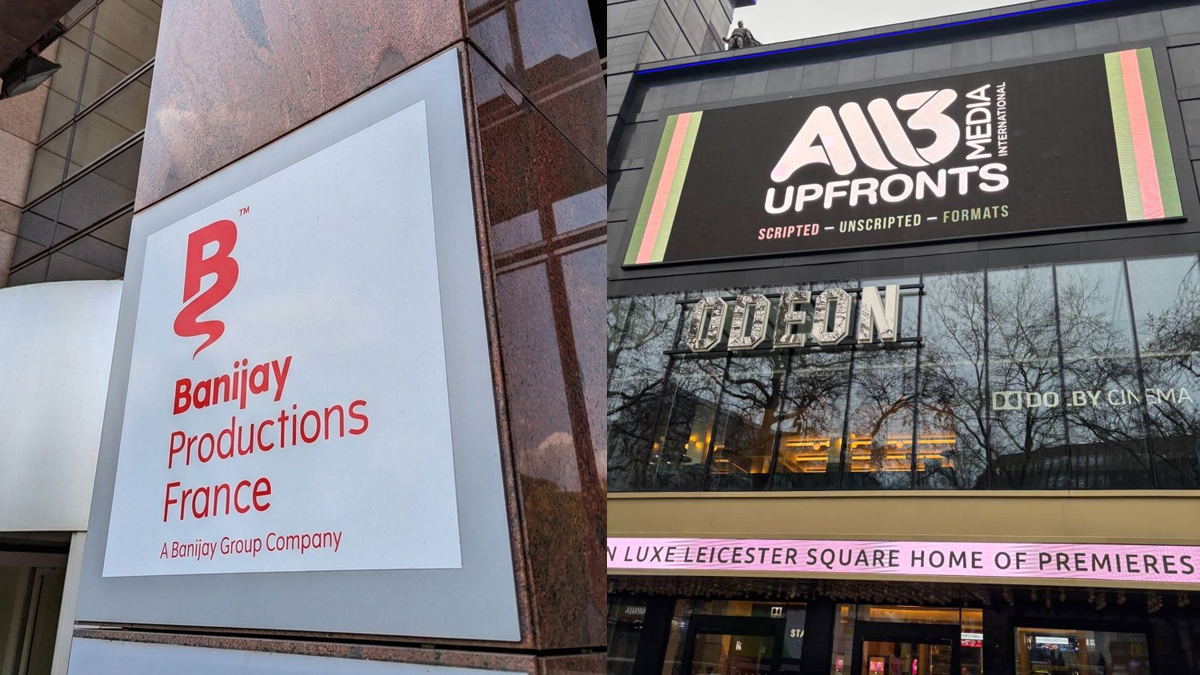
PARIS: Six years after acquiring Endemol Shine at the height of the pandemic, Banijay has struck again. The European production heavyweight is merging with All3Media in a deal that will create a television titan with $6.65 billion in revenue and redraw the contours of a fast-consolidating market.
The combined company will trade under the Banijay name and be owned 50 per cent each by Banijay Group and RedBird IMI, which acquired All3Media in 2024. The transaction is expected to close by autumn, subject to regulatory approvals.
Banijay Entertainment CEO Marco Bassetti, will take the top job at the enlarged group. All3Media CEO Jane Turton becomes deputy CEO. RedBird IMI CEO Jeff Zucker will serve as chairman.
The logic is scale. Broadcasters are commissioning less, streamers are tightening budgets and global buyers are fewer but bigger. Against that backdrop, heft matters. The merged entity will generate roughly $6.65 billion in revenues based on 2024 figures, giving it sharper elbows in rights negotiations and deeper pockets for franchise-building.
“Entrepreneurialism, ambition and creativity” remain core to Banijay’s DNA, Bassetti said, flagging plans to invest more heavily in new intellectual property, live events and emerging platforms. Turton struck a similarly bullish note, pointing to All3Media’s journey from a 2003 start-up to a global supplier of hit formats and high-end drama.
Between them, the two groups control a formidable slate. Banijay’s catalogue spans MasterChef, Big Brother, Survivor, Black Mirror, Peaky Blinders and Deal or No Deal. All3Media’s labels include Studio Lambert, producer of The Traitors and Squid Game: The Challenge; Two Brothers, behind The Tourist; and Neal Street, currently producing the forthcoming Beatles biopics directed by Sam Mendes for Sony.
The back catalogue is equally muscular. Banijay Rights holds some 220,000 hours, while All3Media International adds around 35,000 hours, forming one of the industry’s largest libraries.
Banijay, controlled by French entrepreneur Stéphane Courbit and listed in Amsterdam, counts more than 130 production companies across 25 territories. All3Media operates over 40 labels, with strong positions in the UK, US and Germany. The enlarged group will also lean into live entertainment, building on Banijay’s Balich Wonder Studio, which produced the opening ceremony of the Milan-Cortina Winter Olympics, and the Independents.
The deal marks a shift in tone. As recently as October, Bassetti suggested that mergers and acquisitions were not a priority. But the drumbeat of consolidation has grown louder. Mediawan has moved for Peter Chernin’s North Road. David Ellison’s Paramount has agreed to a $110 billion takeover of Warner Bros, with plans to combine HBO Max and Paramount plus. ITV has explored selling its media and entertainment arm to Comcast-owned Sky, though talks have reportedly slowed.






