International
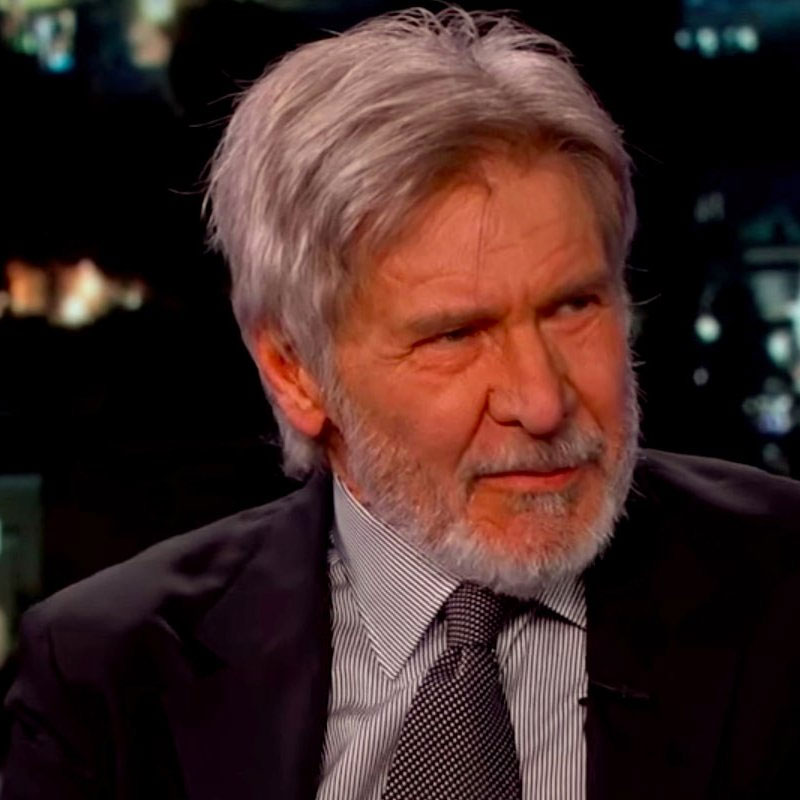
Voters choose Harrison Ford to helm US in an entertaining poll
MUMBAI: With Barack Obama edging out Mitt Romney to become the US president for the second time, a survey commissioned by The Credits, a website sponsored by the Motion Picture Association of America, asked voters which Hollywood president would they have voted for instead of Obama or Romney.
Harrison Ford‘s tough Air Force One Commander in Chief James Marshall came out on top with 23 per cent of the votes. Coming behind was Morgan Freeman as President Beck in Deep Impact. Bill Pullman‘s act of President Whitmore from Independence Day came in third with nine percent.
Though female candidates were put on the ballot, they didn‘t fare well. They took the last three places. They were Cherry Jones (Fox‘s 24), Geena Davis (ABC‘s Commander in Chief) and Mary McDonnell in SyFy‘s Battlestar Gallactica.
The survey also opened up the voting to any actor, not just those who had played a president. In this, Denzel Washington came on top followed by Morgan Freeman and a two-way tie for third place between Clint Eastwood and Harrison Ford. While both Eastwood and Ford were favoured by Romney supporters, the women heavily favoured Washington.
There was also a question about which fictional character would best lead the country during a zombie apocalypse.
Potential voters believed Samuel L. Jackson‘s experience in exterminating serpents in Snakes on a Plane would help him to deliver the nation from an undead plague. Milla Jovovich‘s character from the Resident Evil franchise came in at No. 2, while Tom Cruise‘s character from War of the Worlds rounded out the top three slots.

International
Utopai Studios unveils 4K three-minute video generation for PAI platform
New Story Agent and editing tools aim to streamline AI-led filmmaking workflows
MUMBAI: Utopai Studios has announced a major upgrade to its PAI storytelling AI platform, introducing what it claims is an industry-first capability to generate three-minute videos in 4K resolution, alongside enhancements to its Story Agent feature.
The update, rolling out from April 15, expands the platform’s capabilities across the filmmaking process, from early concept development to post-production. The company said the new features are designed to help filmmakers maintain continuity across characters, scenes and visual styles, a key challenge in AI-driven storytelling.
At the heart of the release is a next-generation model that enables more structured narrative development, allowing creators to move more seamlessly from idea to execution. With tools such as multi-shot sequencing and multi-turn editing, the platform aims to give both studios and independent creators greater control over complex storytelling workflows.
Commenting on the launch, Utopai Studios co-founder and CTO Jie Yang said, “The next phase of AI in media will not be defined by isolated tools, but by systems that can carry story, continuity and collaboration across the full creative process.” He added that the update is a step towards enabling more practical, end-to-end narrative development at a professional level.
Echoing this, Utopai Studios co-founder and chief scientific officer Zijian He said, “Generative video is opening the door to a new production model, where creative ambition is less constrained by traditional cost and complexity.” He noted that the platform combines multimodal models with iterative editing to give creators more speed, control and consistency.
The company said PAI is already being used in professional film and television productions, particularly in Hollywood, for tasks such as pre-visualisation, scene design and post-production refinements. The latest update adds features including improved voice options, character consistency, unlimited editing and more flexible asset management.
Utopai also emphasised that its models are not trained on copyrighted material, positioning the platform as a cleaner alternative for creators and rights holders navigating the evolving AI landscape.
As AI continues to reshape content creation, Utopai’s latest push signals a shift from standalone tools to integrated systems, aiming to make high-quality filmmaking faster, more flexible and increasingly accessible.