News Broadcasting
UK viewers want tougher controls on sexual images in children’s content
MUMBAI: UK viewers want stricter controls over the amount of sex that children are exposed to on television.
In a BBC survey, 86 per cent of respondents felt the government should impose tougher restrictions on sexual images on children’s television and in magazines aimed at children. The aim is to discourage under-16s from having sex.
The BBC’s Healthy Britain survey questioned more than 1000 people on a number of issues including free contraception, sex education and screening services.
As many as 92 per cent of 55 to 64 year olds, and 78 per cent of 18 to 24 year olds backed the idea that the government should be firmer on the issue of sex on children’s content.
While 89 per cent of the respondents supported television campaigns and publicity to promote safer sex and highlight the inherent risks of unprotected sex. 10 per cent were not in favour of such a move.
Meanwhile, 78 per cent of those polled supported spending government funds on free condoms to discourage unprotected sex. The figure rises to 91 per cent in the 18 to 24 age group
The phone poll was conducted for the BBC by ICM between 20 and 22 August across England, Scotland and Wales.

News Broadcasting
BBC to cut up to 2,000 jobs in biggest overhaul in 15 years
Cost pressures and leadership change drive major workforce reduction plan
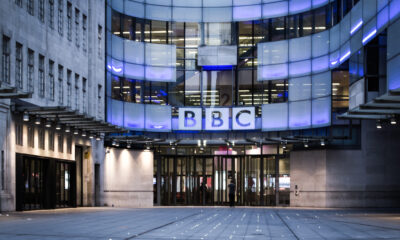
LONDON: BBC has unveiled plans to cut up to 2,000 jobs, roughly 10 per cent of its global workforce, in what marks its biggest downsizing in 15 years.
The announcement was made during an all-staff meeting led by interim director-general Rhodri Talfan Davies, as the broadcaster moves to tackle mounting financial pressures and reshape its operations.
Between 1,800 and 2,000 roles are expected to be eliminated from a workforce of around 21,500. The cuts form part of a broader plan to save £500 million over the next two years, aimed at offsetting rising costs, stagnating licence fee income and weaker commercial revenues.
In a communication to staff, BBC interim director-general Rhodri Talfan Davies said, “I know this creates real uncertainty, but we wanted to be open about the challenge,” acknowledging the impact the move would have across the organisation.
The restructuring comes at a time of leadership transition. Former director-general Tim Davie stepped down earlier this month, with Matt Brittin, a former Google executive, set to take over the role on May 18, 2026.
While some cost-cutting measures are being implemented immediately, the majority of the structural changes are expected to roll out over the next few years, with full savings targeted by the 2027–2028 financial year.
The broadcaster had earlier signalled its intent to reduce its cost base by around 10 per cent over a three-year period, warning of “difficult choices” as it adapts to shifting economic realities and audience expectations.
With operating costs hovering around £6 billion annually, the BBC’s latest move underscores the scale of the financial challenge it faces, as it balances public service commitments with the need for long-term sustainability in an increasingly competitive media landscape.