News Broadcasting
Tribunal upholds tax demand, NDTV intends to challenge order

NEW DELHI: The Income Tax Appellate Tribunal (ITAT) has upheld a tax demand raised on investments of USD 150 million by a US television network in NDTV in 2008, an order that the Indian company said has “numerous inconsistencies and contradictions”. With the tribunal’s 14 July 2017 order upholding the tax demand, penalty proceedings are likely to commence shortly.
NDTV had assured shareholders that it would seek necessary legal advice and appeal against any adverse ITAT order. On its web site, it stated: “This is with reference to reports in certain section of the media as well as social media regarding the rejection by the Income Tax Appellate Tribunal (ITAT) of an appeal filed by the Company against the assessment order for tax demand of Rs. 450 crore for the assessment year 2009-10. The ITAT order has not yet been uploaded. Once the order is uploaded, the Company will advise shareholders of the implications thereof.”
In a stock exchange filing, NDTV said it was surprised at ITAT dismissing the appeal it had filed against the tax demand, according to a PTI news report, which quoted the company as saying, “It is important to note foremost that the ITAT has accepted that there was no round-tripping or money laundering, as was alleged by income tax department.”

The tax department had alleged that Rs 218.30 crore (Rs. 2183 million) was the tax that was sought to be evaded on investment of Rs 642.54 crore (Rs. 6425.4 million). It had sought a penalty of Rs 436.8 crore (Rs. 4368 million) at the rate of 200 per cent of tax evaded.
It confirmed invocation of Sec 69A of Income tax Act (dealing with ‘unexplained money’ addition) and upheld that “transaction used principally as a devise for the distribution/ diversion of sum to the Indian entity” and that “the beneficial owner of the money is the assessee”.
PTI quoted NDTV as saying: “Surprisingly, the ITAT has dismissed the appeal filed by the company as not being maintainable but at the same time adjudicated the appeal filed by the income tax department (ITD) against the same assessment order. It is inconceivable how appeal filed by the ITD against the assessment order is maintainable before the ITAT but the company’s appeal emanating from the same order is not maintainable.”
“Surprisingly, the ITAT has upheld the addition under Section 69A of the Act, purely on conjectures and surmises, ignoring the evidence adduced by the company including the annual reports of the investors,” NDTV was quoted as having said, “The legal advice received is that a consistent view has to be taken and it appears that the order had been passed in a haste and the above inconsistencies have arisen because of a hurried order. We have been advised that Section 69A of the Act is applicable only when money is found in possession of a taxpayer but not accounted for in the books of accounts.
“However, the said section has no application in the present case since admittedly, investment made by NBC Universal (admittedly then subsidiary of the GE Group) through its step down subsidiary, Universal Studios International BV, was duly recorded in the books of accounts of the company’s subsidiary, viz, NDTV Networks International Holdings BV.”
Stating that it will continue to fight the “misguided case” made by income tax department, NDTV said it is “exploring all options available to it in accordance with law.
ALSO READ:
NDTV issues response to govt charges
NDTV gets slapped with higher tax dues notice






News Broadcasting
CNN-News18 to host Fury in the Gulf conclave on West Asia crisis
Three-hour summit to unpack geopolitical fallout and impact on India
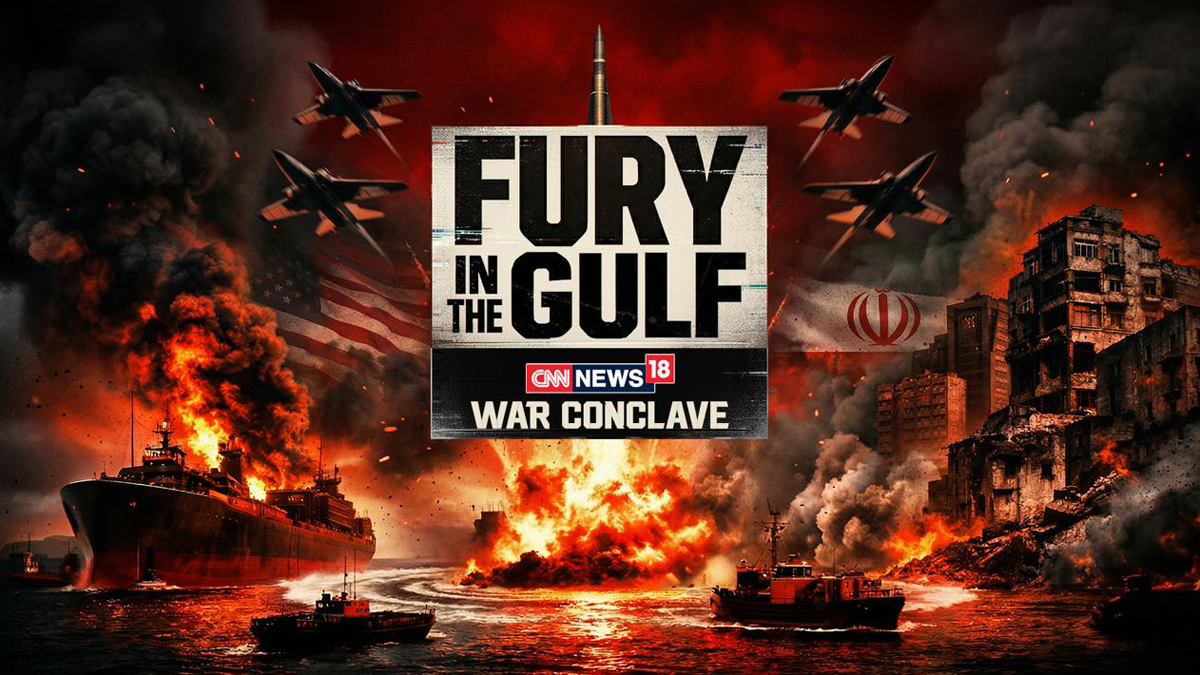
MUMBAI: CNN-News18 is set to host a special three-hour broadcast, Fury in the Gulf – War Conclave, on April 7, aiming to decode the escalating West Asia crisis and its far-reaching implications for India.
Scheduled from 4:00 PM to 7:00 PM, the conclave comes at a time when tensions between Iran and the United States are reshaping global geopolitics and triggering economic uncertainty. With India’s deep energy ties, trade links and large diaspora in the Gulf, the developments carry significant domestic relevance.
Built around the theme ‘Conflict, Consequences, and The Future,’ the programme will feature six curated sessions combining one-on-one interviews and panel discussions. The focus is to cut through the clutter and offer viewers a clearer understanding of the fast-evolving situation.
Key sessions include ‘Diplomacy in Times of War’ featuring Shashi Tharoor, and ‘World After the Iran Conflict’ with voices such as Ram Madhav, Reuven Azar, representatives from the European Union and the Iranian Deputy Envoy. Another session titled ‘Another Dunkirk?’ will bring together K. J. S. Dhillon and Jitin Prasada among others.
CNN-News18 editorial affairs director Rahul Shivshankar said, “In times of war, clarity becomes the most powerful tool. Fury in the Gulf – War Conclave brings together credible voices to address the questions and confusion that arise amid an overwhelming influx of information.”
He added that the initiative is aimed at delivering “facts, perspective, and insight” at a time when misinformation can easily cloud public understanding.
Echoing the sentiment, CNN-News18 CEO– English and business news Smriti Mehra said the conflict marks a defining global moment, with consequences that extend well beyond the region. She noted that the conclave seeks to present the crisis with “depth, nuance and responsibility” so audiences can better grasp its real-world impact.
As geopolitical tensions continue to dominate headlines, the conclave positions itself as an attempt to bring order to the noise, offering viewers a structured, insight-led look at a complex and rapidly shifting global situation.






