iWorld
Today, 70 years ago, Elvis Presley entered America’s living rooms
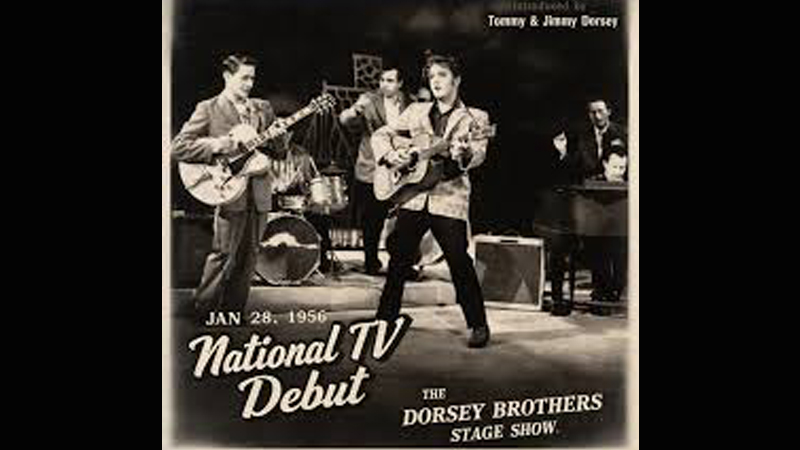
NEW YORK: Exactly 70 years ago today, on January 28, 1956, the world of entertainment shifted on its axis. A 21-year-old truck driver turned singer named Elvis Presley walked onto a television stage and quietly rewrote the definition of a “star”.
While many people mistakenly believe Presley’s television journey began with The Ed Sullivan Show, the real rupture came months earlier. On a winter Saturday night in 1956, Elvis made his national television debut on the Dorsey Brothers’ Stage Show on CBS.
It was hardly a grand unveiling. Accounts suggest the studio audience was modest, with poor weather keeping many away, and the headline acts were the ageing big-band leaders Tommy and Jimmy Dorsey. But when the young man from Memphis stepped into the spotlight, the era of the big band began to fade and the era of the teenager edged into view.
The performance that baffled adults
Elvis didn’t just sing; he moved in ways that 1950s television cameras were unprepared for. Dressed in a tweed jacket, white tie and black shirt, he powered through Shake, Rattle and Roll and I Got a Woman.
The reaction: The older studio audience was reportedly caught between shock and curiosity. They had never seen a performer use his entire body as an instrument.
The Stage Show gamble: Presley was paid $1,250 for the appearance, part of a deal that would later expand to multiple shows. Ratings that night lagged behind NBC’s Perry Como Show, but the buzz generated by the performance travelled faster than any overnight figure.
Why January 28 was the turning point
Before that night, Elvis was largely a regional sensation, known in the South as the Hillbilly Cat. After Stage Show, he became a national talking point.
• National reach: For the first time, households from New York to California could match the face to the voice they had heard on the radio.
• A blueprint for stardom: The debut led to a total of six appearances on Stage Show, each growing more confident and more controversial as young viewers tuned in specifically for him.
• Before the censorship: This first appearance was raw and uncensored. Unlike his later Ed Sullivan performances, where cameras famously stayed above the waist, the Dorsey Brothers’ broadcast captured every twitch and swivel.
Seventy years of echoes
Today, in 2026, the genetic imprint of that performance is everywhere. The idea that a pop star must be a full-bodied spectacle—sound, movement and attitude combined—can be traced back to that New York stage.
Elvis Presley didn’t just debut on television on January 28, 1956. He cracked open the screen, let youth culture flood in, and ensured American television would never quite stand still again.

iWorld
Spotify Q1 revenue hits €4.5bn as users cross 760 million globally
Subscriber growth and margins rise as platform bets big on AI and discovery
LONDON: Spotify has kicked off 2026 on a strong note, reporting first-quarter revenue of €4.5 billion, up 14 per cent year-on-year in constant currency, as its global user base swelled past 760 million.
The streaming giant said monthly active users rose 12 per cent year-on-year to 761 million, while premium subscribers climbed 9 per cent to 293 million. The steady rise in both free and paid users signals continued demand for its expanding mix of music, podcasts and audiobooks.
Profitability also struck a chord. Gross margin improved by around 140 basis points to 33 per cent, marking one of the company’s strongest first-quarter performances to date. Operating income reached €715 million, comfortably ahead of expectations.
Spotify co-CEO Alex Norström said, “We surpassed 760 million MAU, delivered on the subscriber growth we aimed to achieve, and saw healthy engagement from existing users, reactivations and new users alike.” He added that increased listening and viewing activity in key markets such as the United States reflects confidence in sustained growth and low churn.
The company’s other co-CEO, Gustav Söderström, pointed to long-term ambition, saying the platform’s scale, creator ecosystem and investments in personalisation are opening up “new growth vectors” across formats and user engagement.
Revenue growth was largely driven by the premium segment, which rose 10 per cent to €4.1 billion, supported by price increases and stable average revenue per user of €4.76. However, the ad-supported business saw a 5 per cent dip to €385 million, though it still posted a modest 3 per cent increase in constant currency terms.
Cash generation remained robust, with free cash flow at €824 million for the quarter and €3.2 billion over the past 12 months. The company also benefited from lower-than-expected operating expenses, including €49 million in reduced social charges linked to share-based compensation.
Beyond the numbers, Spotify is leaning into product innovation. New AI-driven features such as “Taste Profile” and “Prompted Playlist” aim to give users more control over recommendations, while tools like “SongDNA” and “About the Song” deepen music discovery. The platform is also expanding audiobook charts in the United States and United Kingdom to boost engagement in newer formats.
Looking ahead, Spotify expects momentum to continue into the second quarter, forecasting 778 million monthly active users, 299 million subscribers, revenue of €4.8 billion and operating income of €630 million.
With €8.8 billion in cash and 7,258 employees, the company appears well-positioned to keep its growth story in rhythm as competition in digital entertainment intensifies.