News Broadcasting
Those who flaunted BARC ratings are questioning it now: TV9’s Barun Das

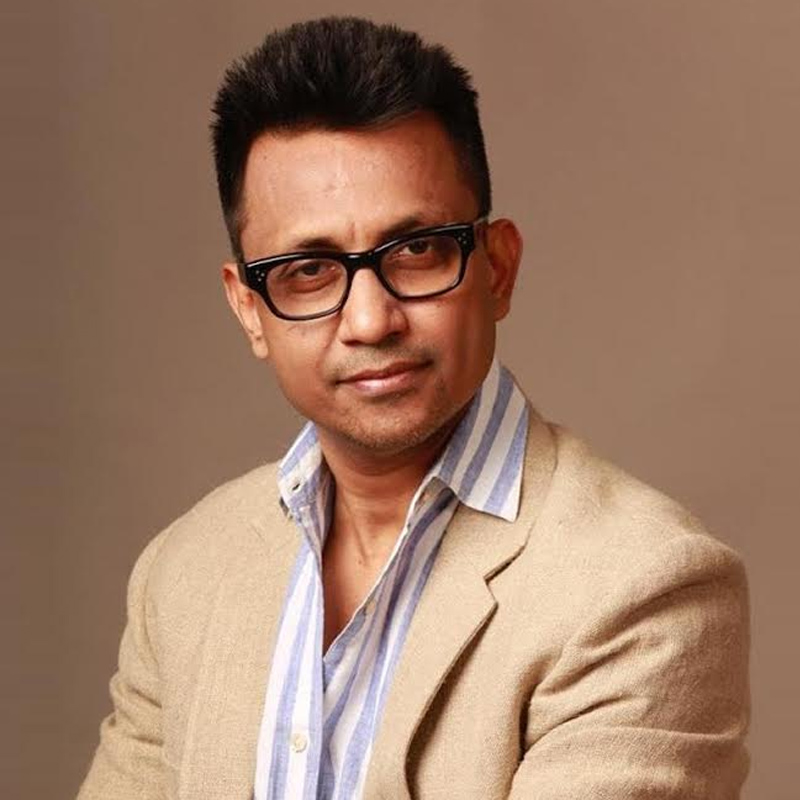
NEW DELHI: TV9 CEO Barun Das says he feels like an outcast. While he’s unsure whether BARC’s decision to hit the pause button on TRP for news channels will prove to be good or bad in the long run, he thinks singling out the news business in this way is cause for concern.
“When I find that only the news television ratings has been suspended, that makes me feel that I’m standing with a bunch of people who are possibly suspicious. I don’t think there’s something wrong with the industry per se, a few unscrupulous acts may happen here and there. But if it were my decision, I wouldn’t have cast the entire industry in the light of suspicion,” he said during a virtual foresight session with indiantelevision.com founder, CEO and editor-in-chief Anil Wanvari at the News Television Awards Summit 2020.
He has complete confidence in the BARC and points out what he perceives to be the double standards in the industry: “BARC rating was flaunted by those who are now questioning it. It is uncanny… that people complain against the currency only when they are victimised, otherwise it’s all hunky-dory. You have got to have a standard that is consistent.”
At the same time, Das recommends strict action against any person or organisation who is found to be running afoul of the system. “Any malpractice or tampering from a news player should attract capital punishment. It should be zero tolerance,” he asserts.
The investigation into the TRP racket, be it by law enforcement agencies or BARC’s own internal probe, will not just affect the news industry but also have larger ramifications on the society as a whole, believes Das. “So when people speak of ‘intervention’ or ‘malpractice’, we need to be extra cautious because we have the responsibility of forming the country’s opinions.”
Read our coverage of the NT Awards 2020
So what should BARC do to plug the gaps in its system? The TV9 CEO has some ideas.
“Why not have a technical cut-off? Instead of out-casting one genre, say that below a certain figure, the sample or statistical methods have larger margins of error so these other genres which fall below this number would also be suspended. Checks and balances need to be built in to make the system fool-proof.”
Das also admits that he has radical views when it comes to the advertising-driven business model that presently holds sway over most of the news industry. Without taking names, he highlights the hazards of aping content that seems to be doing well in terms of ratings, without analysing the long-term consequences of pandering to the masses.
He illustrates with an analogy: “Let’s say the currency that we have says that consumers are enjoying circus on a news channel during primetime. In a free society, whatever the consumer is expecting you tend to give that more in your content. By the end of the year, you’ll see almost all the channels are showing circus on primetime and viewers who didn’t like it have no choice but to watch circus too. And they would eventually start liking the circus. That’s the risk the country faces by going wrong in our ratings.”
Das is of the view that news channels should have a model that is fully subscription-based; an advertising-driven news operation is an oxymoron and there is something fundamentally wrong with that system. “If somebody is a large advertiser of mine, how much will I expose him if there’s something going wrong at his end?” he quips.
But the winds of change are slowly but surely coming. In the West, newer formats of news commentary and engagement are coming up where influencers and multi-channel digital networks are challenging the legacy players. And it's only a matter of time before this catches on in India too. Wanvari asks Das what he predicts will happen to the traditional broadcast industry in such a scenario.
“The convergence of news originator and consumer will be brought in by the digital world, I’ve said this before. The broadcast sector will give way to digital platforms. The latter lacks intervention at the moment but it’s on auto-correct mode. But organised players will always be there. They will seamlessly transform themselves from a traditional TV business to more digital news content business,” he said.