Hollywood
This Christmas, treat yourself with a Sherlock video tape!

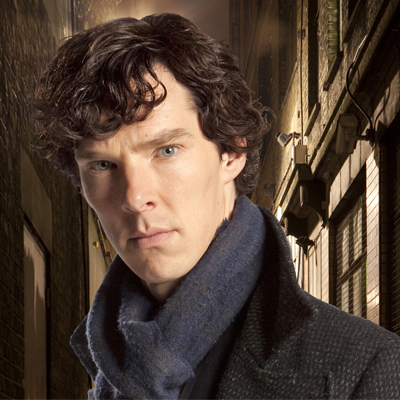
MUMBAI: Sherlock certainly knows how to make a re-entry. The acclaimed series is set to return next month for its third season on AXN India and, to further stoke anticipation; the BBC has released an enigmatic new mini-episode online. It tracks the return of Benedict Cumberbatch’s brilliant, socially-challenged detective from a grave that, one could deduce, he never filled.
“Many Happy Returns” follows up “The Reichenbach Fall,” the Season two finale of January 2012 in which Sherlock faked his suicide in London. The 7 minutes 12 seconds episode is written by Mark Gatiss and Steven Moffat. Moffat had earlier said that the new villain of the show will send a chill down the spines of the viewers. Now, years later, we open on a mysterious blonde drug smuggler uncovered among a group of monks – a stunning discovery that could only be attributed to Holmes, or so insists Detective Anderson (Jonathan Aris) – never a big fan of Sherlock’s – who tries to convince Inspector Lestrade (Rupert Graves) that the detective isn’t dead after all.
Anderson points to two other cases – including one murder involving ice cream “solved” by an inspector in New Delhi – that bear Holmes’ trademark reasoning and reluctance to accept any credit. Still, Lestrade remains unconvinced, even as Anderson traces a line of miraculously solved crimes that seem to indicate a return to London.
After finishing his pint, Lestrade goes to see John Watson (Martin Freeman) and hands Holmes’ trusty sidekick an uncut version of a video message the detective once made for Watson’s birthday. In it, we finally see Sherlock, unsure how to tell Watson why he can’t attend his birthday party. (The real reason: because there will be people.) “So what do you want me to do at the end?” Holmes asks. “Shall I smile and wink? I do that sometimes; I’ve no idea why. People seem to like it. It humanizes me. Its fine, whatever.”
After insulting his friend in the sweetest way possible, we see Sherlock’s message, in which he offers Watson many happy returns and promises, “Don’t worry, I’m going to be with you again very soon.” But just how the presumably deceased detective intends to rise from his apparent demise is hardly elementary. Then Watson is distracted by a ringing phone. So how does the clip end? With Holmes offering a wink and a smile, of course.
Thanks to Sherlock, Cumberbatch has seen his Hollywood stock rise significantly in the past few years. He recently voiced the titular dragon in The Hobbit: The Desolation of Smaug, starred as the nefarious John Harrison in Star Trek Into Darkness, and made a turn as Wikileaks founder Julian Assange in The Fifth Estate. Over the summer, Pacific Rim director Guillermo Del Toro said he was hoping to cast the actor in his upcoming adaptation of Frankenstein.
Season Three of Sherlock will air on Friday nights on AXN starting 3 January.