News Broadcasting
“The journalism I follow is journalism of opinion:” Arnab Goswami

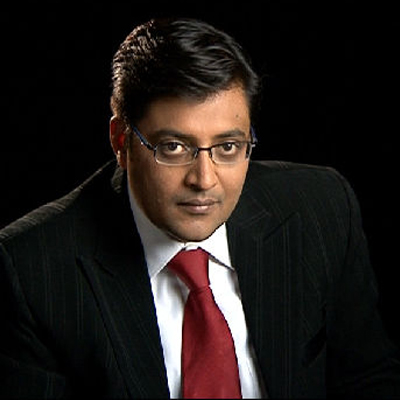
GOA: The second day of the 10th edition of Goafest started with a zealous key note from Times Now editorial director and editor-in-chief Arnab Goswami.
Seconding the image that he’s built with his different mode of journalism, Goswami said, “The formula of stating an opinion as a journalist is wrong is not true and my presence here today proves that. The journalism I follow is journalism of opinion and is not PR driven. If my opinion helps bringing about a change, I will opine and not shy behind the wall of neutrality. When you know there is something wrong, you don’t need to be neutral. When the facts prove something, you don’t need to be neutral.”
A tad different in his approach to journalism when compared to his peers, Goswami has oft been accused of promoting sensationalism, being over the top loud and what not. In his keynote, the senior journalist addressed some of the accusations that have been levied on him time and again. They are as follows:
Sensationalism: “I know I am accused of sensationalism. Let us go back to the initial stages of Times Now… a small kid was lying at the bottom of a 60 feet deep bore well. We covered it with supreme priority for three continuous days till the kid was rescued alive. We did it because a poor kid was always neglected. Had it been a politician’s or a celebrity’s child, the treatment would have been different. It is because of the OB Vans that the small kid’s life became a national issue and everyone was praying for the kid. We were accused of sensationalism after the coverage, but our coverage then ensured that no such bore well is left unfilled now, which saves small kids from facing the trauma that Prince went through and hence I am proud of sensationalizing, and if it does good to the people of India we will keep doing it.”
Getting Too Involved in the Story: “I know I am accused of getting too involved in a story, which eventually ends up with me taking sides and compromising neutrality. In 2011, we got to know about a small accounting error from a group of Indians on British soil. We analysed the facts and the story was on air. Early next morning, young journalists came running to me and said: ‘Sir, Kalmadi is responding to our story.’ A small report shaking a person of Kalmadi’s magnitude was not normal. I got thousands of calls and one of them was from a person I love – the late Vinod Mehta. He told me: ‘What did you do? Why is everyone so anti-Arnab because of one report? There is something beyond what you have reported… dig deep and find out.’ The entire team got involved. We didn’t sleep, we didn’t think anything else and after a week of investigation, what we came out with was a historical moment for the Indian media — the unveiling of Commonwealth Game Scams, which started the journey of unveiling scams in the public forum. So if getting too involved brings in such revolutions, I promise in future too, no matter how much ever we are criticized, we will keep getting too involved.”
Not Giving Chance To Others To Speak: “Well once I decided that I will let the other person speak and that day became a historical day for the Indian media. And the person was Rahul Gandhi. After that day, there is nothing more left for him to speak anymore. He came with a script in his head and my motive was to make him speak out of that script and the moment I succeeded in doing it, he revealed many hidden secrets. With that the people of India came to know about his feeble nature, which set the tone for the Narendra Modi led government. Well, now we don’t even know where he is, so it’s not that I don’t let others speak, it’s just that I stop them from speaking what they have pre-scripted and is not relevant and accurate.”
The keynote was followed by a Q&A round where advertising fraternity representative Prasoon Joshi asked Goswami numerous questions. Answering on the ’Shame in Sydney’ episode that was run after India’s defeat against Australia in the ICC Cricket World Cup semi-finals, which saw substantial criticism on social media platforms, Goswami said, “I have no regrets on running that episode. Criticising a defeat is not a crime and we also appreciate them when they win. It is not something new. Over the years, we saw every defeat in a big match was aggressively criticised. Cricket fans had a problem with the word shame, which is a different argument. We are open to criticism but that doesn’t mean I have any regret airing that episode.”
Goswami’s speech about how Times Now is all about bringing about a change amidst a gathering of advertisers and agencies, could have had multiple motives. However, that didn’t stop him from taking a dig at rivals.
While he didn’t exactly criticise others for airing content that he didn’t agree with, at the risk of sounding pompous, he said, “I think I hardly have any rivals.” Goswami’s intention was most likely to tell the advertising fraternity that Times Now was beyond competition when it came to viewership and popularity.