Cable TV
The challenge of DD FreeDish and new tariff order for DPOs

GOA: With the emergence of a large number of OTT platforms and cord-cutting phenomenon globally, the future of pay-TV has often been questioned. The talk of the town seems to be about the how pay-TV industry will continue to thrive in such an environment. Moreover, the new tariff order (NTO) in India is also set to overhaul the entire value chain, leading to some uncertainty.
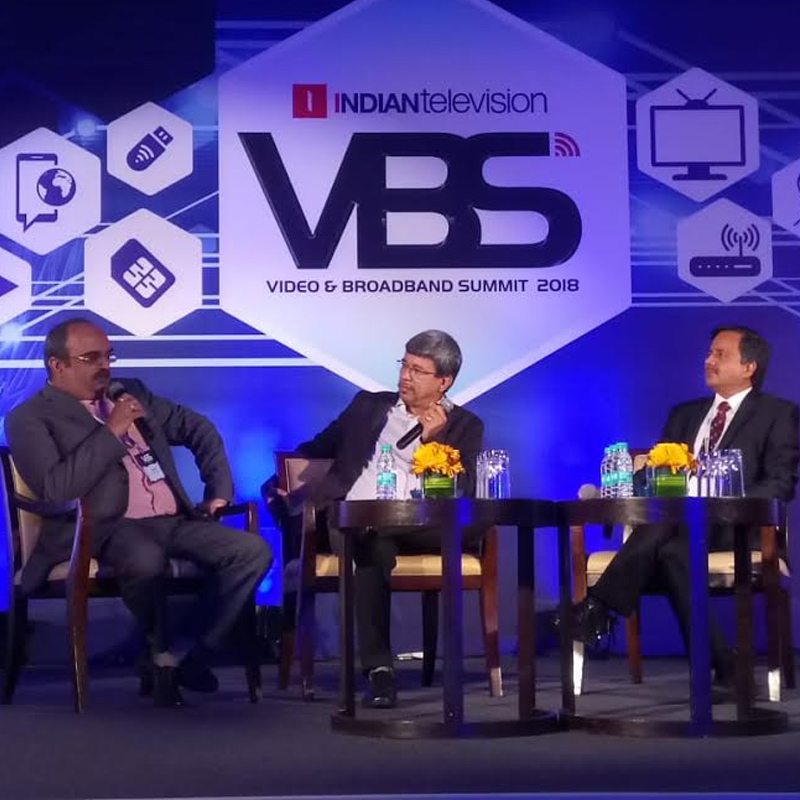
Against this backdrop, Video and Broadband Summit 2018 held an intense discussion on the “future of pay TV in India”. Travelxp CEO Prashant Chothani and Doordarshan additional director general Sunil participated in the session which was moderated by Indiantelevision.com founder and CEO Anil Wanvari. The session had viewpoints from two entirely different players as Chothani provides a niche premium offering to viewers, while Sunil is responsible for public service which caters to the masses.
Travelxp works on a B2B2C model despite having 100 per cent original content. Chothani, who is very passionate about linear TV, does not share his content with any OTT platform other than Netflix in North America. He thinks it is extremely crucial to protect linear business as much as possible.
Chothani, talking about the NTO, said that DPOs are in existential crisis. He thinks DD FreeDish is the biggest challenge for distribution platform operators (DPOs) as the former offers over 100 free to air channels to consumers for free and the latter has to charge Rs 130 for the same as per the NTO.
“FreeDish is your biggest competitor. Where do you think these 30 or 40 million homes have come from? They go to a large part of north India, UP, Bihar and lot many other markets, where the customer is not willing to pay even Rs 99. There comes the cord cutting in favour of DD FreeDish because this population is satisfied whatever channels come to them for free,” he commented.
While there are already technological disruptors like Hotstar, Netflix, Amazon threatening linear TV’s growth, consumers, who don’t wish to pay for the channels, can turn to DD FreeDish, said Sunil endorsing Chothani’s view.
From the audience, Doordarshan director general Supriya Sahu added that DD FreeDish is not only used by a marginal section of the society but the service is quickly evolving as an alternative option which clearly indicates that it could be a potential threat for DPOs.
When asked if DD FreeDish would partner with broadcasters, Sunil said he was open to the idea of collaboration. Rather than making money, the pubcaster’s aim is to let the system grow, he said.
“We have to work on a business model on that front and it is very difficult to answer this question at this point of time because the call has to be taken by the government. But yes cable operators and broadcasters are a part of this system. They are always welcome to partner with us,” he added later.
He also thinks NTO will be a big game changer as the difference in price between small LCOs and bigger ones has been taken away by TRAI regulations. He also believes that the future of pay-TV is threatened by TRAI regulations. Customers will watch what they want, where they want and when they want and will only pay for that purchase, he added.
Chothani also added that India is a very price sensitive market. Even in Serbia where currency value is weaker than India’s, Coke is priced the same as in Germany but in India, it is offered at a much cheaper rate. This nature does not fade away when it comes to entertainment.
“We content creators got greedy. We thought why would you pay 50-60 per cent money with DPOs and do B2B2C business why not B2C. If you see RIOs of some broadcasters, you will see their B2C offering subscription on their apps is cheaper than they are giving to LCOs or DPOs. Why? Because OTT apps are not regulated,” said Chothani.
“So, this regulation is also going to take away a lot of customers from traditional DPOs unless they play smart. Broadcasters have been playing this game for too long and will keep on playing for times to come. But DPOs need to rethink now. This is a golden opportunity for them. So, they need to get behind and think how they can make consumers pay for content while DD FreeDish is offering so many channels for free,” he added.
The experts believe that though the future of pay-TV has a few challenges, the NTO offers opportunities to restructure the industry and make the business profitable for all.