iWorld
Telcos are great partners for OTT discoverability and monetisation

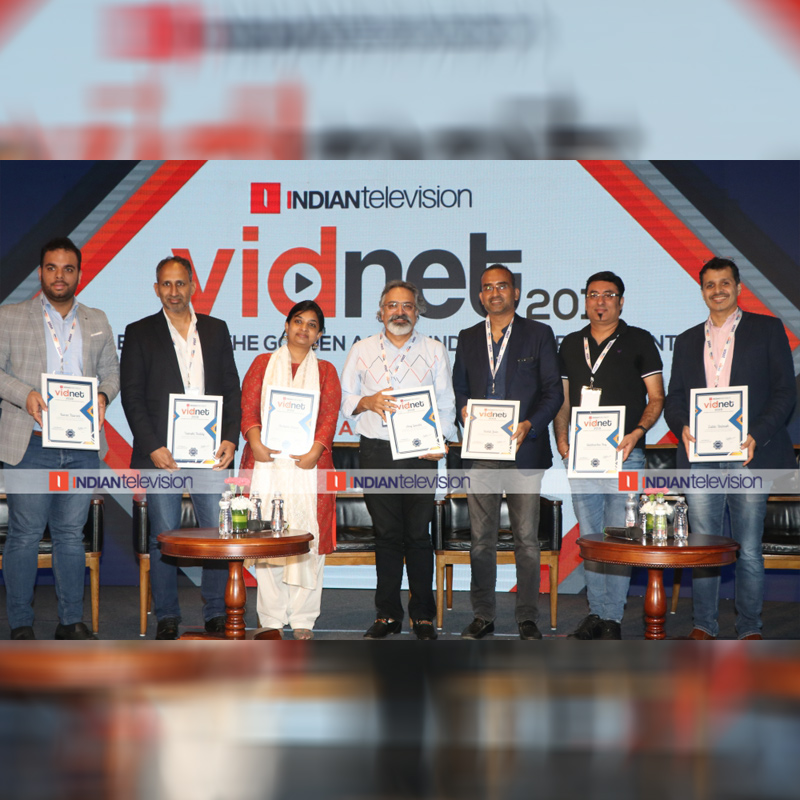
MUMBAI: With an explosion in the smartphone market and rise in the number of OTT channels operating in India, telco-OTT partnerships are well-strategised and the most beneficial for content platforms to gain eyeballs and drive monetisation asserted a panel speaking on the topic of “Captive Audiences of the Telecom Trace” at the recently concluded Business and Tech Track of Indiantelevision.com Vidnet 2019 summit.
Sitting on the panel, moderated by Elara Capital VP – research analyst (Media) Karan Taurani, were ZEE5 Global chief business officer Archana Anand, IndiaCast Media Distribution group CEO Anuj Gandhi, Apalya Technologies founder & CEO Vamshi Reddy, Lionsgate South Asia MD Rohit Jain, Shemaroo Entertainment COO digital Zubin Dubash, and Hungama Digital COO Siddhartha Roy.
Roy mentioned that as aggregators, telecom companies are greatly positioned as single payment option for most of the OTT channels and Zubin Dubash vouched for the ability of telco partners to get greater traction on content sites and drive up numbers.
Taking the example of Ditto TV, the VOD service from ZEE, Archana Anand shared that partnerships with telecom companies have always been fruitful for the ZEE network’s OTT offerings, for both consumer acquisition and marketing.
She said, “I think, back then, we were the first ones to go across and do partnerships with the telcos and we created quite a stir in the market because of the lovely sachet pricing we were offering. The telecom partners ensured that they are paying on behalf of the consumers and it gave us brilliant traction. I believe, we managed to get the highest subscriber base in those days.”
Anand added that there can’t be a better distribution network than telcos as it also translates into a ‘fantastic payment mechanism’. “With all the hesitancy around credit card payment, etc., the direct carrier billing is something that the consumer can be confident about and adapt easily.”
Vamshi Reddy seconded her thoughts as he quipped that telcos can become the easiest ways for the industry to build a monetisation model around the whole content consumption. He noted that with fragmentation happening in the OTT space, the telecom partners can provide a universal experience to users in a seamless manner.
Gandhi, however, highlighted that in the long run, the issue of ownership of the consumer can arise. “This challenge will take some time to settle, but from a pure bundling perspective, the discoverability on TV is extremely easy, and that is something that the OTT platforms are struggling with. Telcos can help in solving that.”
To this, Anand noted that today there is a great symbiotic relationship between the OTT platforms and the telcos as the former wants to own the content and the latter, the consumer. But the platforms need to be mindful of the fact that it gets constant data from its partners and also keeps on communicating with the consumers through in-app notifications to ensure scalability of the partnerships in the long run.
Jain added another dimension to the conversation as he noted that while telecoms are great in helping the OTT content reach the smaller screen, there is a wide array of opportunities lying in the big-screen space, which the OEMs can latch on to.
He said, “In some ways, this is life coming to a full circle as all of these (telcos, OEMs, etc.) are actually (equivalent to) DTH and cable companies. All we need now is an ecosystem to emerge and thrive and whoever does a good job of aggregating content will eventually become the winner.”