DTH
Tata Sky, Airtel DTH gain market share in 2017


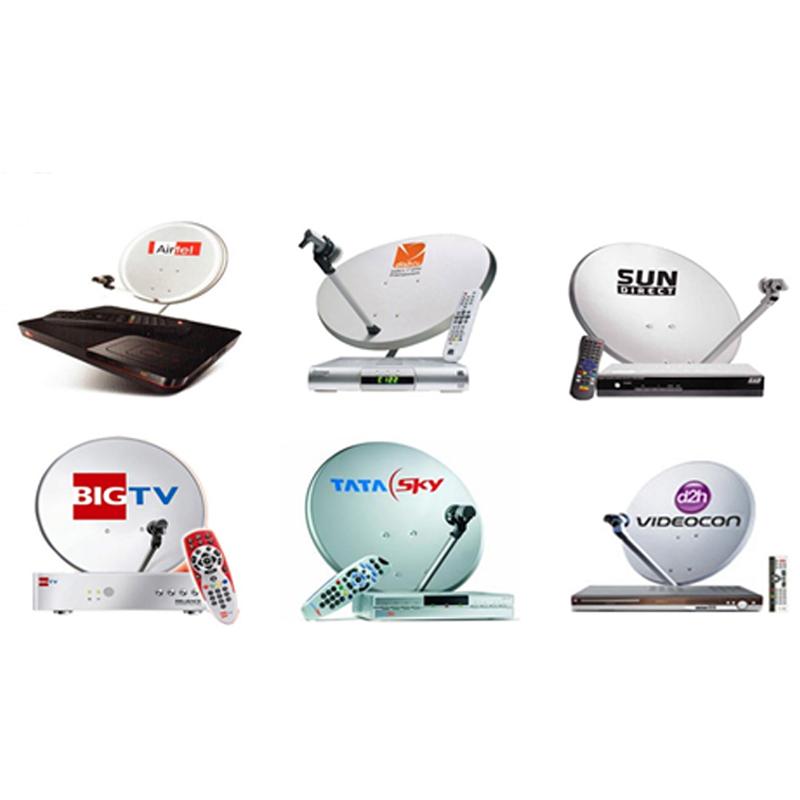
BENGALURU: Tata Sky and Airtel Digital TV (Airtel DTH) have reason to rejoice as they saw market share rise in calendar year 2017 as compared to a year ago. Both saw an increase by one per cent each at the end of December 2017 as compared to at the end of December 2016 according to Telecom Regulatory Authority of India (TRAI) data.
Tata Sky had 24 per cent market share at the end of 2017 (CY-2017) as compared to 23 per cent at the end of 2016 (CY-2016), while Airtel DTH had 21 per cent share as compared to 23 per cent during the same period. Hence, the market share of Tata Sky and Dish TV, which lost one per cent market share in 2017, was the same. The other player that lost market share was Videocon d2h – its market share fell by a percentage point to 19 per cent in 2017 as compared to 20 per cent in 2016.
We had mentioned earlier that the share of the three major players whose numbers are available in the public domain –(in order of number of subscribers – Dish TV, Airtel DTH and Videocon d2h) has been declining – from about 65 per cent to 64 per cent in the Jun-Sep17 quarter to an even lower 63 per cent in the Oct- Dec 2017 quarter.
Please refer to the market shares of the six private DTH players at the end of 2017 and 2016 according to TRAI data:

According to TRAI data, the overall private DTH active subscriber base grew by 4.19 million or 0.419 crore (7.8 per cent) in CY-2017 to 67.56 million or 6.756 crore from 62.65 million or 6.256 crore in CY- 2016. Comparatively, in 2016, the overall private DTH active subscriber base grew by 6.67 million or 0.667 crore (11.9 per cent) from 55.98 million or 5.598 crore in CY- 2015.
As also mentioned by us earlier, quarterly data released by TRAI indicates that the industry added net 2.25 million or 0.225 crore subscribers for the quarter ended 31 December 2017 (Oct-Dec17 quarter), hence the final quarter of CY-2017 accounted for about 46 per cent of the net subscribers added during the year. The Oct-Dec17 quarter had the highest quarter-on-quarter pay-TV DTH subscriber growth in CY- 2017 at 3.45 per cent.
We’d said that CY-2017 saw muted pay-TV DTH subscriber growth. Those numbers were based on the results declared by the above mentioned three private DTH players.
It must also be mentioned that the government’s FreeDish DTH service is the largest DTH player by far in terms of subscribers with an estimated 22 million or 2.2 crore subscribers in 2016 as per the KPMG-FICCI Indian Media and Entertainment Industry Report 2017 (KPMG-FICCI M&E Report 2017) titled Media for the Masse: The Future Unfolds. It must however be noted that an exact number for registered or active subscribers is not available since this is a free DTH service. Also, the merger of Videocon d2h with Dish TV has created the largest private television carriage player in India and quite likely the second largest in the world, be it cable, internet television or DTH or any other.