iWorld
Tata Play Binge service now offers content from Planet Marathi, Namma Flix and Chaupal

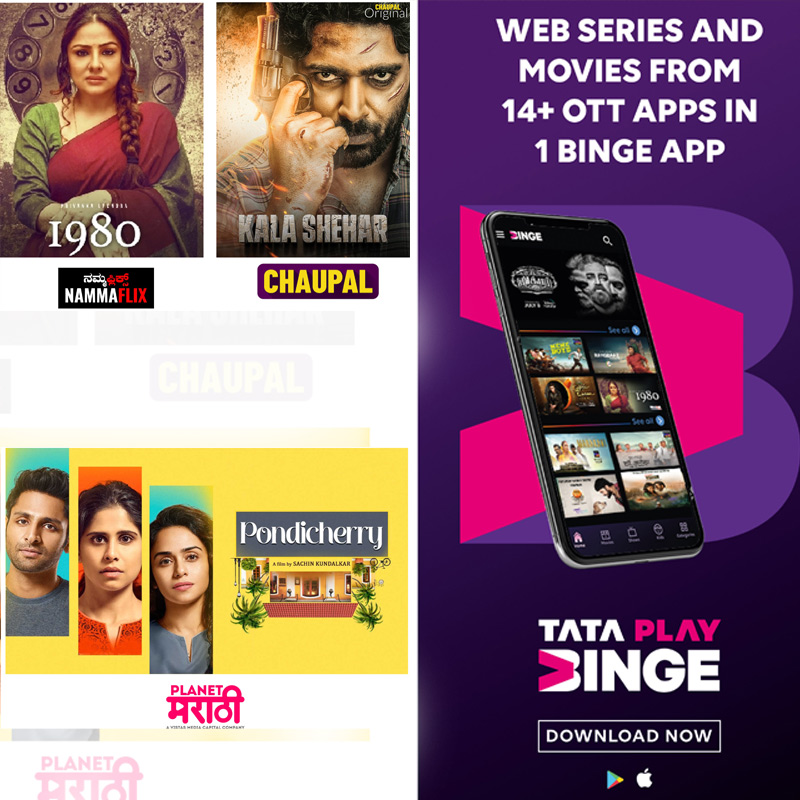
Mumbai: Tata Play has added three new OTT platforms—Planet Marathi, Namma Flix, and Chaupal—to its Tata Play Binge offering. The platform now offers 16 OTT platforms in one app with diverse content across languages, catering to a pan-Indian audience.
Chaupal, Planet Marathi, and Namma Flix will bring stories from the world of Kannada, Punjabi, Haryanvi, Bhojpuri, and Marathi entertainment.
The service can be accessed via the Tata Play Binge mobile app or Tata Play Binge+ Android set-top-box (STB).
Tata Play’s chief commercial and content officer Pallavi Puri, said, “Carrying forward Tata Play Binge’s objective of bringing the best of entertainment to viewers, we are proud to partner with Namma Flix, Planet Marathi, and Chaupal. The addition of these three new OTT platforms to Binge’s existing partnership with 13 other platforms will enable a wider audience to enjoy stories in their own languages. This will significantly boost content discovery and exploration for Indian consumers, making Tata Play Binge the one-stop solution for all OTT entertainment.”
“We are very excited to partner with Tata Play Binge to reach a wider audience base. Our vast content library of retro movies and the latest ones will now be available to the Tata Play Binge audience. We are also working towards releasing two new movies every month and aspire to launch some web series as well. We believe in increasing our footprint through our partners and are putting in our best efforts to keep Kannadigas across the country entertained,” said NammaFlix founder & CEO Vijayaprakash R.
Planet Marathi OTT founder Akshay Bardapurkar said, “We are committed to introducing the power of Marathi content to as many viewers as possible. Our exclusivity and forte lie in the power of creating content of varied genres, through web series, films, non-fiction content, and much more. We have always been the first movers and game changers when it comes to the Marathi industry, and this collaboration is also a step towards the same. Through this association, we will be able to reach out to new users as well as loyal ones through a new channel. We want to aid discoverability, affordability, and accessibility through various media and meet our audience in various convenient ways. We are confident we will be able to merge our strength in content with Tata Play’s prowess in distribution to create a robust viewer community.”
Chaupal managing director Sandeep Bansal, said, “Chaupal signifies entertainment beyond boundaries, where regional languages and cultures interact, giving a glimpse of the Indian panorama. At Chaupal, we always believed in giving a wealth of choice to our subscribers in terms of new content offerings in their mother tongues—Punjabi, Haryanvi, and Bhojpuri, to begin with. Since its launch, Chaupal has witnessed a huge surge in content consumption on large screens and connected devices. We are hopeful that the partnership with Tata Play will further boost Chaupal’s engagement and help its content traverse all barriers of region and language. We are thrilled about the collaboration between both brands.”
Tata Play Binge service offers OTT platforms such as hoichoi, Disney+ Hotstar, ZEE5, SonyLIV, Voot Select, SunNxt, Hungama Play, Eros Now, ShemarooMe, Voot Kids, CuriosityStream, EPIC ON and DocuBay. Content from all these platforms is available to the viewers of Tata Play Binge through a single subscription and single user interface.