e-commerce
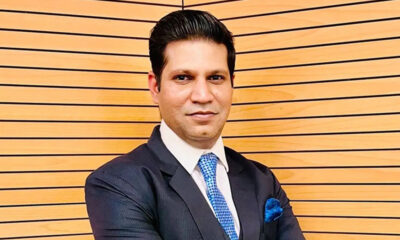
Swiggy orders fresh talent, puts Anuj Gupta in revenue driver’s seat as VP
MUMBAI: Swiggy just ordered itself a fresh hot serving of growth—with extra toppings of expertise. The food delivery giant is turning up the heat in its growth kitchen by appointing seasoned omnichannel wizard Anuj Gupta as vice president of revenue and growth for its food marketplace. Clearly, Swiggy knows the secret sauce to stay ahead: hiring a seasoned chef of consumer-tech strategy.
Bringing more than 14 years of consumer-tech and retail mastery to Swiggy’s table, Gupta is tasked with spearheading strategic initiatives that’ll spice up user growth, revenue expansion, and brand power.
Previously, Gupta co-founded Thimblerr, transforming it into a powerhouse in fashion supply-chain solutions. Before stitching success at Thimblerr, he held key positions at Zivame, notably as chief revenue officer, dramatically shifting it from a marketplace to India’s biggest women’s intimatewear brand, driving revenue up by a staggering 12 times in just four years. Now that’s some impressive brand makeover!
Notably at Zivame, Gupta also boosted six month customer retention by 1400 basis points and increased purchase frequency by 25 per cent. These numbers aren’t just impressive—they’re sizzling hot!
At Swiggy, Gupta’s culinary magic will focus on optimising revenue streams, enhancing customer experience, and maximising platform growth. Whether it’s perfecting the recipe for customer retention or cooking up tasty innovations in user engagement, he’s got a proven appetite for results.
Gupta’s earlier stints include impactful roles at Myntra, JPMorgan Chase, and co-founding ventures like Flont and Citizens for Accountable Governance. Clearly, he loves wearing multiple hats—and looks good in all of them!
With Gupta behind the wheel, Swiggy aims to deliver an enhanced dining experience for millions across India, one delicious strategy at a time.

e-commerce
Visa report tracks rise of India’s affluent, experience-led spending
Affluent base doubles to 130 lakh, travel 58 per cent of elite spends.
MUMBAI: In India’s new luxury playbook, it’s less about owning more and more about living better. A new whitepaper by Visa Consulting and Analytics (VCA) maps a decisive shift in India’s affluent economy, where spending is becoming more intentional, experience-led, and closely tied to personal identity rather than pure income growth.
Titled India’s Affluent Economy 2025–2026, the report draws on a Visa-commissioned Yougov study and VisaNet data across travel, dining, retail and lifestyle categories. The headline number is hard to miss: individuals earning over Rs 10 lakh annually have nearly doubled from 69 lakh to 130 lakh, significantly expanding the country’s discretionary spending base.
But it’s not just about scale, it’s about behaviour. As consumers move up the affluence ladder, discretionary categories are taking a larger share of credit card spends, positioning cards as key enablers of premium, lifestyle-driven consumption.
The geography of wealth is shifting too. Affluence is no longer confined to metros such as Mumbai, Delhi and Bengaluru, with cities like Ahmedabad, Surat, Jaipur and Lucknow increasingly mirroring metro consumption patterns.
The report highlights a clear pivot from ownership to access. More than 50 per cent of affluent consumers now use cards for elite memberships, while 7 in 10 are drawn to limited-edition drops and curated collections. Increasingly, luxury is defined by seamless access be it concierge-led travel or curated dining where time saved is as valuable as money spent.
Spending patterns reinforce this shift. Among the ultra-elite, travel accounts for 58 per cent of discretionary spends, far outpacing retail and luxury combined at 28 per cent. Cross-border spending penetration stands at 63 per cent, signalling a growing global outlook among India’s affluent.
Closer home, indulgence is becoming routine. Nearly 4 in 5 affluent consumers dine at premium establishments at least three times a year, while 1 in 4 visit luxury venues more than five times annually. Dining spends are also climbing, with Rs 20,000 emerging as a new entry-level benchmark per experience and Rs 50,000 marking premium territory.
Retail, meanwhile, is becoming more selective. Three in four affluent consumers make a high-end purchase at least once a quarter, while one in four shops premium every two weeks. Luxury retail intensity is also rising, with 2 in 5 consumers spending over Rs 5 lakh annually, and a smaller but significant segment exceeding Rs 10 lakh.
Technology and wellness are carving out new roles in this ecosystem. High-end gadgets now see average spends of Rs 60,000 or more per purchase, while ultra-elite consumers are eight times more likely to visit spas and show five times higher engagement with cosmetic stores than non-affluent groups.
The broader takeaway is structural. Affluent consumers are no longer buying products, they are buying ecosystems. Integrated experiences across travel, dining, wellness and payments are becoming central to how this segment lives and spends.
As India’s affluent base expands beyond metros and aligns more closely with global consumption patterns, the real opportunity lies not just in size, but in speed. For brands, the message is clear: relevance will be defined by how early and how seamlessly, they plug into this evolving lifestyle economy.