Hardware
STBs considered as telecom equipment to encourage indigenous production: Javadekar

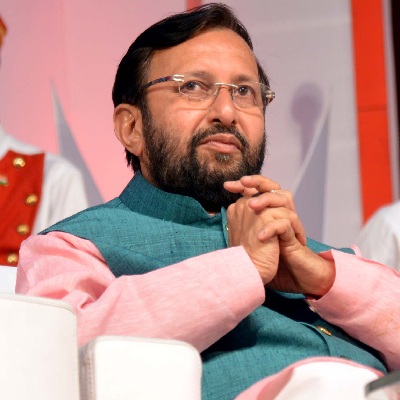
NEW DELHI: The Department of Telecommunications (DoT) has issued orders confirming that set top boxes (STBs) are part of telecommunication equipments. This has been done to promote indigenous production of STBs.
Information and Broadcasting Minister Prakash Javadekar today informed the Lok Sabha that this was done after his ministry along with other ministries took up the constraints of Indian manufacturers in the production of indigenous STBs, in view of the fact that an estimated 110 million STBs would be required for the third and fourth phase of digital access system (DAS).
While the earlier government had introduced digitisation in the country, it failed to chalk out a clear path for it, especially for boosting indigenous production of STBs. The new government had assured all the players that it would look at every sector’s problems and work on them. This thrust to indigenous STB makers seems to be a step forward in that direction.
Javadekar also said that a task force has been set up to finalise the modalities and study the implementation of the last two phases of DAS which need to be completed by 31 December 2014. A Deloitte report prepared for ASSOCHAM recently said about 12 million STBs have been seeded and 80 per cent consumer application forms received as of December 2013. The Telecom Regulatory Authority of India (TRAI) claims 100 per cent digitisation has taken place in the second phase of DAS.
TRAI has also said that recommendations on the new direct to home (DTH) licences would be brought out very soon. HITS licences have been issued to two players and are expected to enable digitisation in Phase III and Phase IV markets.
Meanwhile, the report notes ‘complaints have poured in against STBs. People in the city are complaining about digital STBs installed in their residences and commercial organisations. Visual and sound disturbances coupled with channels going off air from time to time have left viewers unhappy.’
It also noted that ‘in the haste to install STBs in the city, cable operators have overlooked a crucial step – that of filling in the conditional access form (CAF) before installation of the device. The purpose behind mandating DAS was to identify the actual number of cable viewers in the country. But with most customers not filling in the form, the purpose still remains defeated.’
‘With penetration of TV in India standing at approximately 65 per cent, at present, the country has close to 80 million non-TV households, which present a key opportunity for the television distribution players. This low level of penetration holds a great potential for players to increase their subscribers and revenues. Drivers such as rising incomes, decreasing household size, multi TV phenomenon and rising urbanisation would only provide a further fillip.’