Connect with us

Regulators

DoT orders emergency diesel access to stop mobile networks from going offline

Government dials in support for telecom firms as fuel curbs threaten to cut lines

Published

on

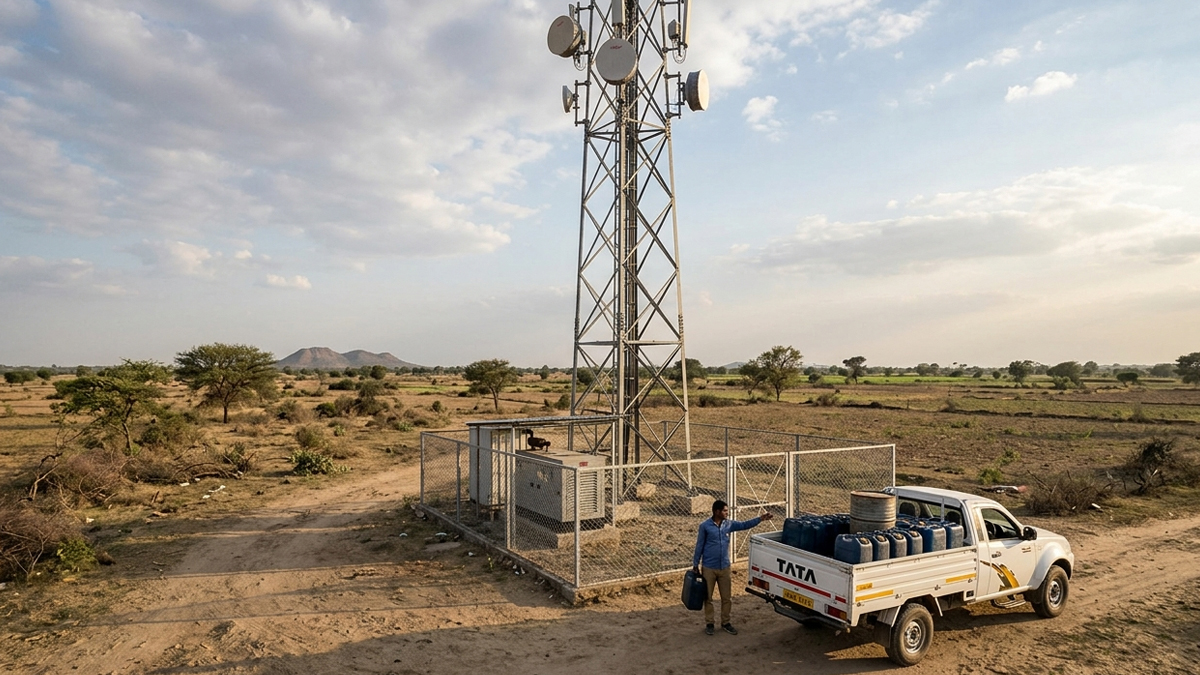
NEW DELHI: India is moving fast to ensure your phone signal doesn’t drop just because the fuel tank is running dry. The Department of Telecommunications (DoT) has stepped in to help mobile tower operators secure steady diesel supplies after regional fuel restrictions, sparked by the ongoing conflict in Iran, began to threaten the nation’s digital backbone.

While state governments have introduced curbs on selling diesel in containers to prevent panic-buying and hoarding, the move has inadvertently pulled the plug on telecom field teams. Many mobile towers, especially in rural areas with patchy electricity, rely on diesel generators to stay online. Without the ability to transport fuel in canisters, these towers risk falling silent.

In an internal memo seen by Moneycontrol, DoT deputy director general (electrical) Amar Relan noted that restrictions in states like Maharashtra, Uttar Pradesh, and Madhya Pradesh have already hit field operations. The department has now ordered its regional units to coordinate with state leaders to bypass these rules, ensuring that telecom infrastructure is treated as a priority.

Advertisement

The alarm was first raised by the Digital Infrastructure Providers Association (DIPA), which warned that the “fuel fatigue” is spreading across Bihar, Jharkhand, and the Northeast. It isn’t just the towers feeling the heat, either. The industry is also facing a squeeze on LPG supplies, which are vital for the galvanisation process in tower manufacturing. Since LPG was diverted to domestic kitchens on 5 March, manufacturing units have been running on fumes, leading to fears of a total standstill in network expansion.

Highlighting the gravity of the situation, DIPA director general Manoj Kumar Singh told the power ministry and the DoT in a letter dated 9 April that network uptime is at serious risk. He argued that telecom providers should be granted “essential services” status to ensure they aren’t left in the dark during power outages or fuel shortages.

While Gujarat has already eased its restrictions to keep the data flowing, the DoT is pushing for a nationwide fix. For now, the government is determined to ensure that even if the global oil market is volatile, your 5G connection remains rock solid.

Advertisement
Click to comment

Leave a Reply

Your email address will not be published. Required fields are marked *

I&B Ministry

MeitY & Reliance Foundation launch e-SafeHER cyber training for Women

Programme aims to train one million rural women in cyber safety over three years

Published

on

NEW DELHI: The Ministry of Electronics and Information Technology has partnered with Reliance Foundation and C-DAC Hyderabad to launch ‘e-SafeHER’, a nationwide cyber security awareness programme aimed at empowering one million women across rural India.

Anchored under the Information Security Education and Awareness Programme, the initiative will focus on building digital confidence and safe online practices among women who are increasingly using digital platforms for financial transactions, livelihoods and essential services.

The programme will be rolled out through a community-led model, with training delivered via women’s self-help groups and grassroots networks. C-DAC Hyderabad will develop and localise training content, while Reliance Foundation will drive on-ground implementation using its rural outreach platforms.

Advertisement

Speaking on the launch, Ministry of Electronics and Information Technology secretary S Krishnan said, “e-SafeHER is an exciting opportunity to bring together knowledge and collaboration to build a cyber secure Bharat. Through this initiative, women from even the remotest regions will be empowered to participate safely in the digital ecosystem.”

Echoing this, Reliance Foundation director Isha Ambani said the initiative aims to equip women with the skills needed to navigate the online world safely. She added that the goal is to enable one million “Cyber Sakhis” who can confidently adopt digital tools to improve their lives and livelihoods.

The programme will begin with pilot training in Madhya Pradesh and Odisha, before scaling nationwide through a phased approach. It will use multilingual content, audio-visual modules and blended learning formats to ensure accessibility and engagement.

Advertisement

Designed for long-term impact, e-SafeHER will be integrated into existing digital literacy and women’s empowerment programmes, avoiding the need for parallel infrastructure. The initiative also aims to drive measurable behavioural change, from improved awareness of cyber risks to safer digital transactions.

By combining policy, technology and grassroots reach, the programme looks to bridge not just the digital divide, but the digital safety gap, ensuring that inclusion goes hand in hand with security.

Advertisement
Continue Reading

Advertisement News18
Advertisement
Advertisement
Advertisement Whtasapp
Advertisement Year Enders

Indian Television Dot Com Pvt Ltd

Signup for news and special offers!

Copyright © 2026 Indian Television Dot Com PVT LTD